Impact of Amelogenesis Imperfecta on Junctional Epithelium Structure and Function
Kevin Lin, Jake Ngu, Susu Uyen Le, Yan Zhang

TL;DR
This study shows that defects in tooth enamel formation can weaken the gum barrier, increasing susceptibility to infection and inflammation.
Contribution
This is the first study to investigate how defective ameloblast differentiation and enamel matrix formation affect junctional epithelium structure and function.
Findings
Mice with defective enamel matrix proteins show altered junctional epithelium morphology and reduced adhesion.
Mutant mice exhibit increased permeability and compromised barrier function in the junctional epithelium.
Reduced β-catenin and Ki67 in mutants suggest impaired epithelial regeneration and mitotic activity.
Abstract
The gingival sulcus, a natural pocket around teeth, is prone to trapping food particles and bacteria, often leading to infection and inflammation that damage the epithelial barrier and the underlying periodontal ligament, cementum, and alveolar bone. If left untreated, this infection can progress to periodontitis, a chronic disease affecting 20–50% of the global population and costing the U.S. USD 154.06 billion in treatment in 2018. The junctional epithelium lines the gingival sulcus, serving as a protective barrier and anchoring the gingiva to the enamel to seal and prevent infiltration by food and pathogens. The junctional epithelium originates from the reduced enamel epithelium, comprising the late developmental stage of ameloblasts, cells that form the enamel tissue. This study investigates whether defective ameloblast differentiation and enamel matrix formation impair junctional…
Genes, proteins, chemicals, diseases, species, mutations and cell lines named across the full text — each resolved to its canonical identifier and authoritative record.
Click any figure to enlarge with its caption.
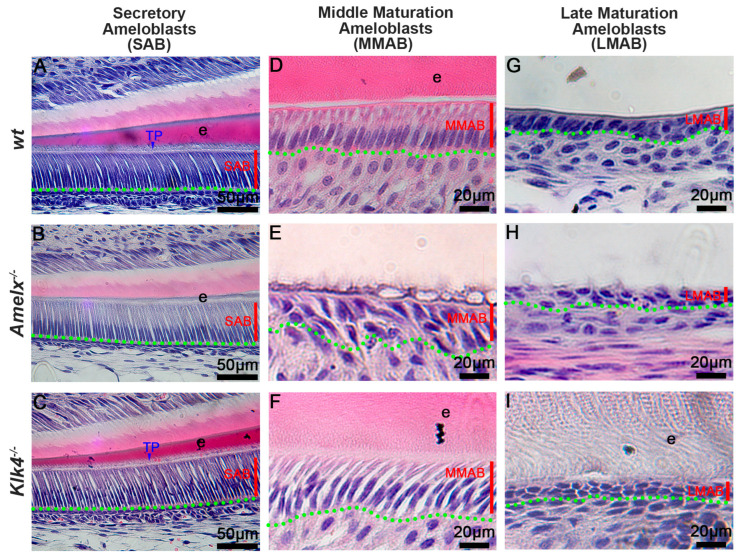 Figure 1
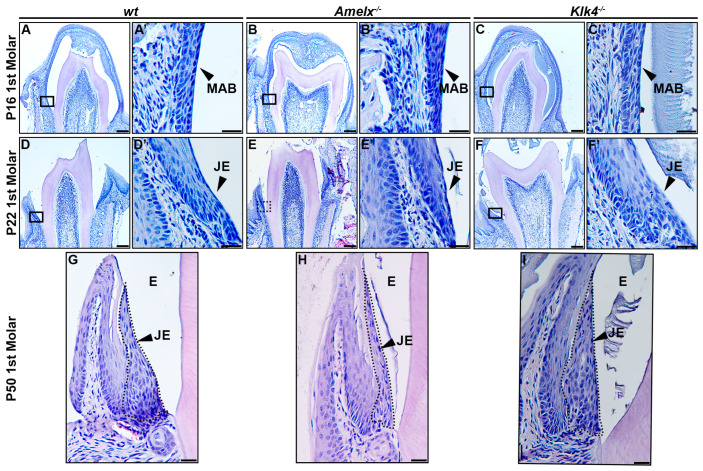 Figure 2
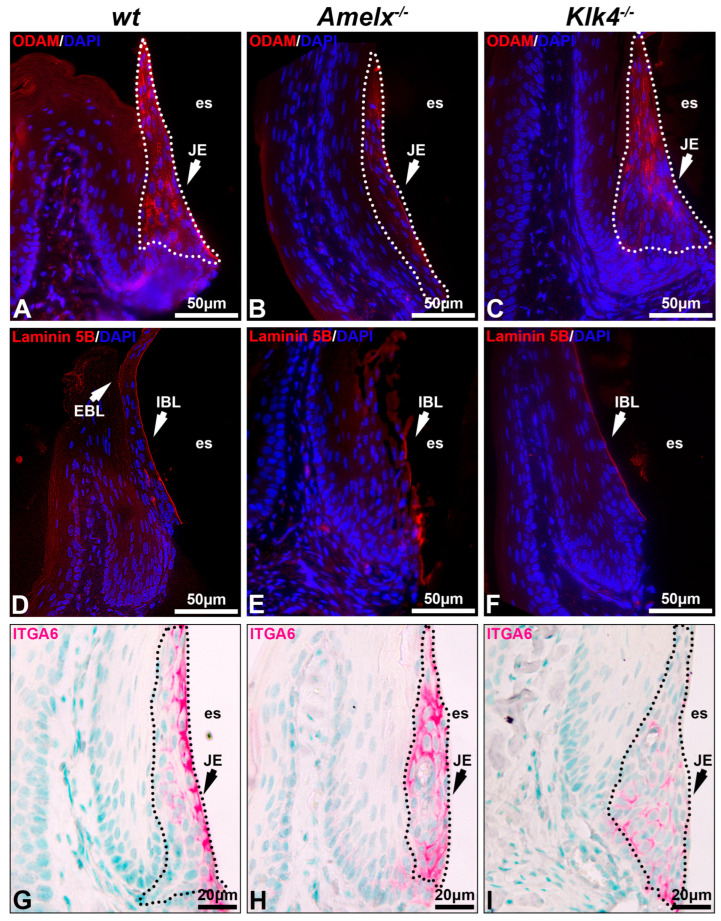 Figure 3
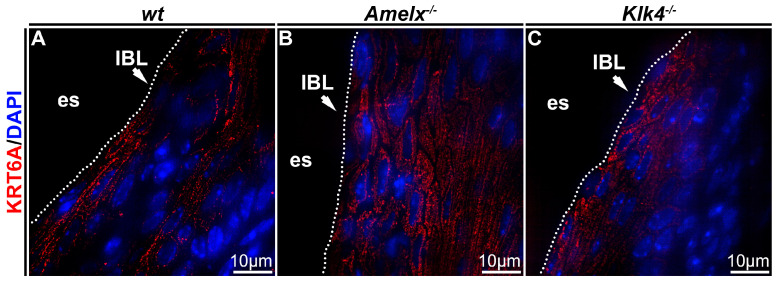 Figure 4
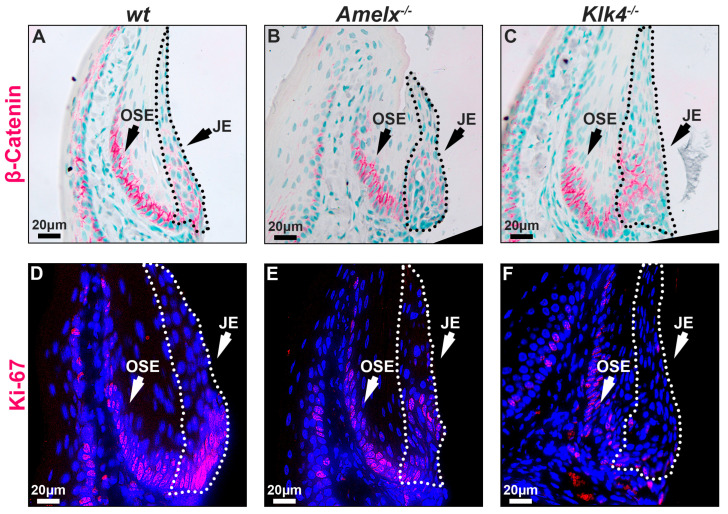 Figure 5
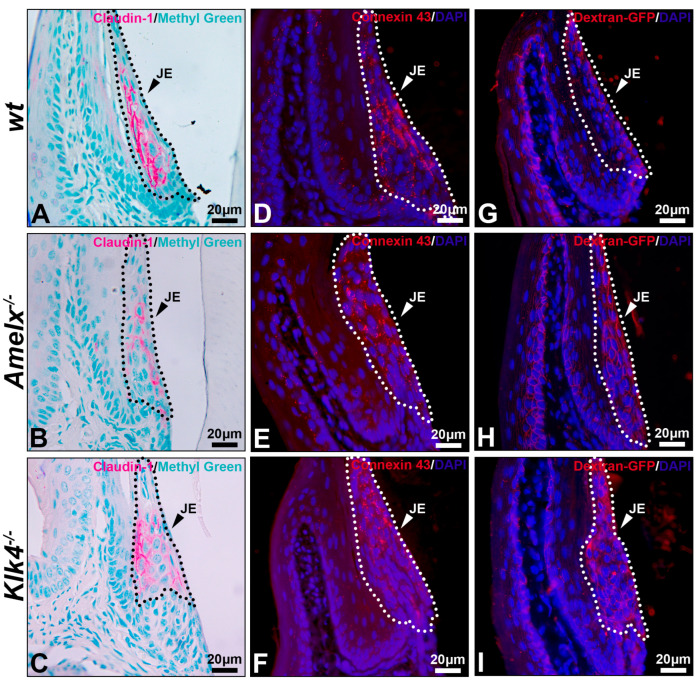 Figure 6
 Figure 7
Peer Reviews
No public reviews on file for this paper yet. If you reviewed it on a platform where reviews are public (OpenReview, ICLR, NeurIPS, ICML), you can paste yours below so the community can read it here.
Videos
No videos yet. Explain this paper in a talk, walkthrough, or lecture? Add one.
Taxonomy
TopicsBone and Dental Protein Studies · Periodontal Regeneration and Treatments · dental development and anomalies