ScnR1-Mediated Competitive DNA Binding and Feedback Inhibition Regulate Guvermectin Biosynthesis in Streptomyces caniferus
Haoran Shi, Jiabin Wang, Xuedong Zhang, Na Zhou, Xiangjing Wang, Wensheng Xiang, Shanshan Li, Yanyan Zhang

TL;DR
A new regulator, ScnR1, was found to control guvermectin production in Streptomyces caniferus through competitive DNA binding and feedback inhibition.
Contribution
Discovery of ScnR1's role in regulating guvermectin biosynthesis via competitive DNA binding and reciprocal feedback with GvmR2.
Findings
ScnR1, a distant LacI-family regulator, suppresses guvermectin biosynthesis by binding to key promoters.
ScnR1 and GvmR2 form a reciprocal feedback loop, each inhibiting the other's expression.
This study reveals a multi-layered regulatory mechanism for guvermectin biosynthesis in Streptomyces.
Abstract
Guvermectin, a Streptomyces-derived purine nucleoside, exhibits potent plant growth-promoting and broad-spectrum antibacterial activities, making it a promising agent for sustainable agriculture. Identification and characterization of novel transcriptional regulators involved in guvermectin biosynthesis is crucial for production improvement via transcriptional regulator engineering. This study identified ScnR1, an extra-cluster regulator influencing guvermectin production. The regulatory role of ScnR1 in guvermectin biosynthesis and its complex interactions with GvmR and GvmR2 were investigated. These findings advance our understanding of the multi-layered regulation of secondary metabolism in Streptomyces, offering a theoretical foundation for enhancing natural product yields through transcriptional regulator engineering. Guvermectin, a Streptomyces-derived purine nucleoside compound,…
Genes, proteins, chemicals, diseases, species, mutations and cell lines named across the full text — each resolved to its canonical identifier and authoritative record.
Click any figure to enlarge with its caption.
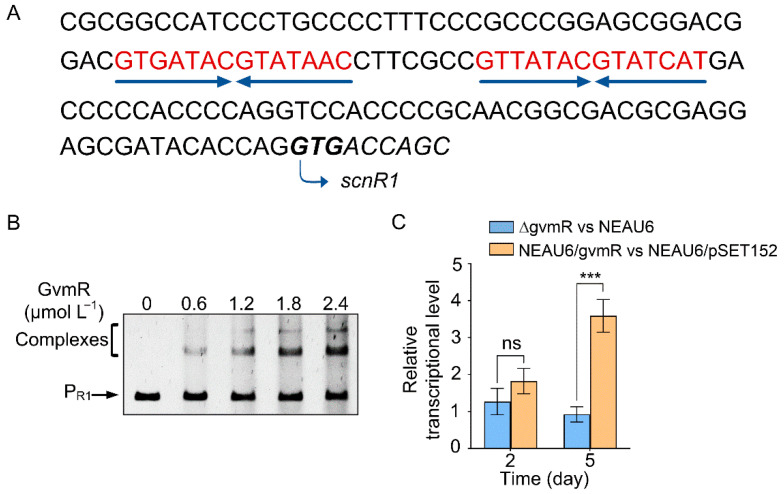 Figure 1
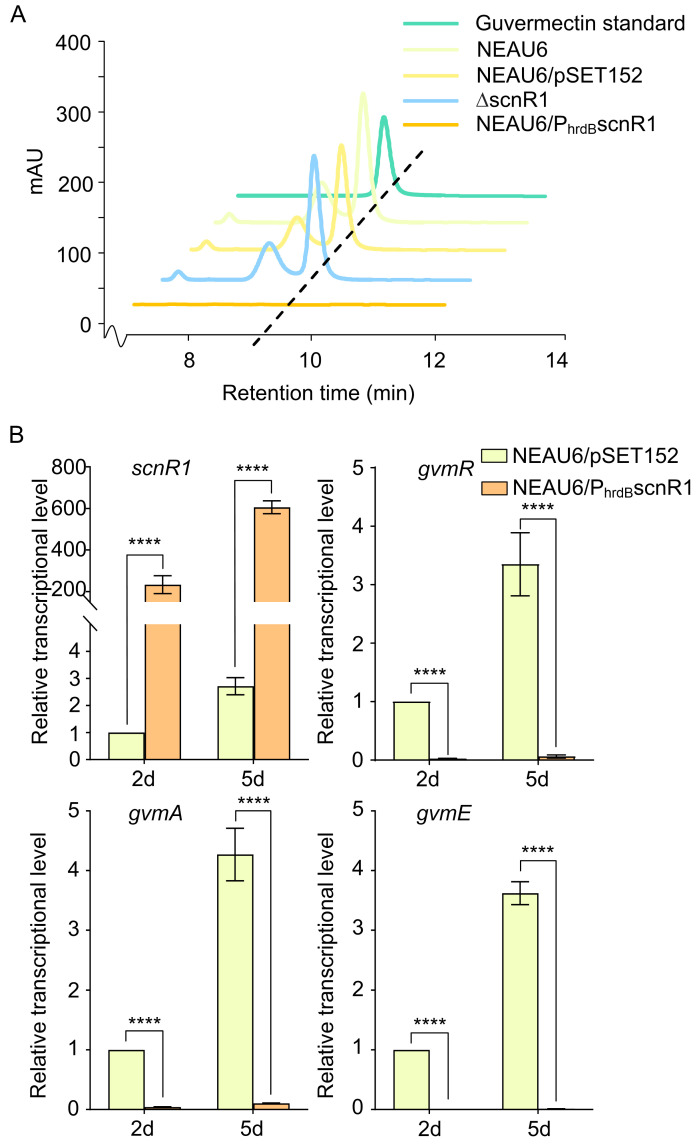 Figure 2
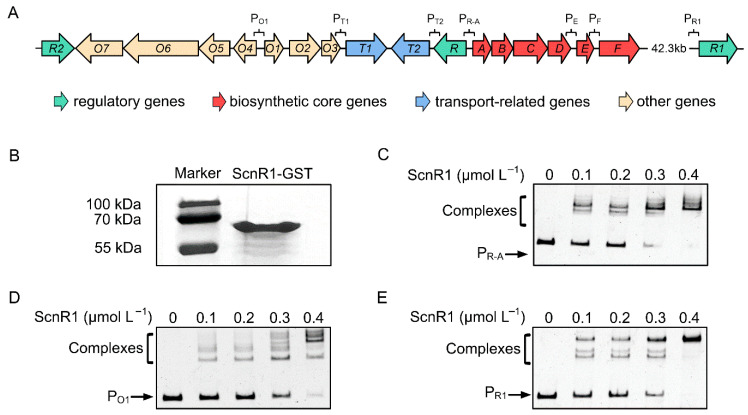 Figure 3
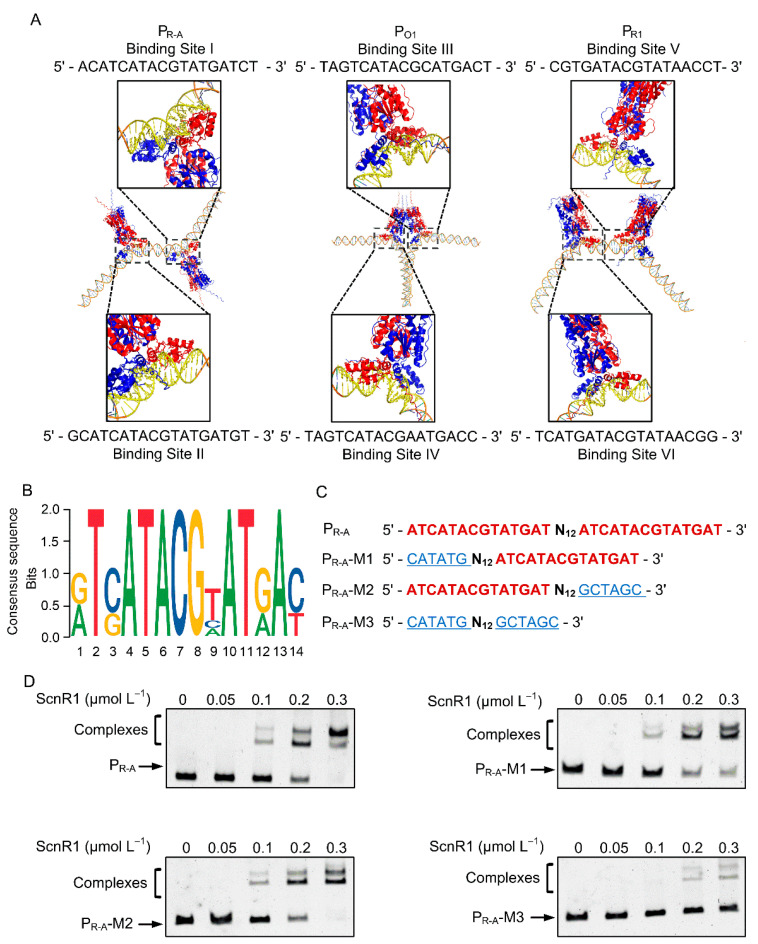 Figure 4
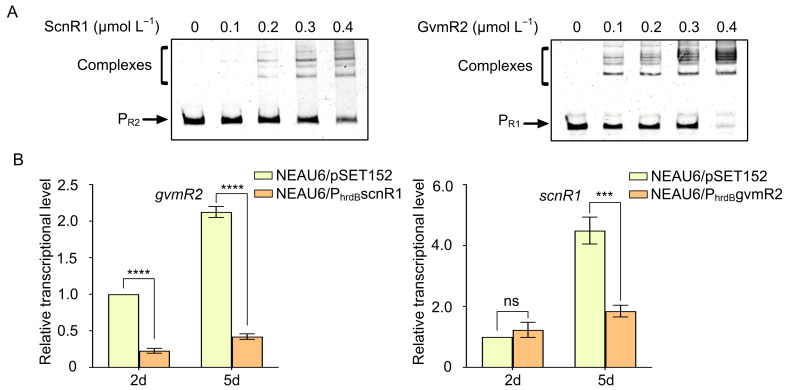 Figure 5
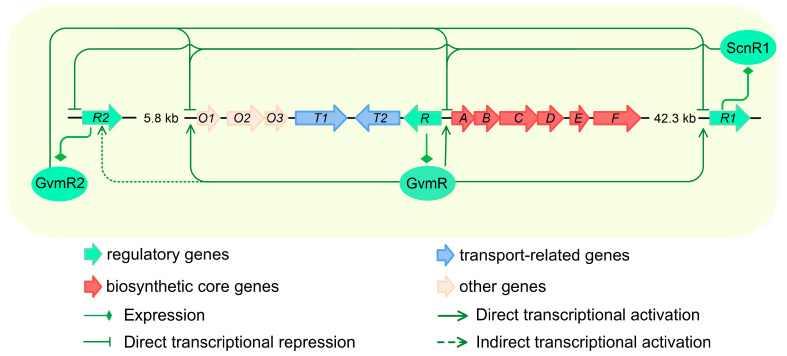 Figure 6
Peer Reviews
No public reviews on file for this paper yet. If you reviewed it on a platform where reviews are public (OpenReview, ICLR, NeurIPS, ICML), you can paste yours below so the community can read it here.
Videos
No videos yet. Explain this paper in a talk, walkthrough, or lecture? Add one.
Taxonomy
TopicsMicrobial Natural Products and Biosynthesis · Genomics and Phylogenetic Studies · Insect symbiosis and bacterial influences