Distinguishing Dyslexia, Attention Deficit, and Learning Disorders: Insights from AI and Eye Movements
Alae Eddine El Hmimdi, Zoï Kapoula

TL;DR
This study uses eye movement data and AI to distinguish dyslexia from attention deficit and learning disorders in children.
Contribution
It shows that dyslexia can be uniquely identified through specific eye movement patterns using machine learning.
Findings
Dyslexia was successfully identified via saccade and vergence eye movements using machine learning.
Statistical tests showed significant differences in saccade parameters like velocity and latency for dyslexia.
Attention deficit and learning disorders showed less distinct eye movement patterns compared to dyslexia.
Abstract
This study investigates whether eye movement abnormalities can differentiate between distinct clinical annotations of dyslexia, attention deficit, or school learning difficulties in children. Utilizing a selection of saccade and vergence eye movement data from a large clinical dataset recorded across 20 European centers using the REMOBI and AIDEAL technologies, this research study focuses on individuals annotated with only one of the three annotations. The selected dataset includes 355 individuals for saccade tests and 454 for vergence tasks. Eye movement analysis was performed with AIDEAL software. Key parameters, such as amplitude, latency, duration, and velocity, are extracted and processed to remove outliers and standardize values. Machine learning models, including logistic regression, random forest, support vector machines, and neural networks, are trained using a GroupKFold…
Genes, proteins, chemicals, diseases, species, mutations and cell lines named across the full text — each resolved to its canonical identifier and authoritative record.
Click any figure to enlarge with its caption.
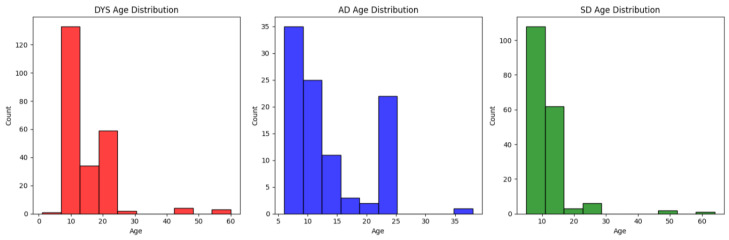 Figure 1
Peer Reviews
No public reviews on file for this paper yet. If you reviewed it on a platform where reviews are public (OpenReview, ICLR, NeurIPS, ICML), you can paste yours below so the community can read it here.
Videos
No videos yet. Explain this paper in a talk, walkthrough, or lecture? Add one.
Taxonomy
TopicsEEG and Brain-Computer Interfaces · Attention Deficit Hyperactivity Disorder · Mind wandering and attention