The Character Position Encoding of Parafoveal Semantic Previews Is Flexible in Chinese Reading
Min Chang, Yun Ma, Zhenying Pu, Yanqun Zhu, Jingxuan Li, Lvqing Miao, Xingguo Zhu

TL;DR
This study shows that Chinese readers can still understand words when characters are out of order, suggesting flexible processing in reading.
Contribution
The study clarifies the mechanism behind the transposition effect in Chinese reading using eye-tracking experiments.
Findings
Semantic and transposed semantic previews showed similar processing efficiency.
Transposed previews provided a processing advantage over unrelated previews.
Chinese readers extract meaning from disrupted character order in the parafoveal region.
Abstract
Extant Chinese studies have documented that transposing characters within two-character words (e.g., 西装 suit) yields greater parafoveal preview benefits for target words compared to replacing the characters with unrelated ones (e.g., 型间 a nonword), i.e., the Chinese character transposition effect. This effect has been interpreted as evidence for flexible positional encoding in parafoveal processing, whereby readers tolerate character order disruptions. Alternatively, it has been attributed to morpheme-to-word activation. The present study aims to further clarify the mechanism of the transposition effect. We manipulated four preview conditions of target words in a sentence, identical, semantic, transposed semantic, and control preview, using an eye tracker to record eye movements. Experiment 1 employed reversible word pairs (e.g., 领带 tie-带领 lead) as semantical and transposed previews for…
Genes, proteins, chemicals, diseases, species, mutations and cell lines named across the full text — each resolved to its canonical identifier and authoritative record.
Click any figure to enlarge with its caption.
 Figure 1
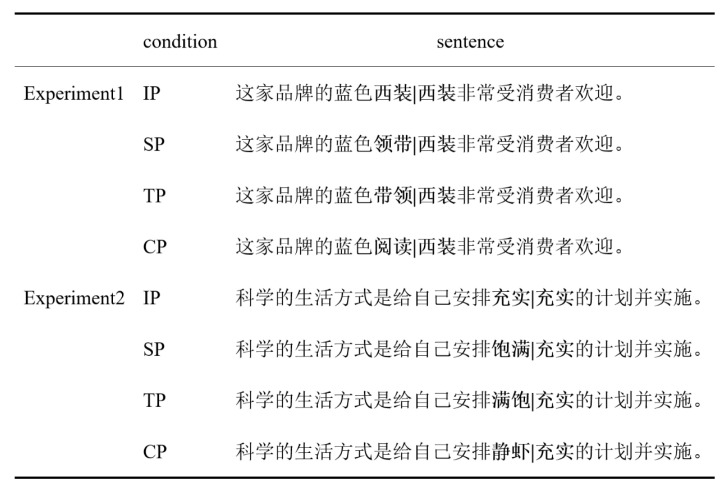 Figure 2
 Figure 3
Peer Reviews
No public reviews on file for this paper yet. If you reviewed it on a platform where reviews are public (OpenReview, ICLR, NeurIPS, ICML), you can paste yours below so the community can read it here.
Videos
No videos yet. Explain this paper in a talk, walkthrough, or lecture? Add one.
Taxonomy
TopicsReading and Literacy Development · Neural and Behavioral Psychology Studies · Neurobiology of Language and Bilingualism