Distinct Roles of apoE Receptor-2 Cytoplasmic Domain Splice Variants in Cardiometabolic Disease Modulation
Anja Jaeschke, April Haller, David Y. Hui

TL;DR
This study shows that different versions of the apoER2 protein affect heart and metabolic health in mice, with one variant offering better protection against artery damage and another promoting inflammation and insulin resistance.
Contribution
The study reveals distinct and cell-specific roles of apoER2 cytoplasmic splice variants in modulating cardiometabolic diseases.
Findings
The apoER2 variant with exon 19 prevents injury-induced neointima formation and necrotic atherosclerotic lesions.
The apoER2 variant without exon 19 promotes adipocyte inflammation and worsens insulin resistance and glucose intolerance.
Neither variant significantly affects the early stages of atherogenesis.
Abstract
Background/Objectives: Apolipoprotein E receptor-2 (apoER2) exists in various alternatively spliced forms, including variants that express apoER2 with or without exon 19 in the cytoplasmic domain. This study compared vascular response to endothelial denudation, as well as diet-induced atherosclerotic and metabolic diseases, between genetically modified mice that exclusively expressed the apoER2 splice variant with or without exon 19 to determine the impact of apoER2 exon 19 motif in cardiometabolic disease modulation. Methods: Vascular response to injury was assessed by measuring neointima area of the carotid arteries after endothelial denudation. The genetically modified mice were also fed a high-fat high-cholesterol diet for 16 weeks for the determination of body weight gain, glucose and insulin levels, glucose tolerance and insulin secretion. Additionally, adipose tissue inflammation…
Genes, proteins, chemicals, diseases, species, mutations and cell lines named across the full text — each resolved to its canonical identifier and authoritative record.
Click any figure to enlarge with its caption.
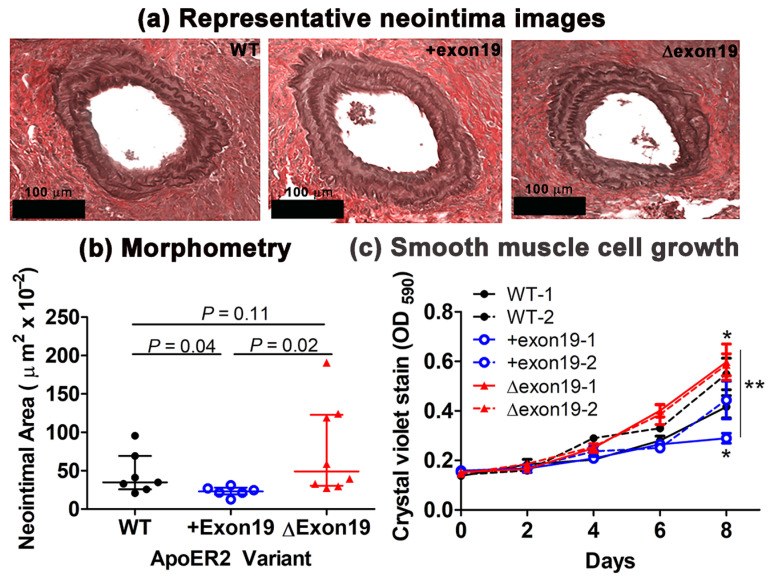 Figure 1
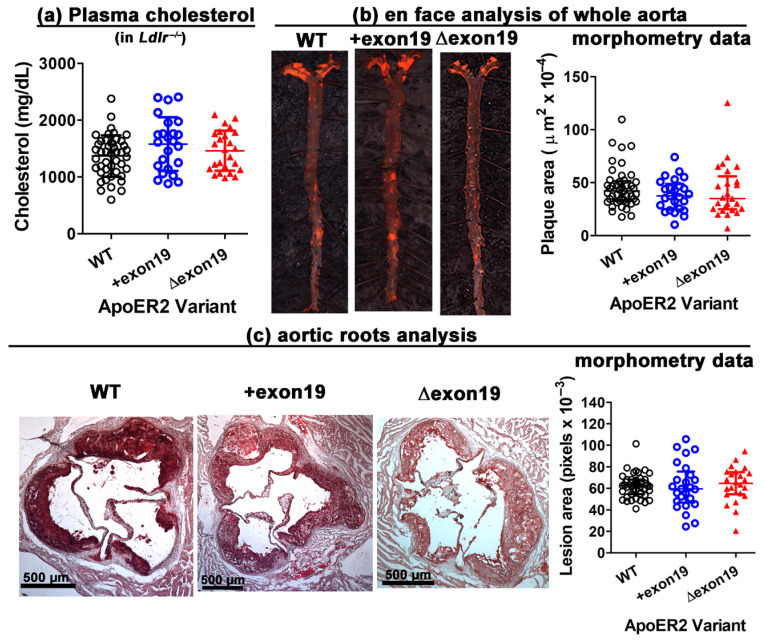 Figure 2
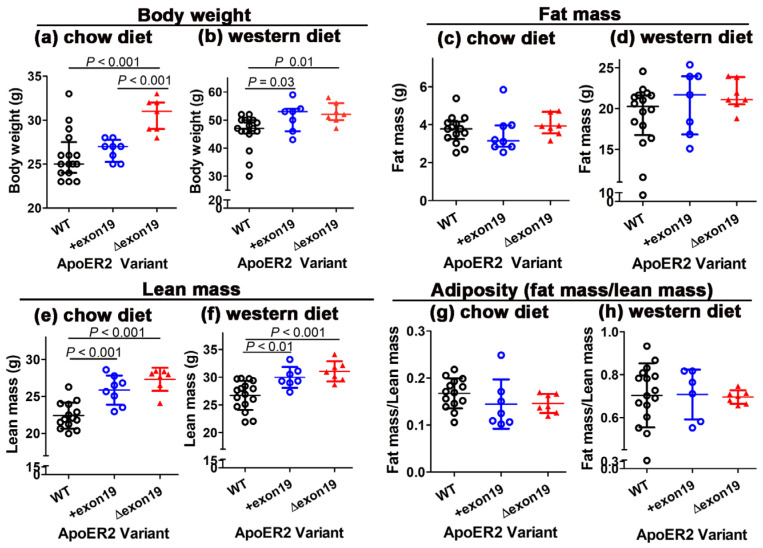 Figure 3
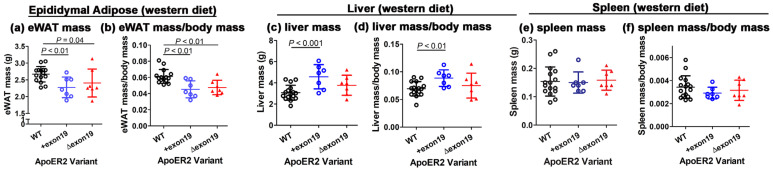 Figure 4
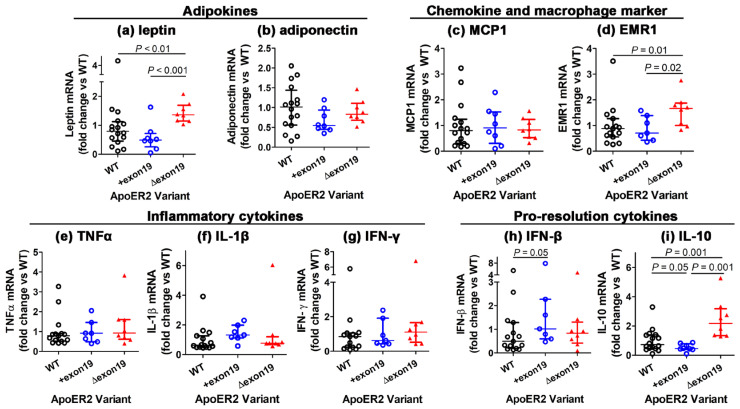 Figure 5
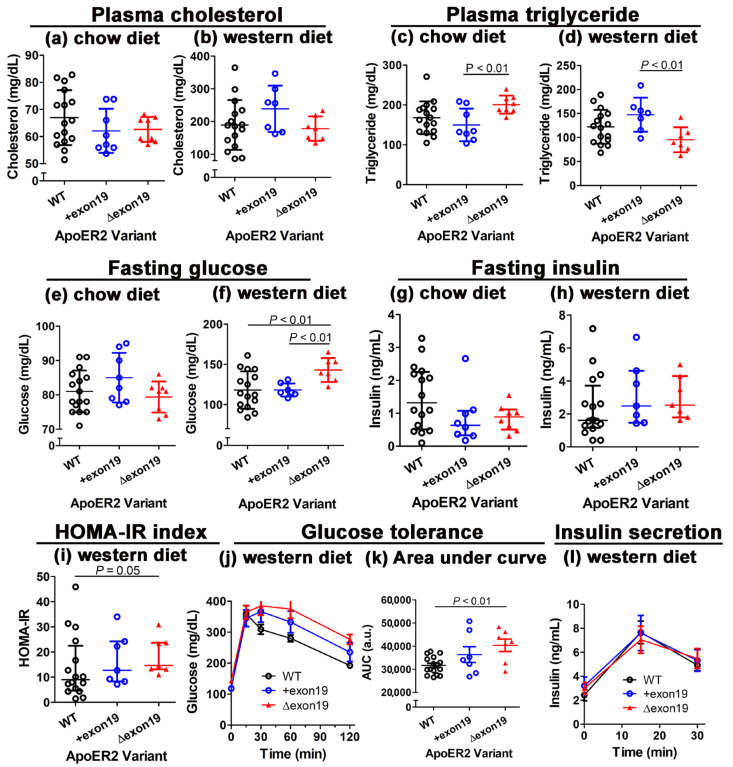 Figure 6
Peer Reviews
No public reviews on file for this paper yet. If you reviewed it on a platform where reviews are public (OpenReview, ICLR, NeurIPS, ICML), you can paste yours below so the community can read it here.
Videos
No videos yet. Explain this paper in a talk, walkthrough, or lecture? Add one.
Taxonomy
TopicsReceptor Mechanisms and Signaling · Atherosclerosis and Cardiovascular Diseases · Adipokines, Inflammation, and Metabolic Diseases