Real-World Efficacy and Safety of the Subcutaneous Implantable Cardioverter Defibrillator: Insights from the GASP Registry
Nikias Milaras, Evangelos Oikonomou, Konstantinos P. Letsas, Nikolaos Ktenopoulos, Sotirios Xydonas, Panagiotis Korantzopoulos, Georgios Leventopoulos, Panagiotis Dourvas, Stefanos Archontakis, Athena Batsouli, Panagiotis Mililis, Athanasios Saplaouras, Emmanuel Kanoupakis

TL;DR
This study evaluates the real-world effectiveness and safety of subcutaneous implantable cardioverter defibrillators (S-ICDs) in a diverse patient group.
Contribution
The study provides real-world data on S-ICD efficacy and safety in a heterogeneous patient population.
Findings
Inappropriate shocks occurred in 7% of patients, mainly due to myopotentials and atrial tachyarrhythmias.
Thirty-day complication-free rates were 97.3%, with most device extractions due to infection.
Complications were not significantly higher in patients with comorbidities like diabetes or heart failure.
Abstract
Background: The advent of subcutaneous implantable cardioverter defibrillators (S-ICDs) marked a significant milestone in the course of cardiac rhythm devices, particularly for patients who are deemed at high risk for ventricular arrhythmias and sudden cardiac death. This extracardiac approach makes the S-ICD an especially valuable option for young patients, those with difficult venous access, or those at high risk of infection. Although the S-ICD does not provide pacing for bradycardia or heart failure, it has shown efficacy in treating ventricular arrhythmias while minimizing complications associated with transvenous systems. Methods: The purpose of this multicenter retrospective analysis was to assess the real-world efficacy and safety of the S-ICD in a heterogeneous population. Results: The GASP registry consisted of 114 patients, 68% male, aged 41 ± 15 years, with a mean LVEF of…
Genes, proteins, chemicals, diseases, species, mutations and cell lines named across the full text — each resolved to its canonical identifier and authoritative record.
Click any figure to enlarge with its caption.
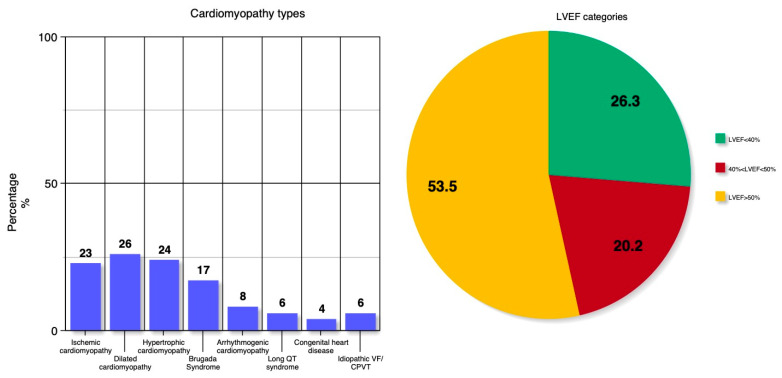 Figure 1
 Figure 2
 Figure 3
Peer Reviews
No public reviews on file for this paper yet. If you reviewed it on a platform where reviews are public (OpenReview, ICLR, NeurIPS, ICML), you can paste yours below so the community can read it here.
Videos
No videos yet. Explain this paper in a talk, walkthrough, or lecture? Add one.
Taxonomy
TopicsCardiac pacing and defibrillation studies · Cardiac Arrhythmias and Treatments · Neurological disorders and treatments