Implementation of a Conditional Latent Diffusion-Based Generative Model to Synthetically Create Unlabeled Histopathological Images
Mahfujul Islam Rumman, Naoaki Ono, Kenoki Ohuchida, Ahmad Kamal Nasution, Muhammad Alqaaf, Md. Altaf-Ul-Amin, Shigehiko Kanaya

TL;DR
This paper explores using a conditional latent diffusion model to generate synthetic histopathological images from unlabeled data, improving controllability and quality.
Contribution
The novel approach combines VQ-GAN, diffusion models, and clustering with expert input for conditional histopath image generation.
Findings
Clustering latent features improved the controllability of synthetic image generation.
Expert input enhanced the interpretability of the clustering process.
Quantitative metrics confirmed the high quality of the generated histopathological images.
Abstract
Generative image models have revolutionized artificial intelligence by enabling the synthesis of high-quality, realistic images. These models utilize deep learning techniques to learn complex data distributions and generate novel images that closely resemble the training dataset. Recent advancements, particularly in diffusion models, have led to remarkable improvements in image fidelity, diversity, and controllability. In this work, we investigate the application of a conditional latent diffusion model in the healthcare domain. Specifically, we trained a latent diffusion model using unlabeled histopathology images. Initially, these images were embedded into a lower-dimensional latent space using a Vector Quantized Generative Adversarial Network (VQ-GAN). Subsequently, a diffusion process was applied within this latent space, and clustering was performed on the resulting latent features.…
Genes, proteins, chemicals, diseases, species, mutations and cell lines named across the full text — each resolved to its canonical identifier and authoritative record.
Click any figure to enlarge with its caption.
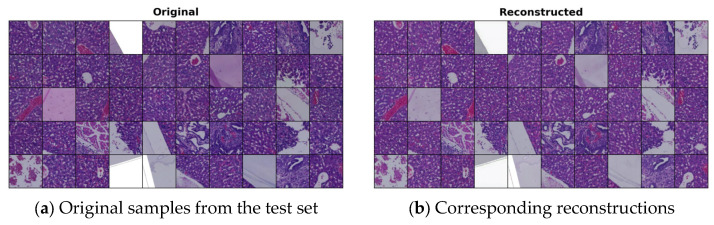 Figure 1
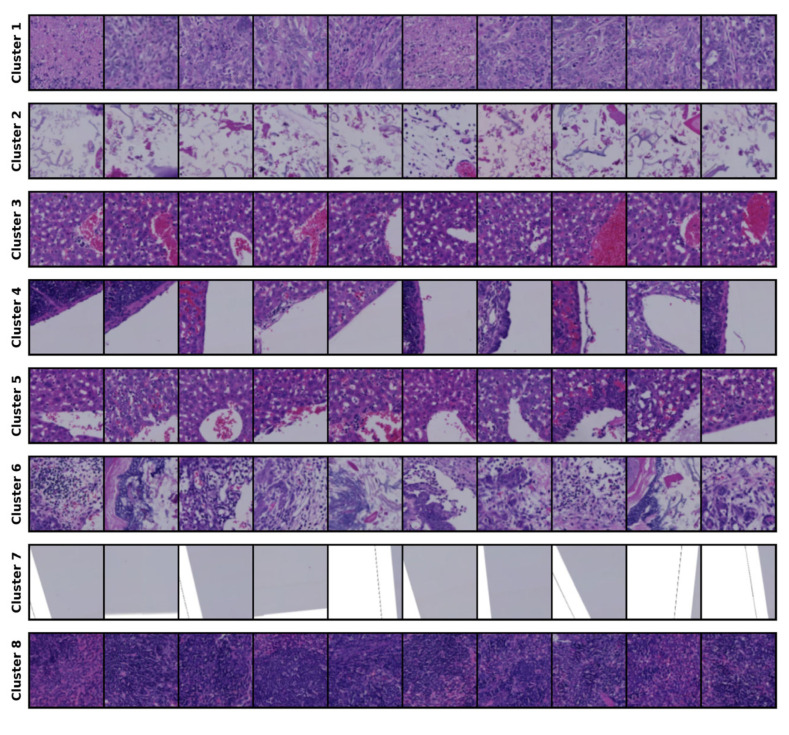 Figure 2
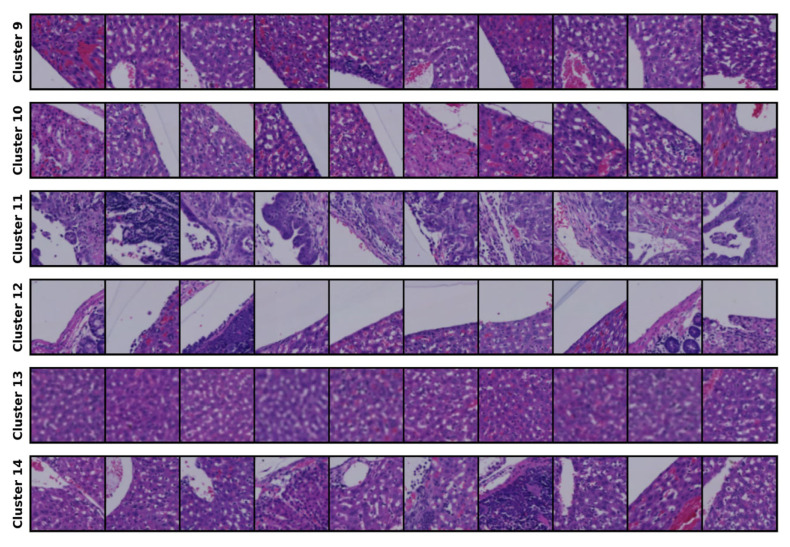 Figure 3
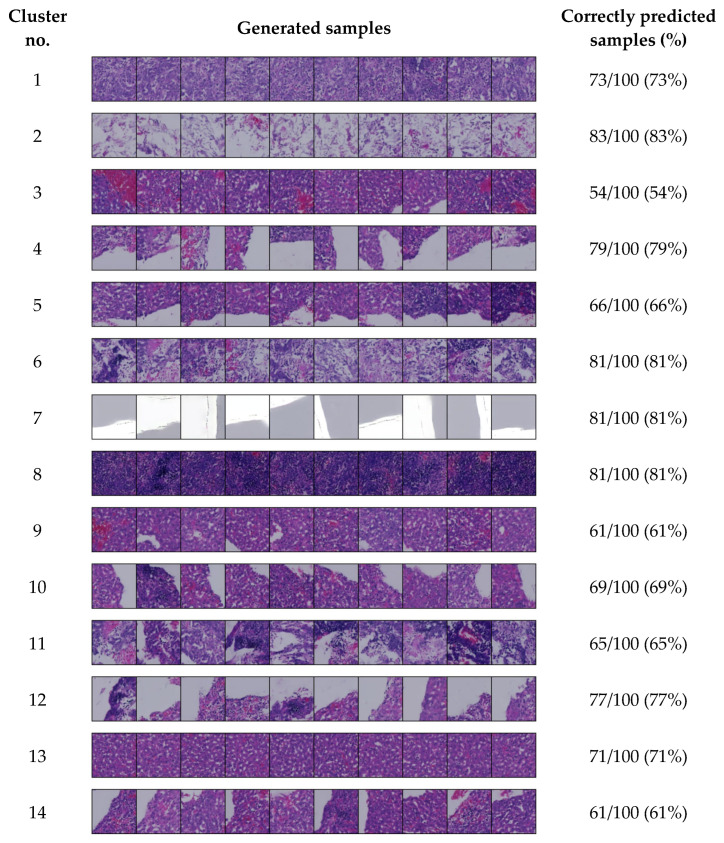 Figure 4
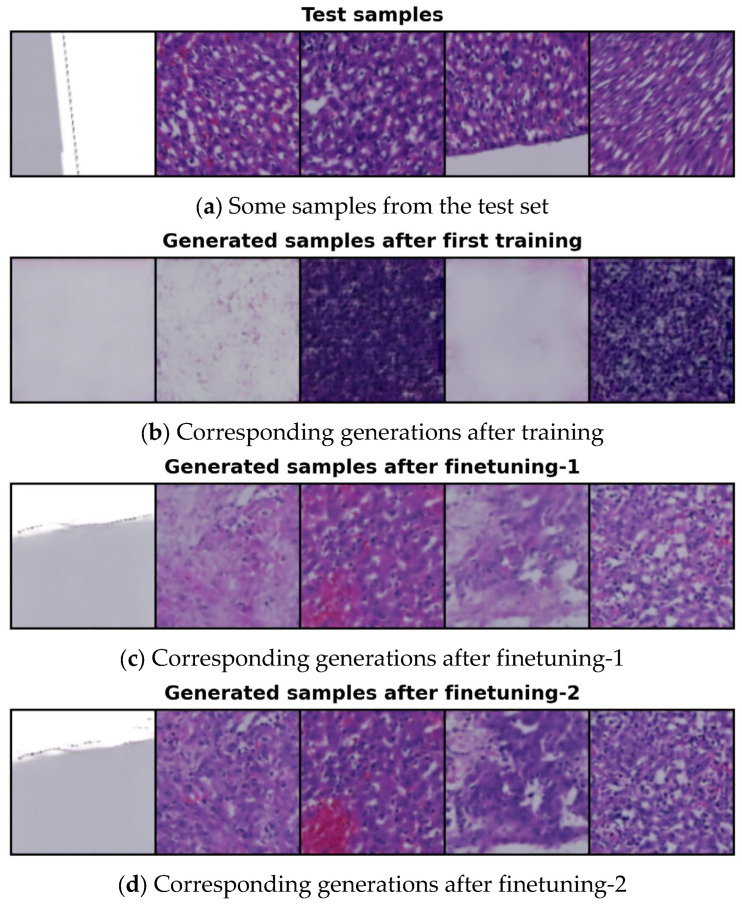 Figure 5
Peer Reviews
No public reviews on file for this paper yet. If you reviewed it on a platform where reviews are public (OpenReview, ICLR, NeurIPS, ICML), you can paste yours below so the community can read it here.
Videos
No videos yet. Explain this paper in a talk, walkthrough, or lecture? Add one.
Taxonomy
TopicsGenerative Adversarial Networks and Image Synthesis · AI in cancer detection