Expanding Genetic and Clinical Spectra of Inherited Retinal Dystrophies: Identification of Three Novel PRPH2 Variants
Raffaella Cascella, Jacopo Sebastiani, Claudia Strafella, Giulia Calvino, Sarah Andreucci, Michele D’ambrosio, Stefania Zampatti, Jung Hee Levialdi Ghiron, Benedetto Falsini, Andrea Cusumano, Emiliano Giardina

TL;DR
This study identifies three new genetic variants in the PRPH2 gene linked to inherited retinal diseases, improving diagnosis and understanding of these conditions.
Contribution
The study reports three novel PRPH2 variants and emphasizes integrating genetic and clinical data for better diagnosis of IRDs.
Findings
Three novel PRPH2 variants (c.653C>G, c.700T>C, c.121del) were identified in patients with inherited retinal dystrophies.
Combining genetic, clinical, and instrumental data improves diagnostic accuracy and genotype–phenotype correlations.
Seven previously reported PRPH2 variants were also documented in the study.
Abstract
Background/Objectives: Pathogenic variants in the PRPH2 gene are implicated in a wide spectrum of Inherited Retinal Dystrophies (IRDs), which show significant phenotypic heterogeneity. This study combines genomic, clinical, and instrumental data, including BCVA, OCT, ERG, and visual field testing, using a multimodal approach to identify known and novel PRPH2 variants, with the aim of refine genotype–phenotype correlations and improving the diagnosis of IRDs. Methods: A total of 830 Italian subjects diagnosed with IRDs by the multimodal clinical approach underwent WES on the Illumina® Next-Seq 550 system. Genetic variants were evaluated by considering type, frequency, and pathogenicity using dedicated databases and bioinformatics tools. Results: WES analysis led to the identification of three novel PRPH2 variants (c.653C>G, c.700T>C, c.121del) and seven previously reported variants…
Genes, proteins, chemicals, diseases, species, mutations and cell lines named across the full text — each resolved to its canonical identifier and authoritative record.
Click any figure to enlarge with its caption.
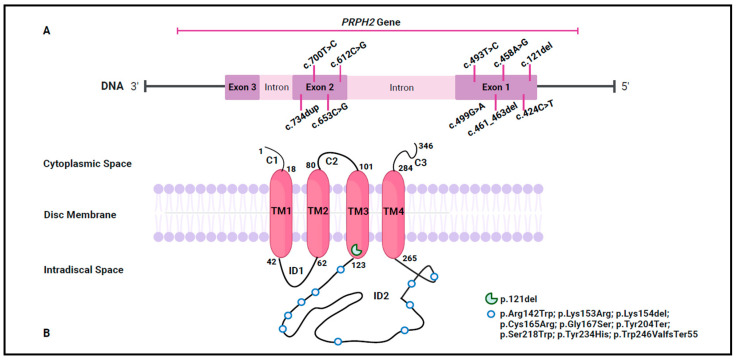 Figure 1
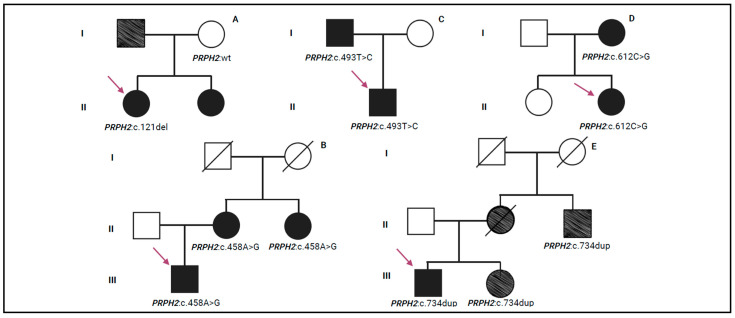 Figure 2
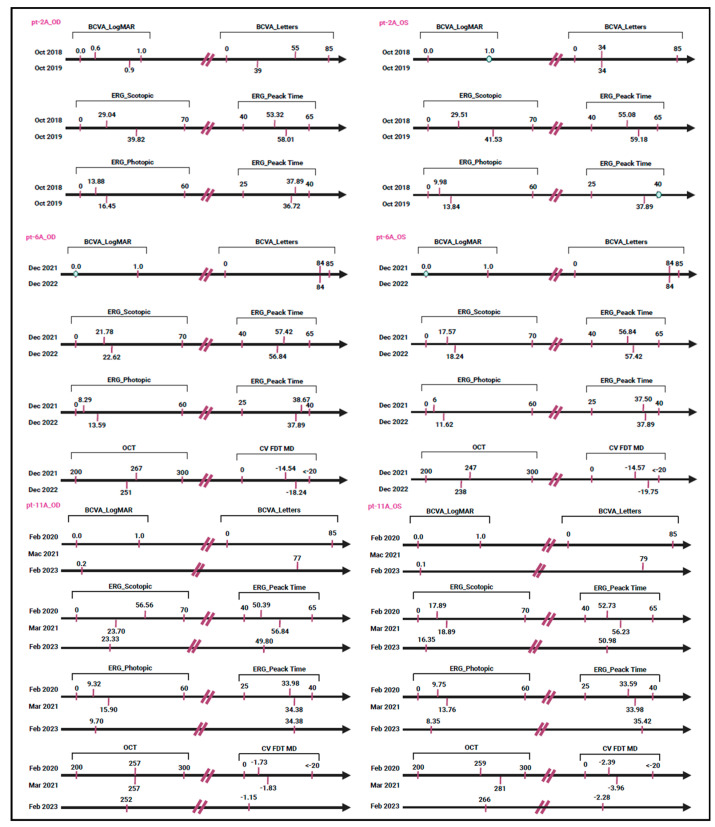 Figure 3
Peer Reviews
No public reviews on file for this paper yet. If you reviewed it on a platform where reviews are public (OpenReview, ICLR, NeurIPS, ICML), you can paste yours below so the community can read it here.
Videos
No videos yet. Explain this paper in a talk, walkthrough, or lecture? Add one.
Taxonomy
TopicsMetabolism and Genetic Disorders · Genetic and Kidney Cyst Diseases · Genetics and Neurodevelopmental Disorders