Perceptions of Multiple Perpetrator Rape in the Courtroom
Kelly C. Burke, Jonathan M. Golding, Jeffrey Neuschatz, Libbi Geoghagan

TL;DR
This study explores how legal decisions are influenced in cases of multiple perpetrator rape, finding that jurors are more likely to convict when multiple perpetrators are involved.
Contribution
The study introduces new insights into legal decision-making in multiple perpetrator rape cases through a novel experimental design.
Findings
Mock jurors were more likely to vote guilty when multiple perpetrators were involved.
Jurors in multiple perpetrator cases emphasized the number of perpetrators as a key reason for guilty verdicts.
Victim helplessness and defendant blame indirectly influenced verdicts in these cases.
Abstract
Rape is typically committed as a one-on-one crime. However, a relatively high number of rapes (2–27%) involve a single victim and multiple perpetrators. These cases are often referred to as “gang” rapes but are also termed Multiple Perpetrator Rape (MPR). Despite these data, there is a scarce amount of legal decision-making research on this issue. This study investigated legal decision making in an acquaintance rape case involving multiple perpetrators. This study was a 2(Defendant Number: one vs. three) × 2(Victim Intoxication: intoxicated vs. sober) × 2(Participant Gender: women vs. men) between-participants design. Online community members (N = 171) were randomly assigned to read a trial summary involving one of four conditions. The primary results showed that, when the case involved multiple (vs. one) perpetrators, mock jurors were more likely to vote guilty, perceived the victim to…
Genes, proteins, chemicals, diseases, species, mutations and cell lines named across the full text — each resolved to its canonical identifier and authoritative record.
Click any figure to enlarge with its caption.
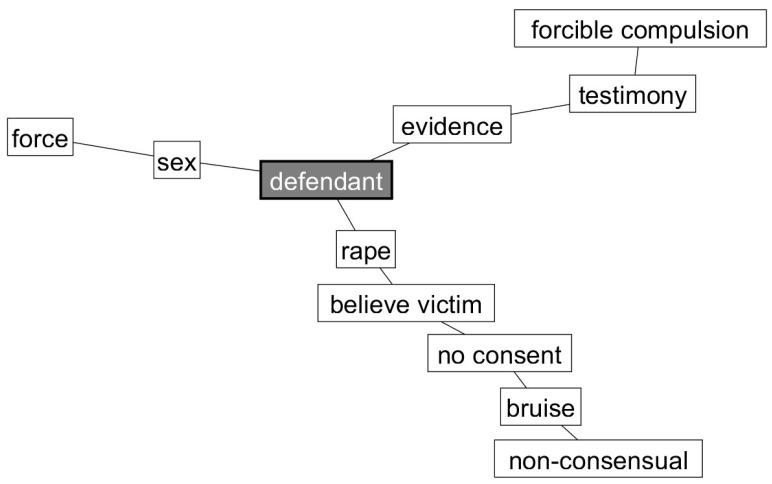 Figure 1
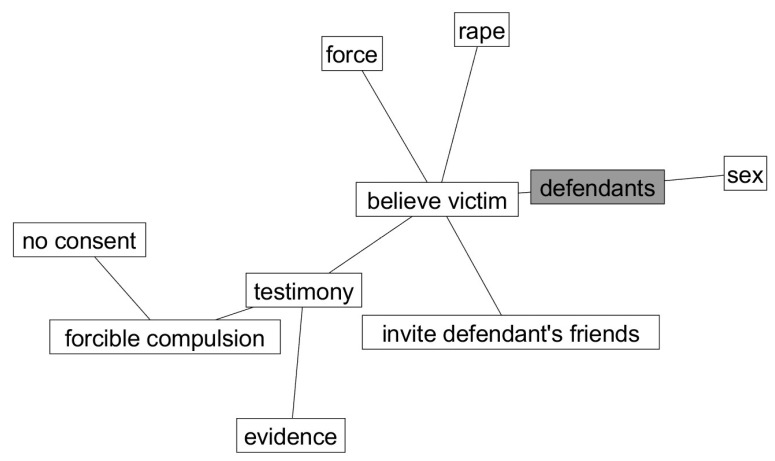 Figure 2
 Figure 3
Peer Reviews
No public reviews on file for this paper yet. If you reviewed it on a platform where reviews are public (OpenReview, ICLR, NeurIPS, ICML), you can paste yours below so the community can read it here.
Videos
No videos yet. Explain this paper in a talk, walkthrough, or lecture? Add one.
Taxonomy
TopicsSexual Assault and Victimization Studies · Jury Decision Making Processes · Social and Intergroup Psychology