Improving Cofactor Promiscuity of HMG-CoA Reductase from Ruegeria pomeroyi Through Rational Design
Haizhao Xue, Yanzhe Huang, Aabid Manzoor Shah, Xueying Wang, Yinghan Hu, Lingyun Zhang, Zongbao K. Zhao

TL;DR
This study improves the cofactor flexibility of an enzyme from Ruegeria pomeroyi, enabling it to use both NADH and NADPH more efficiently.
Contribution
A rational design approach created a dual-cofactor-utilizing HMGR mutant with significantly enhanced NADPH activity.
Findings
The D154K mutant showed a 53.7-fold increase in activity toward NADPH.
The mutant maintained over 80% activity across pH 6–8 with both NADH and NADPH.
The mutant retained protein stability at physiological temperatures.
Abstract
The mevalonate pathway is crucial for synthesizing isopentenyl pyrophosphate (IPP), the universal precursor of terpenoids, with 3-hydroxy-3-methylglutaryl-CoA reductase (HMGR) serving as the rate-determining enzyme that catalyzes the reduction of 3-hydroxy-3-methylglutaryl-CoA (HMG-CoA) to mevalonate, requiring NAD(P)H as an electron donor. Improving the cofactor promiscuity of HMGR can facilitate substrate utilization and terpenoid production by overcoming cofactor specificity limitations. In this study, we heterologously expressed rpHMGR from Ruegeria pomeroyi in Escherichia coli BL21(DE3) for the first time and established that it predominantly utilizes NADH. To broaden its cofactor usage, we employed Molecular Operating Environment (MOE)-assisted design to engineer the cofactor binding site, creating a dual-cofactor-utilizing mutant, D154K (the substitution of aspartic acid with…
Genes, proteins, chemicals, diseases, species, mutations and cell lines named across the full text — each resolved to its canonical identifier and authoritative record.
Click any figure to enlarge with its caption.
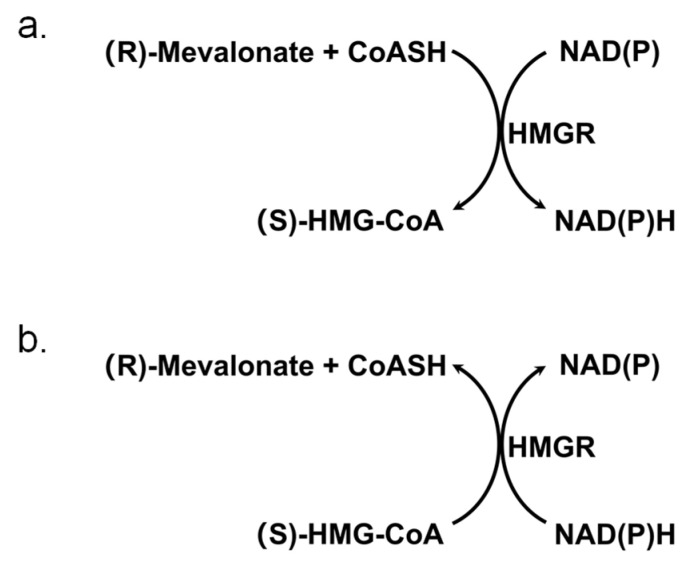 Figure 1
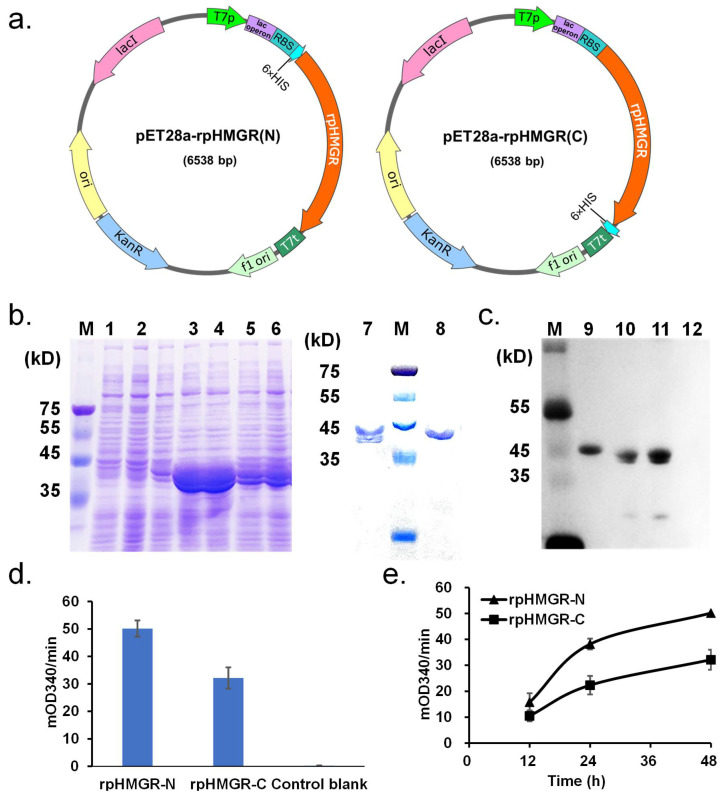 Figure 2
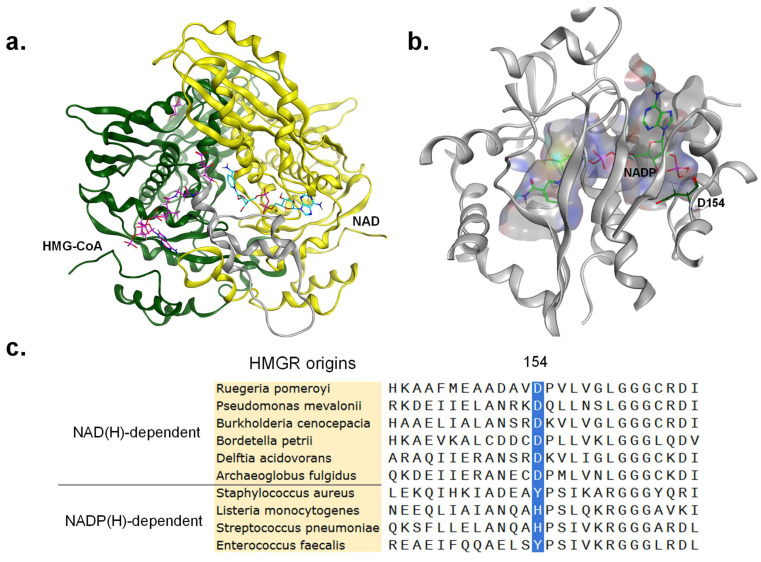 Figure 3
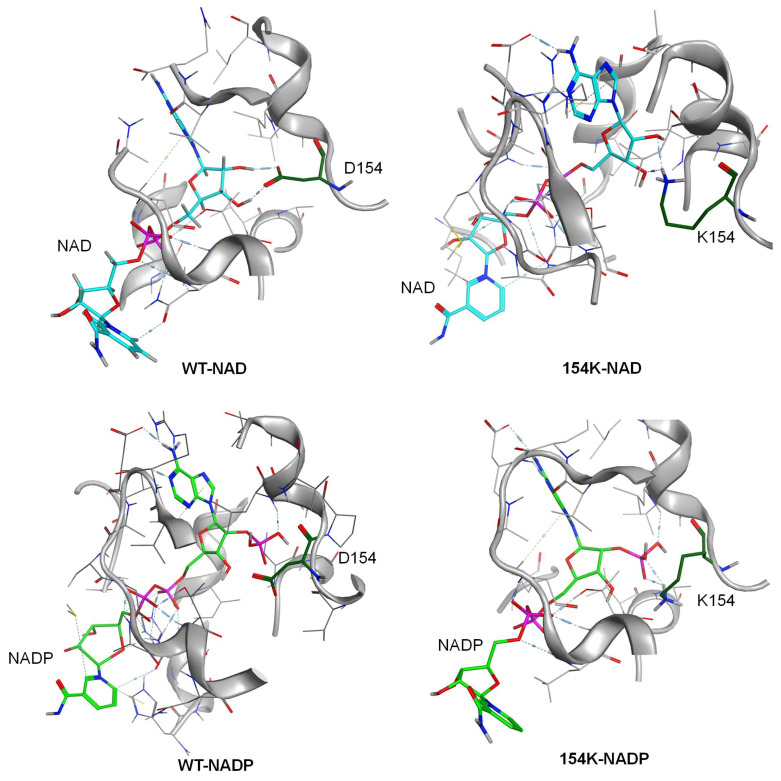 Figure 4
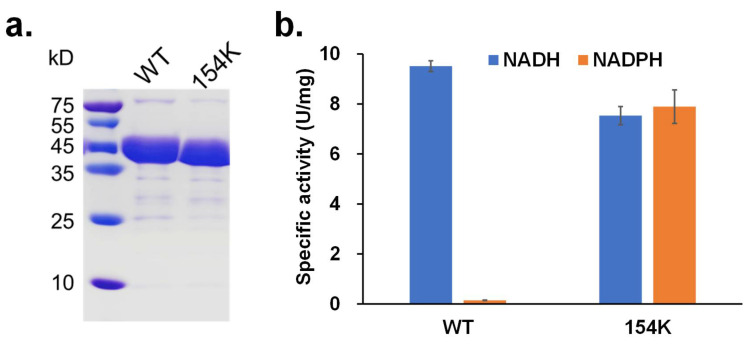 Figure 5
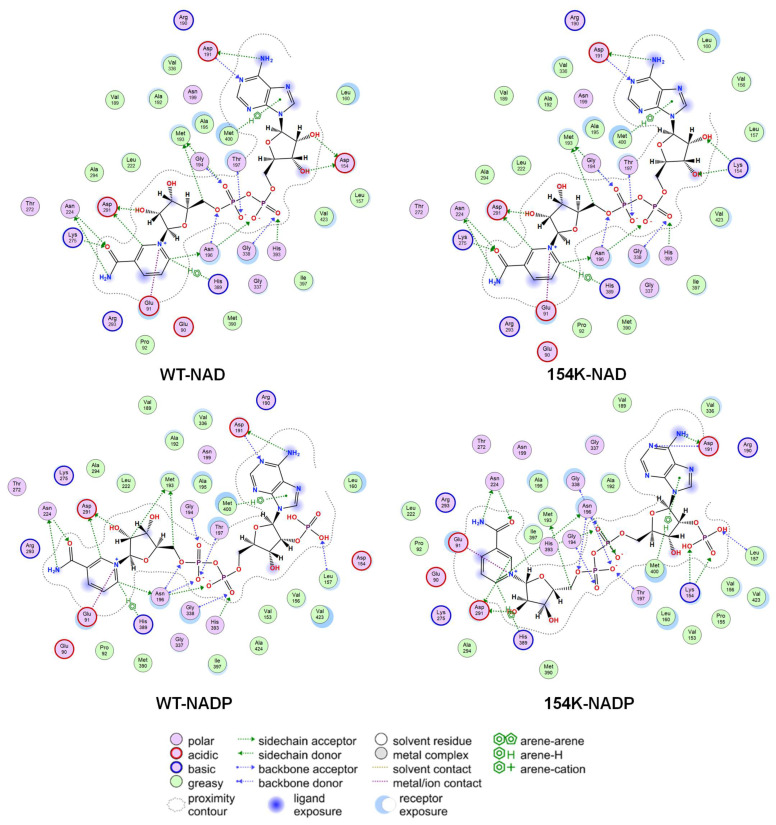 Figure 6
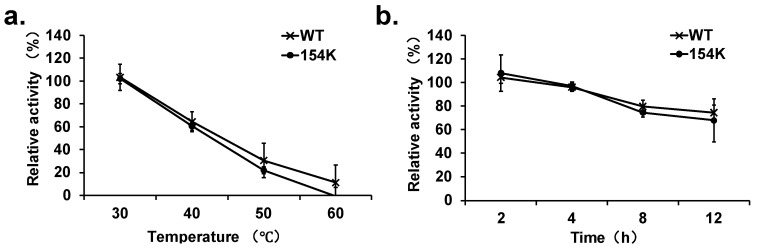 Figure 7
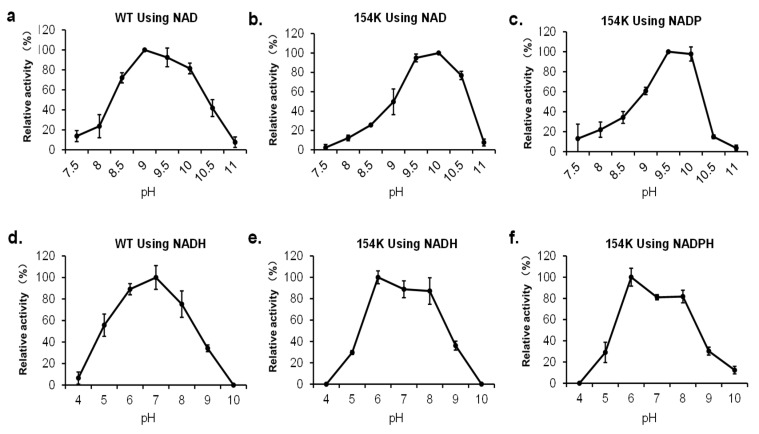 Figure 8
Peer Reviews
No public reviews on file for this paper yet. If you reviewed it on a platform where reviews are public (OpenReview, ICLR, NeurIPS, ICML), you can paste yours below so the community can read it here.
Videos
No videos yet. Explain this paper in a talk, walkthrough, or lecture? Add one.
Taxonomy
TopicsPlant biochemistry and biosynthesis · Microbial Metabolic Engineering and Bioproduction · Microbial Natural Products and Biosynthesis