Social Metamemory Judgments in the Legal Context: Examining Judgments About the Memory of Others
Rebecca K. Helm, Yan Chen

TL;DR
This study explores how well people can judge the memory accuracy of others in legal settings, finding that over-belief in eyewitness identifications is common and that certain strategies improve accuracy.
Contribution
The study introduces novel instructions and examines reasoning strategies to improve memory judgment accuracy in legal contexts.
Findings
People tend to over-believe the accuracy of eyewitness identifications.
Relying on what witnesses say rather than inferring from their statements improves judgment accuracy.
Some individual differences and beliefs about memory correlate with more accurate assessments.
Abstract
Jurors and other legal decision-makers are often required to make judgments about the likely memory accuracy of another person. Legal systems tend to presume that decision-makers are well-placed to make such judgments (at least in the majority of cases) as a result of their own experiences with memory. However, existing research highlights weaknesses in our abilities to assess the memories of others and suggests that these weaknesses are not easily ameliorated through the provision of information. In this work we examine the accuracy of layperson assessments of “real” eyewitness identifications following observation of a mock crime. We examine whether novel instructions, characteristics and beliefs of assessors, and underlying reasoning strategies are associated with improved or impaired judgment accuracy. The results support prior research in demonstrating a tendency towards…
Genes, proteins, chemicals, diseases, species, mutations and cell lines named across the full text — each resolved to its canonical identifier and authoritative record.
Click any figure to enlarge with its caption.
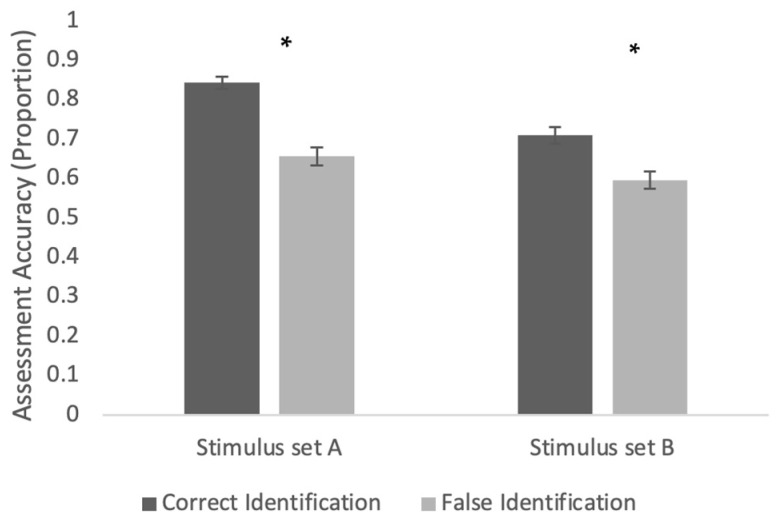 Figure 1
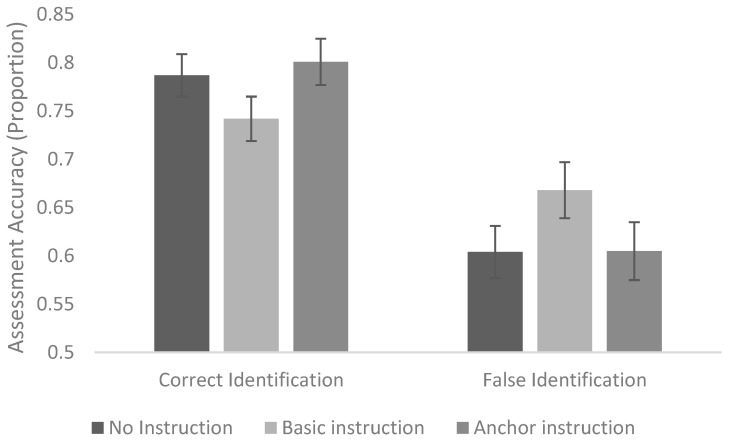 Figure 2
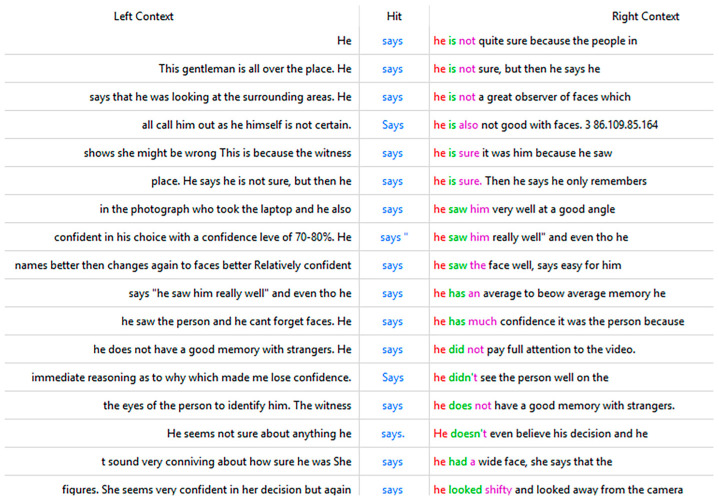 Figure 3
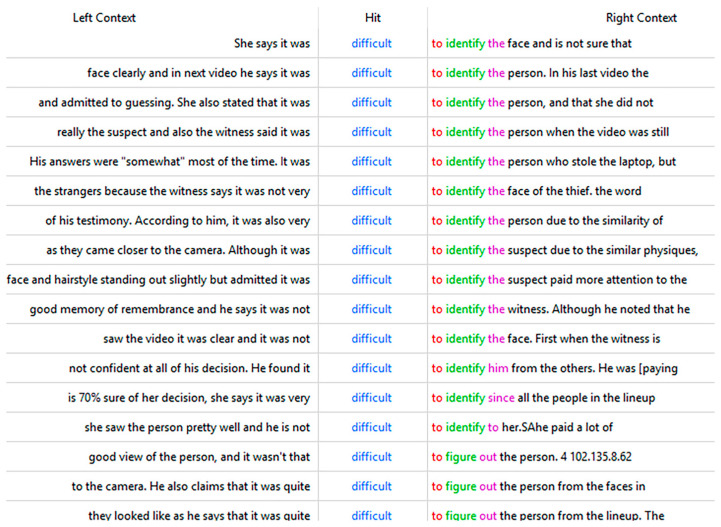 Figure 4
 Figure 5
 Figure 6
Peer Reviews
No public reviews on file for this paper yet. If you reviewed it on a platform where reviews are public (OpenReview, ICLR, NeurIPS, ICML), you can paste yours below so the community can read it here.
Videos
No videos yet. Explain this paper in a talk, walkthrough, or lecture? Add one.
Taxonomy
TopicsDeception detection and forensic psychology · Memory Processes and Influences · Jury Decision Making Processes