Preventive Gastroprotective Effect of a Functional Food Based on Quinoa (Chenopodium quinoa Willd.) and Quercetin in a Murine Model of Ibuprofen-Induced Gastric Damage
Maribel Valenzuela-González, José Luis Cárdenas-López, Armando Burgos-Hernández, Norma Julieta Salazar-López, Manuel Viuda-Martos, Mónica A. Villegas-Ochoa, Gustavo Martínez-Coronilla, J. Abraham Domínguez-Avila, Shela Gorinstein, Gustavo A. González-Aguilar

TL;DR
This study shows that a functional food made from quinoa and quercetin can help prevent stomach damage caused by ibuprofen in rats.
Contribution
The study introduces a novel functional food based on heat-treated quinoa and quercetin as a preventive gastroprotective alternative to omeprazole.
Findings
Microwaved quinoa cookies showed significantly higher antioxidant activity and bioaccessibility compared to non-treated quinoa cookies.
Diets with microwaved quinoa cookies and quercetin reduced gastric damage and improved histological outcomes in ibuprofen-treated rats.
Microwaved quinoa cookies increased plasma antioxidant enzyme activity more effectively than quercetin or omeprazole.
Abstract
Nonsteroidal anti-inflammatory drug-based therapies are the cause of 20–30% cases of gastric lesions in chronic users worldwide. Co-medication with omeprazole (OMP) is the most commonly used option to prevent these lesions, although this carries risks of its own; thus, alternatives are being explored, such as dietary antioxidant therapies. The objective of this study was to evaluate the gastroprotective activity of quinoa (Chenopodium quinoa Willd.) on ibuprofen (IBP)-induced gastric ulcers in a rat model. Quinoa cookies were formulated with heat-treated quinoa using microwave radiation. The intestinal bioaccessibility of phenols and flavonoids, and the antioxidant activity of microwaved quinoa cookies (MQCs) were notably higher than quinoa cookies without thermal treatment (RQCs): 132% TPC, 52% TFC, 1564% TEAC vs. 67% TPC, 24% TFC, and 958% TEAC, respectively. Basal diets were…
Genes, proteins, chemicals, diseases, species, mutations and cell lines named across the full text — each resolved to its canonical identifier and authoritative record.
Click any figure to enlarge with its caption.
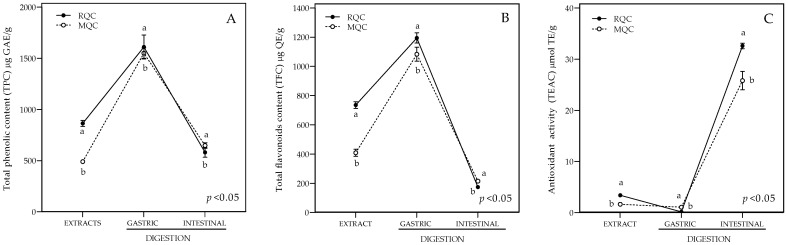 Figure 1
 Figure 2
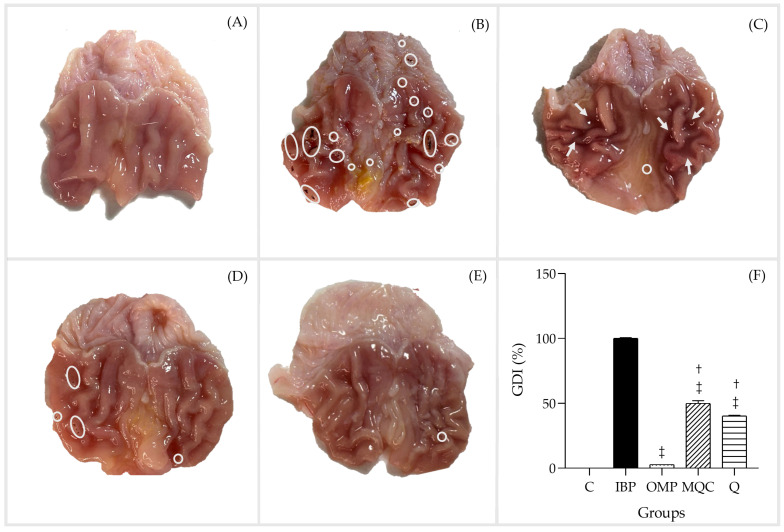 Figure 3
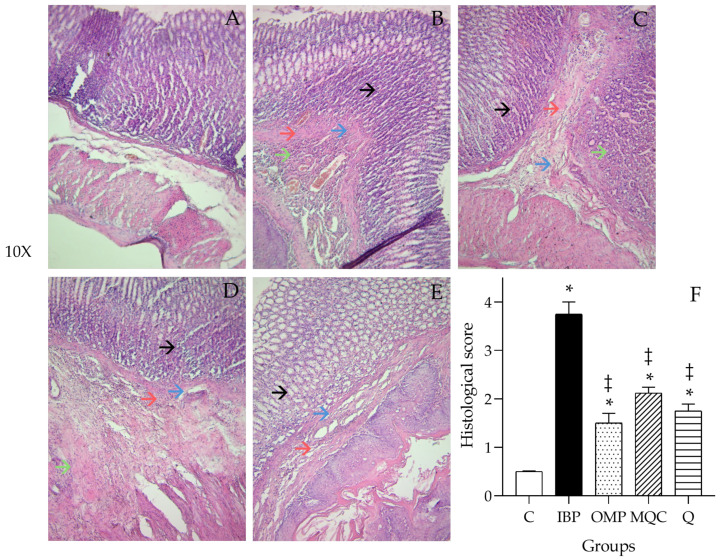 Figure 4
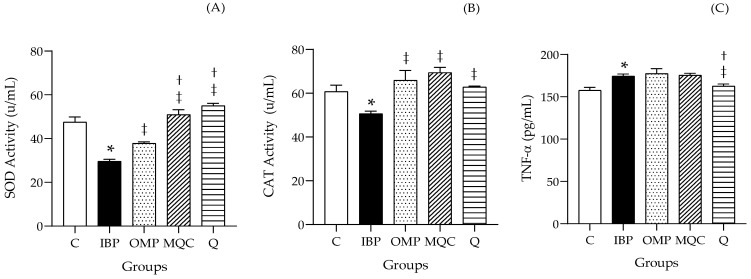 Figure 5
Peer Reviews
No public reviews on file for this paper yet. If you reviewed it on a platform where reviews are public (OpenReview, ICLR, NeurIPS, ICML), you can paste yours below so the community can read it here.
Videos
No videos yet. Explain this paper in a talk, walkthrough, or lecture? Add one.
Taxonomy
TopicsSeed and Plant Biochemistry · Microbial Metabolites in Food Biotechnology · Agriculture Sustainability and Environmental Impact