Inefficacy of Repetitive Transcranial Magnetic Stimulation in Parkinson’s Disease Patients with Levodopa-Induced Dyskinesias: Results from a Pilot Study
Alma Medrano-Hernández, Gabriel Neri-Nani, Mayela Rodríguez-Violante, René Drucker-Colín, Anahí Chavarría

TL;DR
A pilot study found that high-frequency repetitive transcranial magnetic stimulation did not improve motor symptoms in Parkinson’s patients with dyskinesias but showed some non-motor benefits.
Contribution
This study is the first to investigate HF-rTMS effects on both motor and non-motor symptoms in PD patients with levodopa-induced dyskinesias.
Findings
HF-rTMS caused slight worsening in motor and non-motor symptoms, including mood/cognition and gastrointestinal issues.
Positive effects were observed in reduced excessive sweating and weight.
No adverse effects were reported from the HF-rTMS protocol.
Abstract
Background: Parkinson’s disease (PD) presents a significant challenge due to its wide range of motor, non-motor, and treatment-related symptoms. Non-invasive interventions like transcranial magnetic stimulation (TMS) are being explored for potential therapeutic benefits. This study aimed to assess if a high-frequency repetitive TMS protocol (HF-rTMS) consisting of 10 trains of 100 pulses of rTMS at 25 Hz over the motor cortex (M1) at 80% of the resting motor threshold could be effective in treating motor or non-motor symptoms in patients with PD with levodopa-induced dyskinesias. Methods: A randomized, single-blinded, placebo-controlled pilot trial was conducted with eleven PD patients. Nine patients received HF-rTMS, while two received sham stimulation. Patients were exhaustively evaluated using validated clinical scales to assess motor and non-motor symptoms. The study followed a…
Genes, proteins, chemicals, diseases, species, mutations and cell lines named across the full text — each resolved to its canonical identifier and authoritative record.
Click any figure to enlarge with its caption.
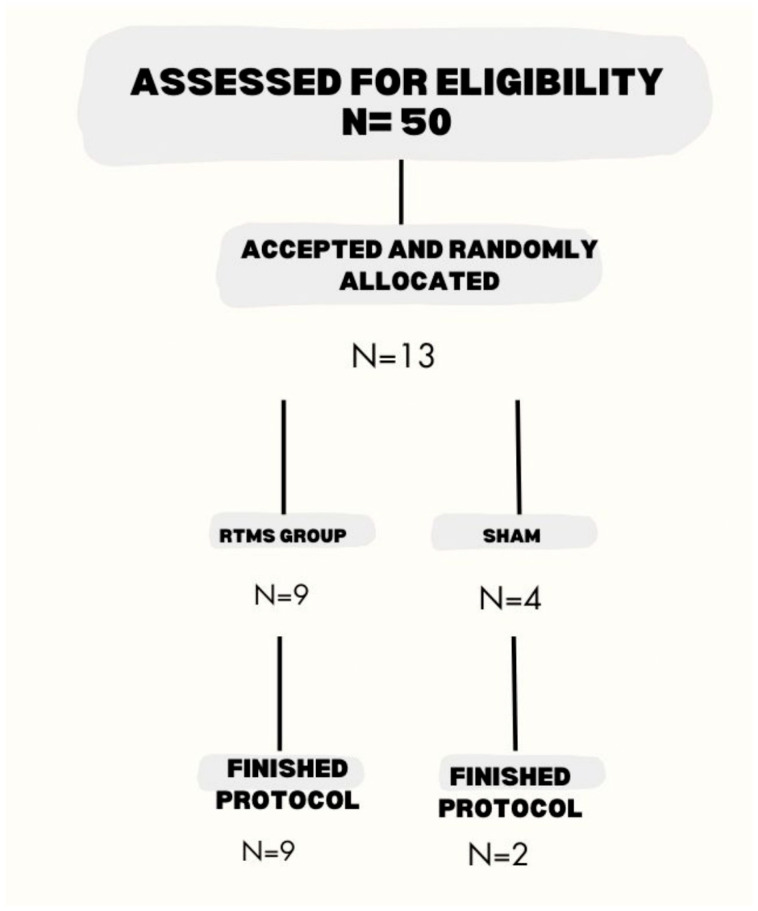 Figure 1
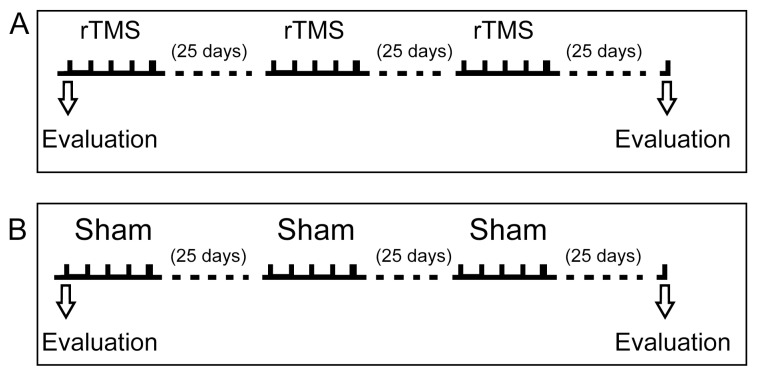 Figure 2
Peer Reviews
No public reviews on file for this paper yet. If you reviewed it on a platform where reviews are public (OpenReview, ICLR, NeurIPS, ICML), you can paste yours below so the community can read it here.
Videos
No videos yet. Explain this paper in a talk, walkthrough, or lecture? Add one.
Taxonomy
TopicsTranscranial Magnetic Stimulation Studies · Neurological disorders and treatments · Stroke Rehabilitation and Recovery