Urolithin A Protects Ovarian Reserve Via Inhibiting PI3K/Akt Signaling and Preventing Chemotherapy-Induced Follicle Apoptosis
Weiyong Wang, Ren Zhou, Yong Ruan, Shuhao Fan

TL;DR
Urolithin A, a gut metabolite, protects ovarian reserve by inhibiting cell signaling and reducing chemotherapy-induced follicle death, potentially preserving fertility in cancer patients.
Contribution
The study reveals Urolithin A's novel ability to inhibit PI3K/Akt signaling and reduce chemotherapy-induced apoptosis in ovarian follicles.
Findings
Urolithin A inhibits primordial follicle activation by downregulating PI3K/Akt signaling.
Urolithin A reduces chemotherapy-induced follicle apoptosis by decreasing DNA damage and apoptosis markers.
RNA-seq analysis shows Urolithin A downregulates DNA damage-related genes like Trp73 and Trim29.
Abstract
Urolithin A, which is a gut-derived metabolite, demonstrates broad therapeutic potential through lifespan extension, disease mitigation, oocyte quality improvement, and detoxification effects. In the study, Urolithin A inhibited granulosa cell proliferation, downregulated key oocyte growth signals (Gdf9, Zp3, and DDX4), and blocked PI3K/Akt signaling reactivity, which helps maintain primordial follicle dormancy. It also reduced cyclophosphamide (CY) and 4-hydroperoxy (4-HC)-induced follicle loss by decreasing DNA damage markers (Trp73 and Trim29) and apoptosis signals (Caspase-3 and PARP1). These findings suggest that Urolithin A could help preserve fertility in women undergoing chemotherapy. Urolithin A, which is a natural gut microbial metabolite, exerts multiple beneficial effects upon supplementation, including prolonging lifespan, mitigating diseases, restoring the quality of aged…
Genes, proteins, chemicals, diseases, species, mutations and cell lines named across the full text — each resolved to its canonical identifier and authoritative record.
Click any figure to enlarge with its caption.
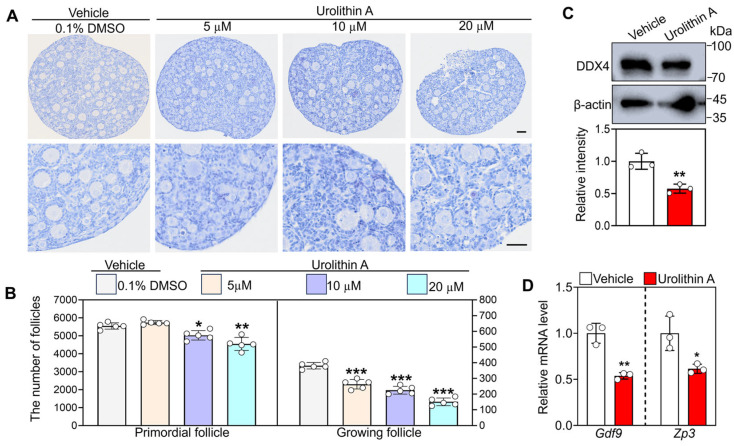 Figure 1
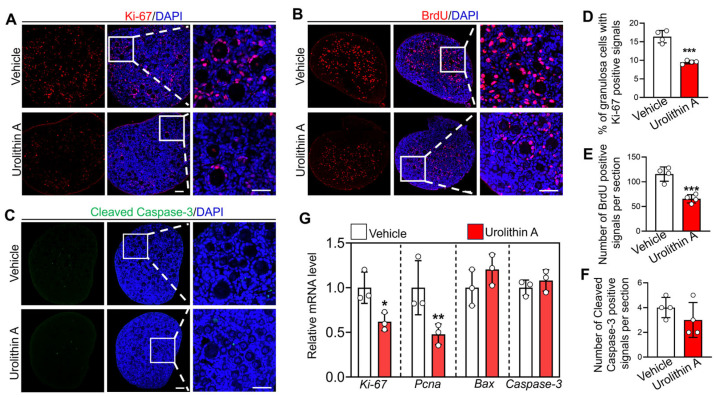 Figure 2
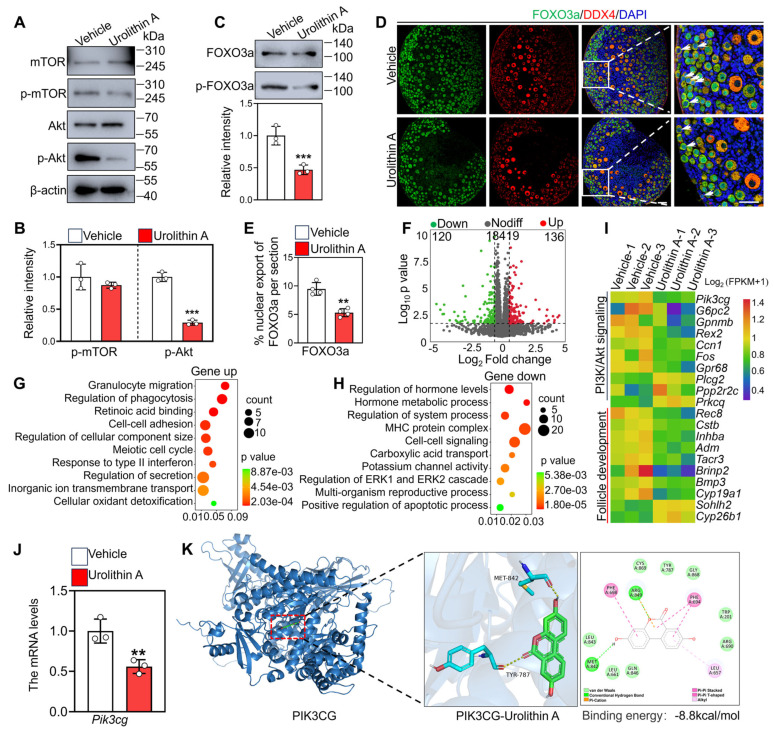 Figure 3
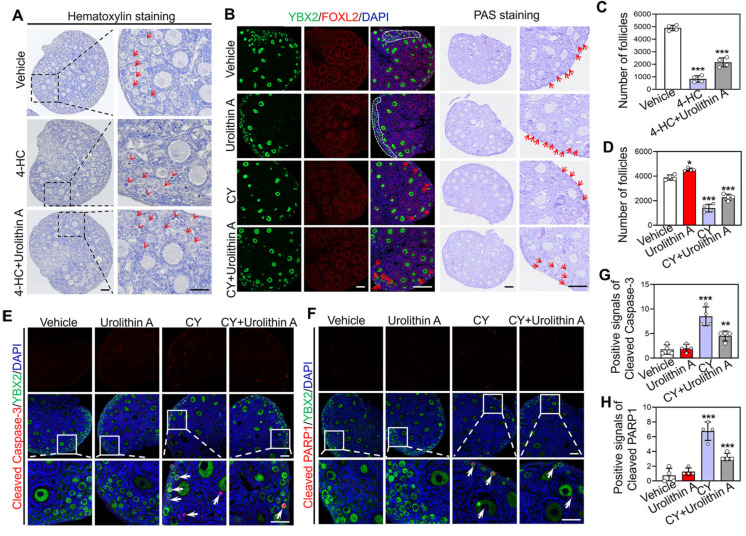 Figure 4
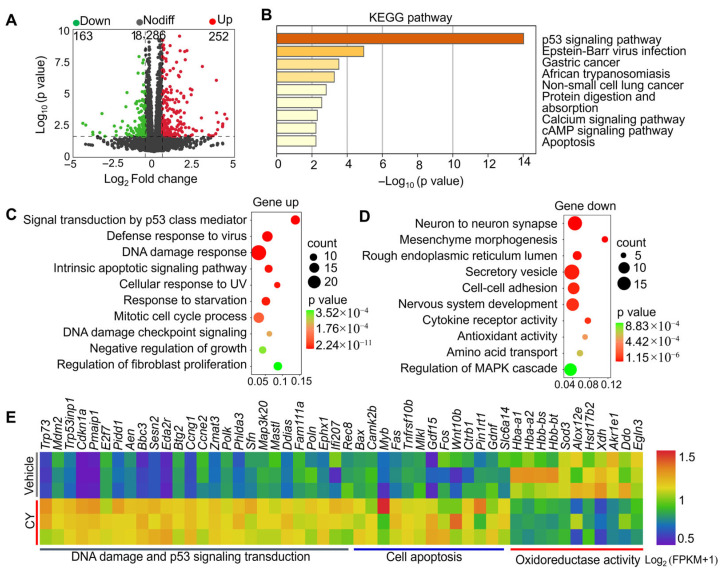 Figure 5
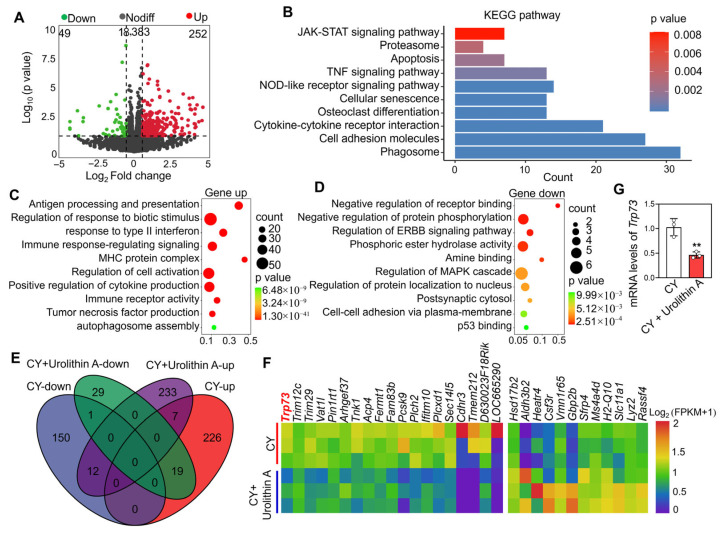 Figure 6
Peer Reviews
No public reviews on file for this paper yet. If you reviewed it on a platform where reviews are public (OpenReview, ICLR, NeurIPS, ICML), you can paste yours below so the community can read it here.
Videos
No videos yet. Explain this paper in a talk, walkthrough, or lecture? Add one.
Taxonomy
TopicsPomegranate: compositions and health benefits · Cynara cardunculus studies · Paraoxonase enzyme and polymorphisms