Three-Month Durability of Bilateral Two-Level Stellate Ganglion Blocks for Traumatic Brain Injury: A Retrospective Analysis
Sean W. Mulvaney, Sanjay Mahadevan, Roosevelt J. Desronvilles, Kyle J. Dineen, Kristine L. Rae Olmsted

TL;DR
This study found that a specific nerve block treatment can significantly reduce symptoms of traumatic brain injury for three months, with similar results in men and women.
Contribution
The study demonstrates the three-month durability of bilateral two-level stellate ganglion blocks for chronic TBI symptoms using NSI scores.
Findings
85.36% of patients showed improvement in NSI scores after treatment.
Patients experienced a 48.44% average decrease in total NSI scores from baseline.
No sex-based differences in treatment outcomes were observed.
Abstract
Background/Objectives: The primary aim of the study was to determine if ultrasound-guided, bilateral, two-level stellate ganglion blocks (SGBs), also known as two-level cervical sympathetic chain blocks (2LCSBs), performed on subsequent days, improve symptoms of chronic mild Traumatic Brain Injury (TBI) over a three-month period, as assessed by the Neurobehavioral Symptom Inventory (NSI). A secondary objective was to evaluate sex-based differences in outcomes during the same time period. Methods: A retrospective chart review was conducted between January 2024 and February 2025. We identified 41 patients who received bilateral 2LCSB for chronic (at least 3 months) TBI-related neurobehavioral symptoms as determined by NSI scores. NSI scores were collected at baseline, one week, one month, two months, and three months post treatment in 28 males and 13 females. An analysis of NSI scores and…
Genes, proteins, chemicals, diseases, species, mutations and cell lines named across the full text — each resolved to its canonical identifier and authoritative record.
Click any figure to enlarge with its caption.
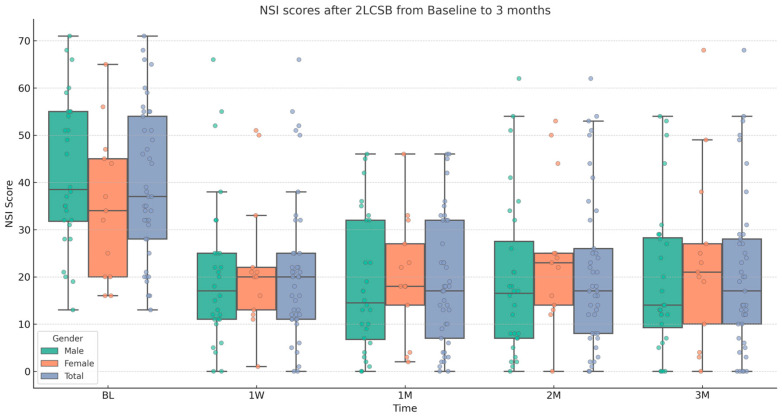 Figure 1
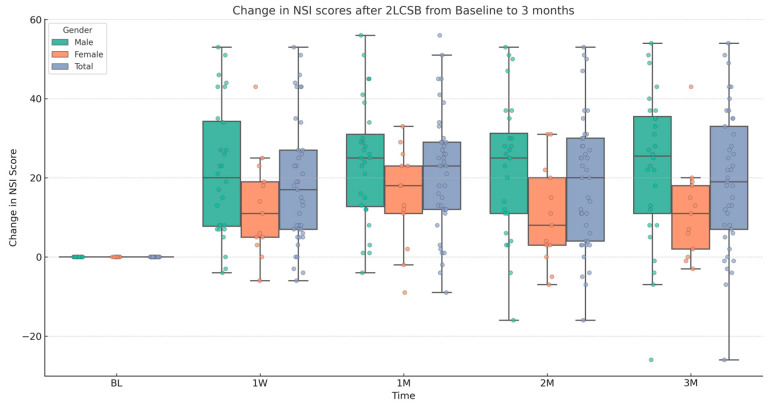 Figure 2
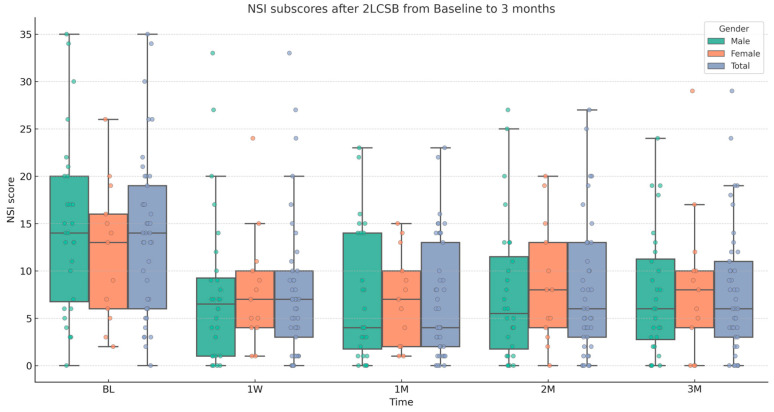 Figure 3
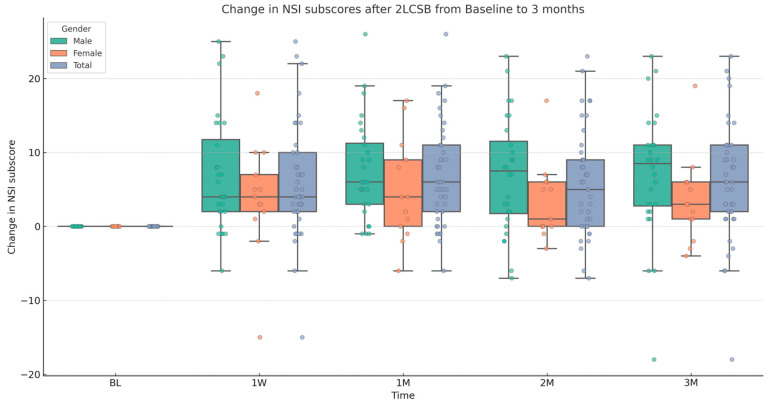 Figure 4
Peer Reviews
No public reviews on file for this paper yet. If you reviewed it on a platform where reviews are public (OpenReview, ICLR, NeurIPS, ICML), you can paste yours below so the community can read it here.
Videos
No videos yet. Explain this paper in a talk, walkthrough, or lecture? Add one.
Taxonomy
TopicsTraumatic Brain Injury Research · Musculoskeletal pain and rehabilitation · Traumatic Brain Injury and Neurovascular Disturbances