Differential Effects of Hazardous Drinking on Post-Traumatic Stress Disorder Outcomes Across Two Prolonged Exposure Treatment Formats
Casey L. Straud, Kiara H. Buccellato, Edna B. Foa, Lily A. Brown, Carmen P. McLean, Tabatha H. Blount, Richard P. Schobitz, Bryann B. DeBeer, Joseph Mignogna, Brooke A. Fina, Brittany N. Hall-Clark, Christian C. Schrader, Jeffrey S. Yarvis, Vanessa M. Jacoby, Wyatt R. Evans

TL;DR
This study explores how hazardous drinking affects PTSD treatment outcomes in military personnel and veterans undergoing prolonged exposure therapy.
Contribution
The study reveals that while hazardous drinking reduces treatment benefits, prolonged exposure remains effective even for individuals with hazardous drinking.
Findings
Individuals without hazardous drinking showed greater PTSD symptom reductions compared to those with hazardous drinking.
Hazardous drinkers still experienced significant PTSD and drinking reductions after treatment.
Treatment outcomes did not differ based on the format of prolonged exposure therapy.
Abstract
Individuals with post-traumatic stress disorder (PTSD) are at increased risk for hazardous drinking, which often complicates treatment and affects trauma-focused psychotherapy outcomes. The present study is an exploratory, secondary analysis investigating differential effects of prolonged exposure (PE) among those with and without hazardous drinking and whether treatment outcomes varied across these groups as a function of PE format. Data used were from a randomized controlled trial that examined two daily, compressed formats of PE treatment for PTSD (massed and intensive outpatient program) in military personnel and veterans (N = 234). Individuals without hazardous drinking had greater PTSD symptom reductions compared to those with hazardous drinking (d = 0.42, p = 0.001). However, the hazardous drinking group also demonstrated significant reductions in PTSD (d = 1.46, p < 0.001)…
Genes, proteins, chemicals, diseases, species, mutations and cell lines named across the full text — each resolved to its canonical identifier and authoritative record.
Click any figure to enlarge with its caption.
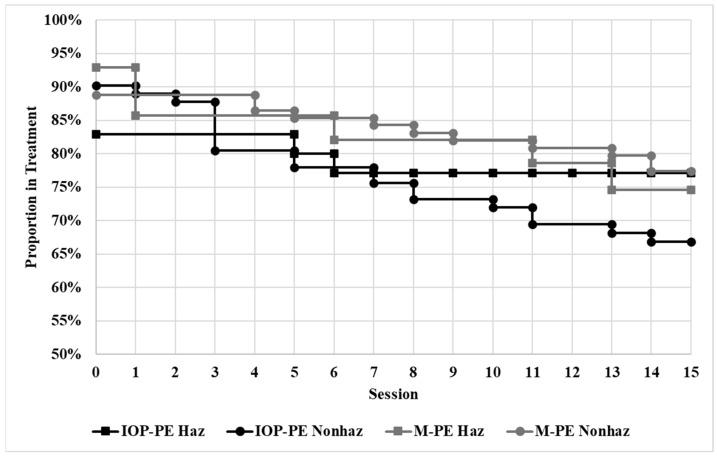 Figure 1
Peer Reviews
No public reviews on file for this paper yet. If you reviewed it on a platform where reviews are public (OpenReview, ICLR, NeurIPS, ICML), you can paste yours below so the community can read it here.
Videos
No videos yet. Explain this paper in a talk, walkthrough, or lecture? Add one.
Taxonomy
TopicsPosttraumatic Stress Disorder Research · Migration, Health and Trauma · Child Abuse and Trauma