Is It Really Over?
Svyat Strokov, Nathalie Cardot‐Leccia, Hélène Raybaud, Sophie‐Myriam Dridi, Christine Voha

Abstract
Genes, proteins, chemicals, diseases, species, mutations and cell lines named across the full text — each resolved to its canonical identifier and authoritative record.
Click any figure to enlarge with its caption.
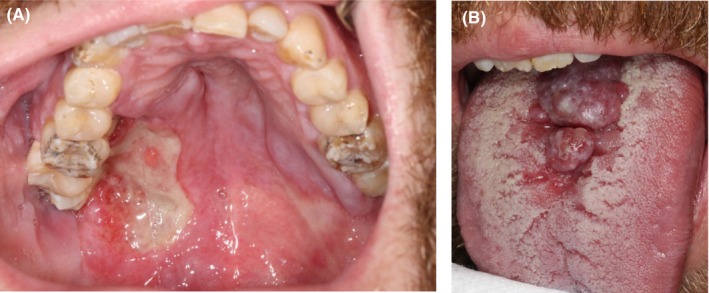 FIGURE 1
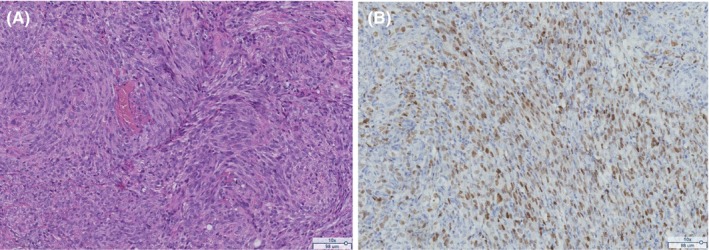 FIGURE 2
Peer Reviews
No public reviews on file for this paper yet. If you reviewed it on a platform where reviews are public (OpenReview, ICLR, NeurIPS, ICML), you can paste yours below so the community can read it here.
Videos
No videos yet. Explain this paper in a talk, walkthrough, or lecture? Add one.
Taxonomy
TopicsViral-associated cancers and disorders
Case Report
1
A 32‐year‐old Eastern European man presents with a painless palatal ulcer and a red swelling on the tongue of 3 months' duration. He denies any significant medical history, avoids tobacco and drinks alcohol occasionally. He discloses a history of multiple homosexual encounters. Clinical examination reveals a large and deep ulcer on the right hard palate, extending into the soft palate. The adjacent teeth show marked mobility. Laboratory investigations revealed seropositivity for HIV‐1 (140 copies/mL), a CD4 T‐cell count of 464/mm^3^ and coinfection with hepatitis A virus, cytomegalovirus and syphilis. Incisional biopsy was performed and showed that both palatal and lingual lesions had similar histological features (Figure 1).
Clinical photography showing an extensive and deep ulcer occurring on the hard and soft palate (A), and a red multilobulated swelling occurring on the dorsal surface of the tongue (B).
What is Your Diagnosis?
2
Based on the patient's history, physical examination and laboratory findings, which one of the following is the most suspicious diagnosis?
- Necrotising sialometaplasia;
- Squamous cell carcinoma;
- Kaposi Sarcoma;
- Histoplasmosis; and
Diagnosis
3
The final diagnosis was consistent with Kaposi's sarcoma involving the tongue and palate. The biopsy showed a tumour composed of spindle cells arranged in a fascicular architecture and expressing HHV‐8, ruling out other clinical differential diagnoses.
The duration of the ulceration (3 months) helps to exclude necrotising sialometaplasia. The absence of alcohol and tobacco intoxication and the young age of the patient do not support the diagnosis of squamous cell carcinoma. The ethnic origin of the patient and the absence of general symptoms (fever, fatigue, respiratory symptoms, etc.) do not immediately suggest histoplasmosis. Finally, ulcers associated with primary syphilitic chancre are typically less deep and do not result in bone destruction or tooth mobility.
Kaposi's sarcoma is classified as a low‐grade angiosarcoma that is consistently associated with human herpesvirus 8 (HHV‐8) infection. There are four types of Kaposi's sarcoma, with two indolent subtypes: classical Kaposi's sarcoma, which affects Mediterranean populations, and endemic African Kaposi's sarcoma. The two aggressive forms are associated with immunosuppression, either iatrogenic (following organ transplantation or immunosuppressive treatment) or viral in origin (related to HIV infection) (Bishop and Lynch 2024). In the case presented, it is an epidemic form associated with HIV seropositivity. Its polymorphic clinical presentation may mimic many other diseases, as it may manifest as macules, plaques or violaceous nodules, as well as nonspecific ulcerations (Shetty 2006).
The most common histological finding is bundles of spindle cells dissecting vascular spaces. These cells consistently express HHV‐8, which is of great diagnostic value as some forms may be confused with simple pyogenic granulomas. Treatment consists primarily of starting antiretroviral therapy as early as possible. Additional treatments (surgery, radiotherapy or chemotherapy) may be considered to reduce local symptoms or in severe and disseminated forms (Thieringer et al. 2021). The overall outcome is influenced by treatment, viral load, CD4 cell count, CD4/CD8 ratio and nadir CD4 cell count (Bishop and Lynch 2024). Despite the significant decline in AIDS‐related Kaposi's sarcoma following the introduction of antiretroviral therapy in 1996, Kaposi's sarcoma remains the most common cancer associated with HIV (Yarchoan and Uldrick 2018; Guedes et al. 2021). Dental practitioners must remain cautious and consider Kaposi sarcoma as a possible differential diagnosis, including non‐nodular ulcerated lesions (Figure 2).
(A) Photomicrograph (HE, original magnification 100×) showing bundles of spindle cells dissecting vascular slit‐like spaces. (B) Photomicrograph (anti‐HHV‐8, original magnification 100×) showing a diffuse expression of HHV‐8 by the neoplastic spindle cells.
Outcome
4
The patient is managed in a multidisciplinary approach in consultation with an infectious disease specialist, and antiretroviral treatment consisting of lopinavir–ritonavir and lamivudine is initiated. After 3 months of follow‐up, he remains alive with a significant reduction in oral ulceration.
Author Contributions
Svyat Strokov: formal analysis, investigation, conceptualization, writing – review and editing. Nathalie Cardot‐Leccia: validation, writing – review and editing. Hélène Raybaud: methodology, validation, visualization. Sophie‐Myriam Dridi: methodology, validation, writing – review and editing. Christine Voha: conceptualization, validation, methodology.
Consent
The patient reported in this manuscript provided written informed consent for the publication of the case details.
Conflicts of Interest
The authors declare no conflicts of interest.
The reference list from the paper itself. Each links out to its DOI / PubMed record.
- 1Bishop, B. N. , and D. T. Lynch . 2024. “Kaposi Sarcoma.” In Stat Pearls. Treasure Island, FL: Stat Pearls Publishing. http://www.ncbi.nlm.nih.gov/books/NBK 534839/.30521260 · pubmed ↗
- 2Guedes, P. T. L. , F. S. C. Pontes , A. C. Prado‐Ribeiro , et al. 2021. “HIV‐Positive Patients With Oral Kaposi's Sarcoma: An Overall Survival Analysis of 31 Patients.” Oral Surgery, Oral Medicine, Oral Pathology and Oral Radiology 131, no. 6: 702–710.33741283 10.1016/j.oooo.2020.11.007 · doi ↗ · pubmed ↗
- 3Shetty, K. 2006. “Disseminated Oral Kaposi Sarcoma Lesion With Extensive Visceral Involvement.” Oral Oncology Extra 42, no. 1: 18–21.
- 4Thieringer, F. M. , J. Cede , K. Glatz , S. Roehling , M. Stoeckle , and C. S. Leiggener . 2021. “Oral Kaposi's Sarcoma: A Case Report and Literature Review on Treatment Management.” Craniomaxillofacial Trauma & Reconstruction Open 6: 247275122110363.
- 5Yarchoan, R. , and T. S. Uldrick . 2018. “HIV‐Associated Cancers and Related Diseases. Longo DL, éditeur.” New England Journal of Medicine 378, no. 11: 1029–1041.29539283 10.1056/NEJ Mra 1615896 PMC 6890231 · doi ↗ · pubmed ↗