Pest categorisation of Coccus viridis
Antonio Vicent Civera, Paula Baptista, Anna Berlin, Elisavet Chatzivassiliou, Jaime Cubero, Nik Cunniffe, Eduardo de la Peña, Nicolas Desneux, Francesco Di Serio, Anna Filipiak, Paolo Gonthier, Beata Hasiów‐Jaroszewska, Hervé Jactel, Blanca B. Landa, Lara Maistrello

TL;DR
This paper assesses the risk of Coccus viridis, a coffee scale insect, becoming a pest in the EU and concludes it could establish in greenhouses and impact agriculture.
Contribution
The study provides a pest categorization of Coccus viridis for the EU, highlighting its potential as a quarantine pest.
Findings
Coccus viridis is a polyphagous pest with over 200 host plant genera.
It could establish in southern and central EU greenhouses despite uncertainties about outdoor survival.
Phytosanitary measures can reduce its entry and spread.
Abstract
The EFSA Panel on Plant Health performed a pest categorisation of Coccus viridis (Hemiptera: Coccidae), the green coffee scale, for the territory of the European Union (EU), following the commodity risk assessment of Jasminum polyanthum from Uganda, in which C. viridis was identified as a pest of possible concern to the EU. Coccus viridis is distributed in tropical and subtropical areas of the Americas, Africa, Asia and Oceania. In the EU, C. viridis occurs on the Azores and Madeira Islands (Portugal). It is a polyphagous pest, feeding on plant species belonging to more than 200 genera from 72 plant families, primarily on coffee (Coffea arabica), guava (Psidium guajava) and cacao (Theobroma cacao) plants. Hosts that are grown in the EU include Apium graveolens, Citrus spp., Eriobotrya japonica, Eucalyptus camaldulensis, Mangifera indica, Pyrus communis and some ornamental plants. Plants…
Genes, proteins, chemicals, diseases, species, mutations and cell lines named across the full text — each resolved to its canonical identifier and authoritative record.
Click any figure to enlarge with its caption.
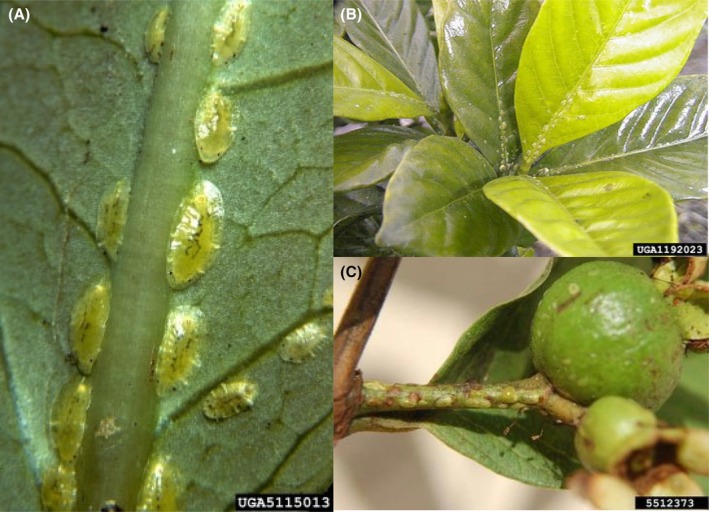 FIGURE 1
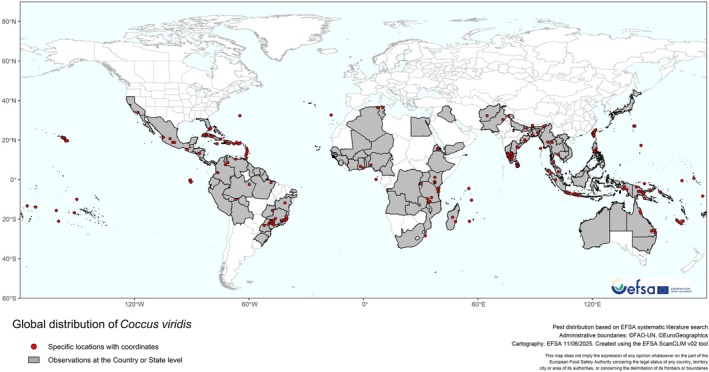 FIGURE 2
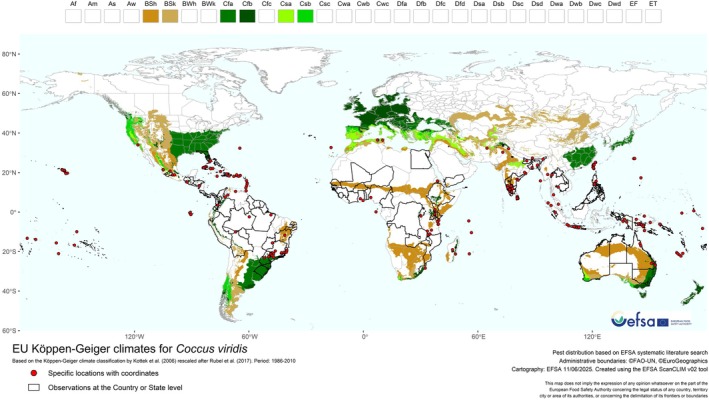 FIGURE 3
|
| Criterion in Regulation (EU) 2016/2031 regarding Union quarantine pest (article 3) |
|
| Is the identity of the pest clearly defined, or has it been shown to produce consistent symptoms and to be transmissible? |
|
|
Is the pest present in the EU territory? If present, is the pest in a limited part of the EU or is it scarce, irregular, isolated or present infrequently? If so, the pest is considered to be not widely distributed. |
|
| Is the pest able to enter into, become established in, and spread within, the EU territory? If yes, briefly list the pathways for entry and spread. |
|
| Would the pests' introduction have an economic or environmental impact on the EU territory? |
|
| Are there measures available to prevent pest entry, establishment, spread or impacts? |
|
| A statement as to whether (1) all criteria assessed by EFSA above for consideration as a potential quarantine pest were met and (2) if not, which one(s) were not met. |
|
| |||
|---|---|---|---|
|
|
|
| |
| 8. | Plants for planting of […] |
ex 0602 10 90 ex 0602 20 20 ex 0602 20 80 ex 0602 40 00 ex 0602 90 41 ex 0602 90 45 ex 0602 90 46 ex 0602 90 47 ex 0602 90 48 ex 0602 90 50 ex 0602 90 70 ex 0602 90 91 ex 0602 90 99 | Third countries other than Albania, Andorra, Armenia, Azerbaijan, Belarus, Bosnia and Herzegovina, Canary Islands, Faeroe Islands, Georgia, Iceland, Liechtenstein, Moldova, Monaco, Montenegro, North Macedonia, Norway, Russia (only the following parts: Central Federal District (Tsentralny federalny okrug), Northwestern Federal District (Severo‐ Zapadny federalny okrug), Southern Federal District (Yuzhny federalny okrug), North Caucasian Federal District (Severo‐Kavkazsky federalny okrug) and Volga Federal District (Privolzhsky federalny okrug)), San Marino, Serbia, Switzerland, Türkiye, Ukraine and the United Kingdom |
| 9. | Plants for planting of […] |
ex 0602 10 90 ex 0602 20 20 ex 0602 90 30 ex 0602 90 41 ex 0602 90 45 ex 0602 90 46 ex 0602 90 48 ex 0602 90 50 ex 0602 90 70 ex 0602 90 91 ex 0602 90 99 | Third countries other than Albania, Algeria, Andorra, Armenia, Australia, Azerbaijan, Belarus, Bosnia and Herzegovina, Canada, Canary Islands, Egypt, Faeroe Islands, Georgia, Iceland, Israel, Jordan, Lebanon, Libya, Liechtenstein, Moldova, Monaco, Montenegro, Morocco, New Zealand, North Macedonia, Norway, Russia (only the following parts: Central Federal District (Tsentralny federalny okrug), Northwestern Federal District (Severo‐Zapadny federalny okrug), Southern Federal District (Yuzhny federalny okrug), North Caucasian Federal District (Severo‐ Kavkazsky federalny okrug) and Volga Federal District (Privolzhsky federalny okrug)), San Marino, Serbia, Switzerland, Syria, Tunisia, Türkiye, Ukraine, the United Kingdom and United States other than Hawaii |
| 11. | Plants of |
ex 0602 10 90 ex 0602 20 20 0602 20 30 ex 0602 20 80 ex 0602 90 45 ex 0602 90 46 ex 0602 90 47 ex 0602 90 50 ex 0602 90 70 ex 0602 90 91 ex 0602 90 99 ex 0604 20 90 ex 1404 90 00 | All third countries |
| Pathways | Life stage | Relevant mitigations [e.g. prohibitions (annex VI), special requirements (Annex VII) or phytosanitary certificates (annex XI) within Implementing Regulation 2019/2072] |
|---|---|---|
| Plants for planting | All life stages |
Plants for planting that are hosts of Plants for planting from third countries require a phytosanitary certificate (Regulation 2019/2072, Annex XI, Part A). Some hosts are considered high‐risk plants (EU 2018/2019) for the EU and their import is prohibited subject to risk assessment. |
| Fruits, vegetables and cut flowers | All life stages | Fruits, vegetables and cut flowers from third countries require a phytosanitary certificate to be imported into the EU (2019/2072, Annex XI, Part A). However, no requirements are specified for C. viridis. |
| Harvested area (1000 ha) | ||||||
|---|---|---|---|---|---|---|
| Crop | Code | 2019 | 2020 | 2021 | 2022 | 2023 |
|
| V2200 | : | : | 8.27 | 7.83 | 7.84 |
|
| T0000 | 512.83 | 522.10 | 519.96 | 520.86 | 523.71 |
|
| F1120 | 110.66 | 108.29 | 106.96 | 103.11 | 100.53 |
| Control measure/risk reduction option | RRO summary | Risk element targeted (entry/establishment/spread/impact) |
|---|---|---|
|
| Pest‐free place of production (e.g. the place of production and its immediate vicinity is free from the pest over an appropriate time period, e.g. since the beginning of the last complete cycle of vegetation, or past 2 or 3 cycles). Pest‐free production site. | Entry/Establishment/Spread |
|
| The plants originate in a place of production with complete physical isolation from the pest. | Entry (reduce infestation)/ Establishment/Spread |
|
| Used to mitigate likelihood of infestation at origin. Plants collected directly from natural habitats, have been grown, held and trained for at least two consecutive years prior to dispatch in officially registered nurseries, which are subject to an officially supervised control regime. | Entry (reduce infestation)/Establishment/Spread |
|
| Roguing is defined as the removal of infested plants and/or uninfested host plants in a delimited area, whereas pruning is defined as the removal of infested plant parts only without affecting the viability of the plant. | Entry/Spread/Impact |
|
|
Many natural enemies, including predators and parasitoids, have been identified for Furthermore, entomopathogenic fungi play an important role in restraining populations of Some of the parasitoid species that have been recorded to parasitize on | Entry/Impact |
|
|
Used to mitigate likelihood of infestation of pests susceptible to chemical treatments. The effectiveness of non‐systemic insecticides against soft scales may be reduced by the waxy coating of the adult. Mortality of | Entry/Establishment/Impact |
|
|
This risk mitigation measure deals with the following categories of physical treatments: irradiation/ionisation; mechanical cleaning (brushing, washing); sorting and grading; and removal of plant parts. This risk mitigation measure does not address heat and cold treatments. Following irradiation at 250 gray (Gy), prolonged survival of green scale, with 8.8%–11.4% of nymphs and up to 8.8% of crawlers remaining alive 3 months after irradiation An absorbed dose of 500, 750 or 1000 Gy caused 100% mortality in all stages of the green scale by 7, 6 and 3 weeks post‐treatment, respectively (Arvanitoyannis & Stratakos, | Entry/ Spread |
|
| The physical and chemical cleaning and disinfection of facilities, tools, machinery, facilities and other accessories (e.g., boxes, pots, hand tools). | Entry/Spread |
|
| Controlled temperature treatments aimed to kill or inactivate pests without causing any unacceptable prejudice to the treated material itself. This set of measures addresses: autoclaving; steam; hot water; hot air; cold treatment. | Entry/Spread |
|
| Treatment of plants by storage in a modified atmosphere (including modified humidity, O2, CO2, temperature, pressure). | Entry/Spread (via commodity) |
| Supporting measure | Summary | Risk element targeted (entry/establishment/spread/impact) |
|---|---|---|
|
| ISPM 5 (FAO, | Entry/Establishment/Spread/Impact |
|
| Examination, other than visual, to determine if pests are present using official diagnostic protocols. Diagnostic protocols describe the minimum requirements for reliable diagnosis of regulated pests. | Entry/Establishment/Spread |
|
|
According to ISPM 31, it is usually not feasible to inspect entire consignments, so phytosanitary inspection is performed mainly on samples obtained from a consignment. It is noted that the sampling concepts presented in this standard may also apply to other phytosanitary procedures, notably selection of units for testing. For inspection, testing and/or surveillance purposes the sample may be taken according to a statistically based or a non‐statistical sampling methodology. | Entry/Establishment |
|
| According to ISPM 5 (FAO, export certificate (import) plant passport (EU internal trade) | Entry/Establishment/Spread |
|
| Mandatory/voluntary certification/approval of premises is a process including a set of procedures and of actions implemented by producers, conditioners and traders contributing to ensure the phytosanitary compliance of consignments. It can be a part of a larger system maintained by the NPPO in order to guarantee the fulfilment of plant health requirements of plants and plant products intended for trade. Key property of certified or approved premises is the traceability of activities and tasks (and their components) inherent the pursued phytosanitary objective. Traceability aims to provide access to all trustful pieces of information that may help to prove the compliance of consignments with phytosanitary requirements of importing countries. | Entry/Spread |
|
| Plants come from within an approved propagation scheme and are certified pest free (level of infestation) following testing; used to mitigate against pests that are included in a certification scheme. | Entry/Spread |
|
| ISPM 5 defines a buffer zone as ‘an area surrounding or adjacent to an area officially delimited for phytosanitary purposes in order to minimise the probability of spread of the target pest into or out of the delimited area, and subject to phytosanitary or other control measures, if appropriate’ (ISPM 5). The objectives for delimiting a buffer zone can be to prevent spread from the outbreak area and to maintain a pest free production place (PFPP), site (PFPS) or area (PFA). | Spread |
|
| Surveillance to guarantee that plants and produce originate from a pest‐free area could be an option. | Establishment/Spread |
| Criterion of pest categorisation | Panel's conclusions against criterion in Regulation (EU) 2016/2031 regarding Union quarantine pest | Key uncertainties |
|---|---|---|
|
| The identity of the pest is clearly defined and |
|
|
|
|
|
|
|
|
|
|
| The introduction of the pest could cause yield and quality losses on several crops and reduce the value of ornamental plants. |
|
|
| There are measures available to prevent further entry, establishment and spread of |
|
|
| While the magnitude of impact in the EU is associated with an uncertainty, all criteria assessed by EFSA for consideration as a potential quarantine pest are met. | |
| Aspects of assessment to focus on/scenarios to address in future if appropriate: | ||
Peer Reviews
No public reviews on file for this paper yet. If you reviewed it on a platform where reviews are public (OpenReview, ICLR, NeurIPS, ICML), you can paste yours below so the community can read it here.
Videos
No videos yet. Explain this paper in a talk, walkthrough, or lecture? Add one.
Taxonomy
TopicsResearch on scale insects · Insect-Plant Interactions and Control · Insects and Parasite Interactions
INTRODUCTION
1
Background and Terms of Reference as provided by the requestor
1.1
Background
1.1.1
The new Plant Health Regulation (EU) 2016/2031, on the protective measures against pests of plants, is applying from 14 December 2019. Conditions are laid down in this legislation in order for pests to qualify for listing as Union quarantine pests, protected zone quarantine pests or Union regulated non‐quarantine pests. The lists of the EU regulated pests together with the associated import or internal movement requirements of commodities are included in Commission Implementing Regulation (EU) 2019/2072. Additionally, as stipulated in the Commission Implementing Regulation 2018/2019, certain commodities are provisionally prohibited to enter in the EU (high‐risk plants, HRP). EFSA is performing the risk assessment of the dossiers submitted by exporting to the EU countries of the HRP commodities, as stipulated in Commission Implementing Regulation 2018/2018. Furthermore, EFSA has evaluated a number of requests from exporting to the EU countries for derogations from specific EU import requirements.
In line with the principles of the new plant health law, the European Commission with the Member States is discussing monthly the reports of the interceptions and the outbreaks of pests notified by the Member States. Notifications of an imminent danger from pests that may fulfil the conditions for inclusion in the list of the Union quarantine pest are included. Furthermore, EFSA has been performing horizon scanning of media and literature.
As a follow‐up of the above‐mentioned activities (reporting of interceptions and outbreaks, HRP, derogation requests and horizon scanning), a number of pests of concern have been identified. EFSA is requested to provide scientific opinions for these pests, in view of their potential inclusion by the risk manager in the lists of Commission Implementing Regulation (EU) 2019/2072 and the inclusion of specific import requirements for relevant host commodities, when deemed necessary by the risk manager.
Terms of Reference
1.1.2
EFSA is requested, pursuant to Article 29(1) of Regulation (EC) No 178/2002, to provide scientific opinions in the field of plant health.
EFSA is requested to deliver 53 pest categorisations for the pests listed in Annex 1A, 1B, 1D and 1E (for more details see mandate M‐2021‐00027 on the Open.EFSA portal). Additionally, EFSA is requested to perform pest categorisations for the pests so far not regulated in the EU, identified as pests potentially associated with a commodity in the commodity risk assessments of the HRP dossiers (Annex 1C; for more details, see mandate M‐2021‐00027 on the Open.EFSA portal). Such pest categorisations are needed in the case where there are not available risk assessments for the EU.
When the pests of Annex 1A are qualifying as potential Union quarantine pests, EFSA should proceed to phase 2 risk assessment. The opinions should address entry pathways, spread, establishment, impact and include a risk reduction option analysis.
Additionally, EFSA is requested to develop further the quantitative methodology currently followed for risk assessment, in order to have the possibility to deliver an express risk assessment methodology. Such methodological development should take into account the EFSA Plant Health Panel Guidance on quantitative pest risk assessment and the experience obtained during its implementation for the Union candidate priority pests and for the likelihood of pest freedom at entry for the commodity risk assessment of high‐risk plants.
Interpretation of the Terms of Reference
1.2
Coccus viridis is one of a number of pests relevant to Annex 1C to the terms of reference (ToR) to be subject to pest categorisation to determine whether it fulfils the criteria of a potential Union quarantine pest for the area of the EU excluding Ceuta, Melilla and the outermost regions of Member States referred to in Article 355(1) of the Treaty on the Functioning of the European Union (TFEU), other than Madeira and the Azores, and so inform EU decision‐making as to its appropriateness for potential inclusion in the lists of pests of Commission Implementing Regulation (EU) 2019/ 2072. If a pest fulfils the criteria to be potentially listed as a Union quarantine pest, risk reduction options will be identified.
Additional information
1.3
This pest categorisation was initiated following the commodity risk assessment of Jasminum polyanthum unrooted cuttings from Uganda (EFSA PLH Panel, 2022), in which C. viridis was identified as a relevant non‐regulated EU pest of possible concern, which could potentially enter the EU on cuttings of J. polyanthum.
DATA AND METHODOLOGIES
2
Data
2.1
Information on pest status from NPPOs
2.1.1
In the context of the current mandate, EFSA is preparing pest categorisations for new/emerging pests that are not yet regulated in the EU. When an official pest status is not available in the European and Mediterranean Plant Protection Organization (EPPO) Global Database (EPPO, online), EFSA consults the NPPOs of the relevant Member States. To obtain information on the official pest status for Coccus viridis, EFSA has consulted the NPPOs of Italy and Portugal. The results of this consultation are presented in Section 3.2.2.
Literature search
2.1.2
A systematic literature search on C. viridis was conducted at the beginning of the categorisation (04‐06‐2024) in the ISI Web of Science and Scopus bibliographic database, using the scientific name of the pest, its synonyms and the international common names as search terms (for more details, see Appendix E). Papers relevant to the pest categorisation were reviewed, and further references and information were obtained from experts, as well as from citations within the references and grey literature.
Database search
2.1.3
Pest information, on host(s) and distribution, was extracted from the references collected in the systematic literature search mentioned above (Section 2.1.2). The CABI Database and the EPPO Global Database were consulted to double‐check the information retrieved through the data extraction.
Data about the import of commodity types that could potentially provide a pathway for the pest to enter the EU and about the area of hosts grown in the EU were obtained from EUROSTAT (Statistical Office of the European Union).
The EUROPHYT (EUROPHYT, online) and TRACES databases (TRACES‐NT, online) were consulted for pest‐specific notifications on interceptions and outbreaks. EUROPHYT is a web‐based network run by the Directorate General for Health and Food Safety (DG SANTÉ) of the European Commission as a subproject of PHYSAN (Phyto‐Sanitary Controls) specifically concerned with plant health information. TRACES is the European Commission's multilingual online platform for sanitary and phytosanitary certification required for the importation of animals, animal products, food and feed of non‐animal origin and plants into the European Union, and the intra‐EU trade and EU exports of animals and certain animal products. Up until May 2020, the EUROPHYT database managed notifications of interceptions of plants or plant products that do not comply with EU legislation, as well as notifications of plant pests detected in the territory of the Member States and the phytosanitary measures taken to eradicate or avoid their spread. The recording of interceptions switched from EUROPHYT to TRACES in May 2020.
GenBank was searched to determine whether it contained any nucleotide sequences for C. viridis which could be used as reference material for molecular diagnosis (www.ncbi.nlm.nih.gov/genbank/; Sayers et al., 2024).
Methodologies
2.2
The Panel performed the pest categorisation for C. viridis, following guiding principles and steps presented in the EFSA guidance on quantitative pest risk assessment (EFSA PLH Panel, 2018), the EFSA guidance on the use of the weight of evidence approach in scientific assessments (EFSA Scientific Committee, 2017), the protocol for pest categorisations as presented in the EFSA standard protocols for scientific assessments (Kertesz et al., 2024, EFSA PLH Panel, 2024) and the International Standards for Phytosanitary Measures No. 11 (FAO, 2013).
The criteria to be considered when categorising a pest as a potential Union quarantine pest (QP) are given in Regulation (EU) 2016/2031 Article 3 and Annex I, Section 1 of the Regulation. Table 1 presents the Regulation (EU) 2016/2031 pest categorisation criteria on which the Panel bases its conclusions. In judging whether a criterion is met, the Panel uses its best professional judgement (EFSA Scientific Committee, 2017) by integrating a range of evidence from a variety of sources (as presented above in Section 2.1) to reach an informed conclusion as to whether a criterion is satisfied.
The Panel's conclusions are formulated respecting its remit and particularly with regard to the principle of separation between risk assessment and risk management (EFSA founding regulation (EU) No 178/2002). Therefore, instead of determining whether the pest is likely to have an unacceptable impact, deemed to be a risk management decision, the Panel will present a summary of the observed impacts in the areas where the pest occurs, and make an expert knowledge elicitation about potential impacts in the EU. While the Panel may quote impacts reported from areas where the pest occurs in monetary terms, the Panel will seek to express potential EU impacts in terms of yield and quality losses and not in monetary terms, in agreement with the EFSA guidance on quantitative pest risk assessment (EFSA PLH Panel, 2018). Article 3 (d) of Regulation (EU) 2016/2031 refers to unacceptable social impact as a criterion for quarantine pest status. Assessing social impact is outside the remit of the Panel.
PEST CATEGORISATION
3
Identity and biology of the pest
3.1
Identity and taxonomy
3.1.1
Is the identity of the pest clearly defined, or has it been shown to produce consistent symptoms and/or to be transmissible?
Yes, the identity of the pest is clearly defined and Coccus viridis (Green, 1889) is the accepted scientific name.
Coccus viridis (Green) (Figure 1) is an insect within the order Hemiptera, suborder Sternorrhyncha and the family Coccidae. It is commonly known as green coffee scale, green scale, green shield scale and soft green scale (EPPO, online). Coccus viridis was originally described as Lecanium viride by Green in 1889 from specimens collected in Pundaluoya, Sri Lanka, on Coffea sp. (coffee). The current valid scientific name is Coccus viridis (García Morales et al., 2016).
The EPPO code1 (EPPO, 2019; Griessinger & Roy, 2015) for this species is COCCVI (EPPO, online).
Coccus viridis: (A) Adults on an Ixora sp. plant (Source: United States National Collection of Scale Insects Photographs, USDA Agricultural Research Service, Bugwood.org); (B, C) Infestation on Gardenia sp. and Psidium guajava host plants, respectively (Source: Anne W. Gideon; Plutarco Echegoyen, Bugwood.org; licensed under a Creative Commons Attribution‐Noncommercial 3.0 Licence).
Biology of the pest
3.1.2
Coccus viridis is an oviparous species and reproduces parthenogenetically via thelytoky (Fredrick, 1943; Rosado et al., 2014; Souza et al., 2023). The presence of males is very rare (Swirski et al., 1997; Waller et al., 2007). Eggs are laid beneath the female body where they are protected (Fredrick, 1943; Reddy et al., 2022) and hatch into nymphs from a few minutes to several hours after being laid (Dekle & Fasulo, 2001; Fredrick, 1943). Each female can produce between 50 and 600 eggs (Barrera, 2008; Reddy et al., 2022). There are three nymphal instars before becoming an adult (Mani, 2022; Souza et al., 2023). In citrus, the duration of development of the first, second and third instars takes about 10–15 days, 8–12 days and 8–12 days, respectively (Carvalho & Aguiar, 1997; Martinez & Sanchez, 1981). The first‐instar nymphs (crawlers) are active and responsible for searching and choosing the feeding location (Rosado et al., 2014). They settle along the lower surface of leaves close to the midrib and veins, as well as the petiole, stems, on young buds and fruits (Barrera, 2008; Figueroa‐Figueroa et al., 2023; Mani, 2022; Reddy et al., 2022). On the contrary, the older instar nymphs move very little, whereas the adults are motionless (Rosado et al., 2014). Laboratory rearing of C. viridis in Brazil at a temperature of 25°C showed that the life cycle from egg hatching to the first oviposition by the adult female lasts between 47 and 51 days (Silva & Parra, 1982).
Coccus viridis is reported to develop multiple generations per year (Souza et al., 2023). For instance, in Queensland, Australia, it completes three to four generations (García Morales et al., 2016; Smith et al., 1997), and in Taiwan, it completes four to five generations per year (Cheng & Tao, 1963). In South Florida, the developmental period from egg to egg‐depositing maturity during the late summer months averages 59–62 days, with reported variation ranging from 50 to 70 days (Fredrick, 1943). Crawler emergence is typically observed in September (Camacho & Chong, 2015). In Irapuato, Mexico, the highest number of C. viridis adults in guava occurred in winter, decreased in the rainy season (June–September) and increased in October, and the crawlers peaked in December–January (Salas‐Araiza et al., 2020). In West Bengal, India, Kar et al. (2023) observed C. viridis on dragon fruit from June until September–October.
Host range/species affected
3.1.3
Coccus viridis is polyphagous, feeding on 216 plant species assigned to 200 genera from 72 plant families (Appendix A provides a full host list) with preference for coffee (Coffea arabica), guava (Psidium guajava) and cacao (Theobroma cacao) (CABI, online; EPPO, online). Coccus viridis has also been reported on cashew (Anacardium occidentale), cassava (Manihot esculenta), citrus (Citrus sp.), coconut (Cocos nucifera), litchee (Litchi chinensis), loquat (Eriobotrya japonica), mango (Mangifera indica), papaya (Carica papaya), pear (Pyrus communis), pigeon pea (Cajanus cajan), pineapple (Ananas comosus), sapota (Manilkara zapota) and tea (Camellia sinensis). Moreover, it has been reported on ornamental plants such as Camellia sp., Ficus sp., Gardenia sp., Ixora sp., Jasminum sp. and Nerium oleander (García Morales et al., 2016).
Intraspecific diversity
3.1.4
To the best of the Panel's knowledge, no information on intraspecific diversity is reported for C. viridis.
Detection and identification of the pest
3.1.5
Are detection and identification methods available for the pest?
Yes. Visual detection is possible, and morphological and molecular identification methods are available.
Detection
Careful visual examination of plants and fruits is effective for detection of C. viridis presence. Accumulation of honeydew, sooty mould and honeydew‐seeking ants are general signs of phloem feeding insect infestations; they can be used to pinpoint the areas where plants may be inspected for the presence of soft scales (Camacho & Chong, 2015). Coccus viridis occurs on the upper and lower surfaces of leaves, young stems, and colonises flower buds and fruits (Barrera, 2008; Figueroa‐Figueroa et al., 2023; Mani, 2022; Reddy et al., 2022). Sticky traps around stems can be used to detect and monitor the crawlers (Bethke & Wilen, 2010; Siregar & Tulus, 2023).
Symptoms
Several studies have documented the main symptoms of C. viridis infestation (Bach, 1991; Figueroa‐Figueroa et al., 2023; Hara et al., 2002; Mani, 2018; Mani, 2022; Reddy et al., 2022; Reimer et al., 1993; Rosado et al., 2014; Siregar & Tulus, 2023; Souza et al., 2023; Swirski et al., 1997; Vranjic, 1997; Wuryantini et al., 2023; Yalemar, 1999):
- Honeydew presence egested by adults and immature stages;
- Black sooty mould growing on the honeydew;
- Leaf curling;
- Partial necrosis and wilting of twigs and leaves, and;
- Yellowing, defoliation, reduced plant growth and fruit production, dieback of the branches or the entire plant caused by heavy infestations.
These symptoms are similar to those caused by many other phloem‐feeding insects and should not be considered as diagnostic.
Identification
The identification of C. viridis requires microscopic examination of slide‐mounted female adults and verification of the presence of key morphological characteristics. Detailed morphological descriptions, illustrations and keys of adult C. viridis can be found in Choi et al. (2018), Granara de Willink et al. (2010), and Williams and Watson (1990). The molecular identification for C. viridis relies on DNA fragments from various genetic markers with reference sequences available in GenBank ([https://www.ncbi.nlm.nih.gov/nuccore/?term=txid589264organism:exp), including the mitochondrial cytochrome c oxidase subunit I (COI) gene, nuclear ribosomal genes (18S and 28S) and mitochondrial ribosomal genes(12S and 16S), as well as wingless (wg) and elongation factor 1‐alpha (EF‐1a) genes (Choi & Lee, 2020).
Description
The eggs are whitish green and elongate oval. The nymphs or immature green scales are oval, flat and yellowish green in colour, and have six short legs. The adult female is shiny pale green with a conspicuous black, irregular U‐shaped internal marking that is dorsally visible to the naked eye. Two submarginal black eye spots are also present and can be seen with a hand lens. The outline shape may be described as elongate‐oval and moderately convex. Dorsum with setae cylindrical, blunt apically; tubular ducts absent; duct tubercles present; and preopercular pores present anterior to anal plates. Marginal setae short, mostly with fimbriate apices. Venter with multilocular disc pores each usually with seven loculi; tubular ducts each with a broad inner ductule, frequent in medial area between mesocoxae, between metacoxae and occasionally a few present around each procoxa; pregenital setae numbering three pairs; antenna seven segmented; and legs each with a tibio‐tarsal articulatory sclerosis.
Pest distribution
3.2
Pest distribution outside the EU
3.2.1
Coccus viridis is thought to be either of Brazilian or East African origin (Bach, 1991; Hsieh et al., 2012; Murphy, 1991; Rivera‐Salinas et al., 2018). The present distribution of C. viridis includes tropical and subtropical regions in Africa, Asia, North, South and Central America and Oceania (Figure 2). Coccus viridis has been reported in 2010 in Cornwall, England, United Kingdom, within a greenhouse that resembles the environment of a tropical rainforest (Humid Tropic Biome at The Eden Project); its origin and pathway of introduction are unknown; however, its abundance within the greenhouse indicates that it may have been present there for several years (Malumphy & Treseder, 2012). For a detailed list of countries where C. viridis is present, see Appendix B.
Global distribution of Coccus viridis (Source: EFSA literature search; for details, see Appendix B). Data indicated are based on occurrences outdoors, and greenhouse occurrences are not indicated.
Pest distribution in the EU
3.2.2
Is the pest present in the EU territory? If present, is the pest in a limited part of the EU or is it scarce, irregular, isolated or present infrequently? If so, the pest is considered to be not widely distributed. Yes. Coccus viridis is present in a limited part of the EU territory. It has been recorded only on the Azores and Madeira Islands (Portugal).
In the EU, C. viridis is known to be present only on the Azores and Madeira Islands (Portugal) (EPPO, online; CABI, online; Franco et al., 2011; Swirski et al., 1997). The Portuguese NPPO confirmed that ‘the pest is present in Azores and Madeira Islands for a long time with few occurrences and does not occur in Portugal mainland. So far, no damage has been reported in Azores, and a few in Madeira, and official surveys not carried out’ (NPPO of Portugal, 2024).
Regulatory status
3.3
Commission Implementing Regulation 2019/2072
3.3.1
Coccus viridis is not listed in Annex II of Commission Implementing Regulation (EU) 2019/2072, an implementing act of Regulation (EU) 2016/2031, or in any emergency plant health legislation.
Hosts or species affected that are prohibited from entering the Union from third countries
3.3.2
According to the Commission Implementing Regulation (EU) 2019/2072, Annex VI, the introduction of several C. viridis hosts into the EU from certain third countries is prohibited (Table 2). Plants for planting of Albizia Durazz., Annona L., Cassia L., Diospyros L., Jasminum L., Nerium L. and Prunus L., which are hosts of C. viridis (Appendix A) are considered high‐risk plants for the EU and their import is prohibited pending risk assessment (EU 2018/2019). According to Commission Implementing Regulation (EU) 2022/1942 of 13 October 2022 amending Implementing Regulation (EU) 2018/2019, unrooted cuttings of Jasminum polyanthum Franchet originating in Uganda should no longer be considered high‐risk plants.
Entry, establishment and spread in the EU
3.4
Entry
3.4.1
Is the pest able to enter into the EU territory? If yes, identify and list the pathways. Yes, the pest has already entered the EU territory. It could further enter the EU with plants for planting, cut flowers, fruits and vegetables. Comment on plants for planting as a pathway.Plants for planting are considered one of the main pathways for C. viridis to enter the EU.
Plants for planting, cut flowers, fruits and vegetables are potential pathways for entry into the EU of C. viridis (Table 3). Plants for planting are considered one of the main pathways for C. viridis because of the wide host range and high diversity and large volumes of plants for planting being imported (Appendix C).
Notifications of interceptions of harmful organisms began to be compiled in EUROPHYT in May 1994 and in TRACES in May 2020. As of 31 May 2025, there were no records of interceptions of C. viridis in the EUROPHYT and TRACES databases.
Miller et al. (2014) report that C. viridis was intercepted 5332 times on a variety of hosts at USA ports of entry between 1995 and 2012 and is the most commonly intercepted soft scale taken at USA borders. These interceptions originated from American Samoa, Antigua and Barbuda, Aruba, Bahamas, Barbados, Colombia, Cook Islands, Costa Rica, Cuba, Dominica, Dominican Republic, Ecuador, El Salvador, Fiji, Grenada, Guatemala, Haiti, Hawaii, Honduras, India, Jamaica, Laos, Malaysia, Mexico, New Caledonia, Nicaragua, Pakistan, Panama, Peru, The Philippines, Puerto Rico, Spain, Sri Lanka, Suriname, St. Kitts and Nevis, St. Lucia, St. Maarten, St. Vincent and the Grenadines, Taiwan, Tahiti, Thailand, Togo, Tonga, Trinidad and Tobago, The U.S. Virgin Islands and Vietnam.
Malumphy and Treseder (2012) reported that C. viridis has been intercepted by the Plant Health and Seeds Inspectorate on plants imported into England on many occasions:
- East Riding of Yorkshire, wholesaler, on jasmine (Jasminum sp., Oleaceae) from Jamaica;
- Essex, London Stansted Airport, unidentified plant;
- Port of Tilbury, on lime fruit (Citrus aurantifolia (Christm.) Swingle, Rutaceae) from Brazil;
- Greater London, London Heathrow Airport, on mangosteen (Garcinia mangostana L., Clusiaceae) (new host) from Indonesia and Thailand, on Citrus sp. foliage from the Dominican Republic, and lime fruit from Brazil;
- Hampshire, flower importer, on Dracaena sp. (Asparagaceae) from Costa Rica;
- Portsmouth, on lime fruit from the Dominican Republic;
- London, wholesaler, on lime fruit from Brazil;
- West Sussex, Gatwick Airport, on Citrus sp. fruit from the Dominican Republic, and on lime fruit from Saint Lucia.
Establishment
3.4.2
Is the pest able to become established in the EU territory?
Yes. Southern and central EU countries most likely provide suitable climatic conditions for the establishment of C. viridis. However, there is uncertainty about its ability to establish stable outdoor populations in central EU. Nevertheless, there is a possibility that C. viridis could occur in greenhouses and on indoor plantings in such areas.
Climatic mapping is the principal method for identifying areas that could provide suitable conditions for the establishment of a pest taking key abiotic factors into account (Baker, 2002). The approach used in EFSA pest categorisations is based on the Köppen–Geiger climate classification (version of Kottek et al., 2006; Rubel et al., 2017) which identifies potentially suitable areas based on the climate types present in Europe. Availability of hosts is considered in Section 3.4.2.1. Climatic factors are considered in Section 3.4.2.2.
EU distribution of main host plants
3.4.2.1
Several host plants of C. viridis are present or are grown widely across the EU. Among others are Apium graveolens, Citrus spp., Eriobotrya japonica, Eucalyptus camaldulensis, Mangifera indica, Pyrus communis and some ornamental plants. The harvested area of host plants of C. viridis (available in EUROSTAT) in the EU between 2019 and 2023 is shown in Table 4.
Climatic conditions affecting establishment
3.4.2.2
Coccus viridis is currently widely distributed throughout the tropical and sub‐tropical regions of the world (Appendix B), in Africa, Asia, America and Oceania. Figure 3 shows the world distribution of Köppen–Geiger climate types (Rubel et al., 2017) that occur in the EU, and which occur in countries where C. viridis has been reported. Climate types of Cfc and Dfc were not included in Figure 3 due to their very limited occurrence in countries where C. viridis is present. The thermal biology of C. viridis has not been studied yet and therefore its thermal requirements and limits are not known. Based on Figure 3, southern and central EU countries most likely provide suitable climatic conditions for the establishment of C. viridis. However, since little is known about the pest's thermal biology and specific temperature requirements, and considering its tropical and subtropical origin, there is uncertainty about its ability to establish stable outdoor populations in central EU. Nevertheless, there is a possibility that C. viridis could occur in greenhouses and on indoor plantings in such areas.
World distribution of Köppen–Geiger climate types that occur in the EU and in countries where Coccus viridis has been reported (red dots indicate precise locations where the insect has been observed). Climate types Dfc and Cfc were removed due to their very limited occurrence in the distribution area of C. viridis.
Spread
3.4.3
Describe how the pest would be able to spread within the EU territory following establishment? Natural spread by first instar nymphs crawling or being carried by wind, or by hitchhiking on other animals, humans or machinery, can occur locally. All stages may be moved over longer distances by movement (including trade) of infested plants specifically plants for planting, cut flowers, fruits and vegetables. Comment on plants for planting as a mechanism of spread.Plants for planting is likely one of the main pathways for spread (see Section 3.4.1).
First‐instar nymphs (crawlers) may be carried to neighbouring plants by their own movement, wind (Vandermeer et al., 2019) or by hitchhiking on clothing, equipment or animals (EFSA PLH Panel, 2022). Movement (including trade) of infested plants for planting is likely the main pathway of spread of C. viridis over long distances (see Section 3.4.1).
Impacts
3.5
Would the pests' introduction have an economic or environmental impact on the EU territory?
Yes, if C. viridis established more widely in the EU, it would most probably have an economic impact, but the magnitude of impact is uncertain.
Coccus viridis is a polyphagous and serious pest of coffee, citrus and other crops in several regions, causing damage due to its feeding on the phloem and egesting sugary honeydew, which serves as a medium for the growth of sooty moulds (Almeida et al., 2018; Chiu, 1981; Dekle & Fasulo, 2001; Fernandes et al., 2012; Poole, 2005; Rosado et al., 2014; Smith et al., 2004; Souza et al., 2023). The infested leaves may curl up and tender twigs drop. This hinders photosynthesis, thereby weakening the plant (Reddy et al., 2022; Rosado et al., 2014). Fruits from infested plants and infested ornamental plants are becoming unmarketable due to the presence of honeydew and sooty mould (Mani, 2022; Wuryantini et al., 2023). In West Bengal, India, Kar et al. (2023) reported that C. viridis was found in both developing and ripening stages of dragon fruit with a population of 5–29 insects per fruit spike depending on the length of the spike. Coccus viridis has been reported to cause serious damage in Brazil to Arabica coffee (Coffea arabica) and robusta coffee (Coffea canephora) plants, especially to young plants and in dense plantations (Fernandes et al., 2012).
High infestation levels by C. viridis have also been reported on coffee plantations in Indonesia, where it reached 100% on sparsely shaded coffee plantations with an average of 109 individuals per twig, and in densely shaded coffee plantations with 52 individuals per twig (Syadida et al., 2024).
The green coffee scale is a major insect pest of coffee in Hawaii. Although it is usually of minor importance on healthy, mature coffee trees, it can become a serious pest of nursery stock and young trees (Reimer et al., 1993). Le Pelley (1968) cites records of heavy damage by C. viridis in Sri Lanka, Java, India, Réunion, Cuba, Jamaica, Suriname and Brazil (Waller et al., 2007). Sathish et al. (2024) reported that C. viridis incidence on sapota plants (Manilkara zapota) was recorded on average of 27.10 scales per five infected leaves per plant. Moreover, Mani et al. (2008) declared that among 25 insects known to attack sapota in India, the soft green scale is reported to cause severe loss and found a mean number of 30.72 scales per leaf on its peak month (May) in Bangalore. Severe infestations of mango trees by this coccid were recorded in Trinidad in the 1930s (Swirski et al., 1997). Infested plants, especially young trees (less than 2 years after transplant), suffer stunting, yellowing and/or loss of leaves and fruit drop (Hara et al., 2002; Mau & Kessing, 1999). Coccus viridis is considered an important pest of citrus in the Kodagu of India (Shivaramu & Pillai, 2012; Singh, 1995). In field trials performed in this area to test the efficacy of some pesticides against the pest, an infestation level of more than 64% was recorded in untreated plots of citrus (Shivaramu & Pillai, 2012). In Thailand, C. viridis damages citrus and has been reported as one of the most dominant scale insect species in citrus orchards (Nakao et al., 1977). In the Cerrados region of Brazil, C. viridis has been reported as an important pest of citrus, particularly affecting young trees (Murakami et al., 1984). A survey conducted between 2014 and 2017 in citrus orchards across the main citrus‐producing regions of São Paulo State, Brazil, identified C. viridis as the fourth most prevalent species among 22 scale insects, with infestations observed on 9% of the sampled citrus plants (Almeida et al., 2018). Moreover, Brugnara et al. (2022) reported an outbreak of sooty mould (Capnodium sp.) affecting the branches, leaves and fruits of citrus plants in the western region of Santa Catarina, Brazil, during a period of water deficiency in 2020–2021. The outbreak was associated with a high incidence of scale insects, predominantly C. viridis. In Lukore, Coast Province of Kenya, scale insects primarily Aonidiella aurantii and C. viridis have been reported as the dominant leaf‐feeding pests of orange trees, with average leaf infestation levels of 11% in young trees (5–6 years old) and 23% in older trees (17–20 years old) (Ekesi, 2015). In Australia, C. viridis is considered a pest of citrus. In 1999, the parasitoid Diversinervus sp. nr stramineus was introduced from Kenya and released in Queensland as a biological control agent (Smith et al., 1997; Waterhouse & Sands, 2001). The Department of Agriculture and Food of Western Australia has recommended an action threshold of 5% or more of green twigs infested with one or more scales (State of Western Australia, 2007). According to the Portuguese NPPO, in the Azores, there are no records of damage to the crops. The pest has also been present in Madeira for a long time, but little damage is reported in fruit crops, mainly citrus and guava and no damage in other crops.
In a review of insect pests of citrus in Portugal, Carvalho et al. (1996) assigned C. viridis a pest status of 3 on a scale from 1 to 5, without providing further justification or methodological details.
Several publications refer to C. viridis as an important pest of citrus. However, since quantitative data mostly refer to infestations and the level of the pest populations on citrus, while yield loss data have not been found, there is uncertainty on the magnitude of potential impact in the risk assessment area.
Available measures and their limitations
3.6
Are there measures available to prevent pest entry, establishment, spread or impacts such that the risk becomes mitigated?
Yes. Although the existing phytosanitary measures identified in Section 3.3.2 do not specifically target C. viridis, they mitigate the likelihood of its entry into, establishment and spread within the EU (see also Section 3.6.1).
Identification of potential additional measures
3.6.1
Phytosanitary measures (prohibitions) are currently applied to some host plants for planting (see Section 3.3.2).
Additional potential risk reduction options and supporting measures are shown in Sections 3.6.1.1 and 3.6.1.2.
Additional potential risk reduction options
3.6.1.1
Potential additional control measures are listed in Table 5.
Additional supporting measures
3.6.1.2
Potential additional supporting measures are listed in Table 6.
Biological or technical factors limiting the effectiveness of measures
3.6.1.3
C. viridis may not be easily detected in cases where low densities occur and when only young stages (crawlers) are present.
Limited effectiveness of non‐systemic insecticides due to the presence of protective wax cover.
Uncertainty
3.7
No key uncertainties of the assessment have been identified.
CONCLUSIONS
4
While the magnitude of impact in the EU is associated with an uncertainty, C. viridis satisfies all criteria assessed by EFSA for consideration as a potential quarantine pest. Table 7 provides a summary of the PLH Panel conclusion.
GLOSSARYContainment (of a pest)Application of phytosanitary measures in and around an infested area to prevent the spread of a pest (FAO, 2023).Control (of a pest)Suppression, containment or eradication of a pest population (FAO, 2023).Entry (of a pest)Movement of a pest into an area where it is not yet present, or present but not widely distributed and being officially controlled (FAO, 2023).Eradication (of a pest)Application of phytosanitary measures to eliminate a pest from an area (FAO, 2023).Establishment (of a pest)Perpetuation, for the foreseeable future, of a pest within an area after entry (FAO, 2023).GreenhouseA walk‐in, static, closed place of crop production with a usually translucent outer shell, which allows controlled exchange of material and energy with the surroundings and prevents the release of plant protection products (PPPs) into the environment.HitchhikerAn organism sheltering or transported accidentally via inanimate pathways including with machinery, shipping containers and vehicles; such organisms are also known as contaminating pests or stowaways (Toy & Newfield, 2010).Impact (of a pest)The impact of the pest on the crop output and quality and on the environment in the occupied spatial units.Introduction (of a pest)The entry of a pest resulting in its establishment (FAO, 2023).PathwayAny means that allows the entry or spread of a pest (FAO, 2023).Phytosanitary measuresAny legislation, regulation or official procedure having the purpose to prevent the introduction or spread of quarantine pests, or to limit the economic impact of regulated non‐quarantine pests (FAO, 2023).Quarantine pestA pest of potential economic importance to the area endangered thereby and not yet present there, or present but not widely distributed and being officially controlled (FAO, 2023).Risk reduction option (RRO)A measure acting on pest introduction and/or pest spread and/or the magnitude of the biological impact of the pest should the pest be present. A RRO may become a phytosanitary measure, action or procedure according to the decision of the risk manager.Spread (of a pest)Expansion of the geographical distribution of a pest within an area (FAO, 2023).
ABBREVIATIONSEPPOEuropean and Mediterranean Plant Protection OrganizationFAOFood and Agriculture OrganizationIPPCInternational Plant Protection ConventionISPMInternational Standards for Phytosanitary MeasuresMSMember StatePLHEFSA Panel on Plant HealthPZProtected ZoneTFEUTreaty on the Functioning of the European UnionToRTerms of Reference
REQUESTOR
European Commission
QUESTION NUMBER
EFSA‐Q‐2024‐00619
COPYRIGHT FOR NON‐EFSA CONTENT
EFSA may include images or other content for which it does not hold copyright. In such cases, EFSA indicates the copyright holder and users should seek permission to reproduce the content from the original source.
PANEL MEMBERS
Antonio Vicent Civera, Paula Baptista, Anna Berlin, Elisavet Chatzivassiliou, Jaime Cubero, Nik Cunniffe, Eduardo de la Peña, Nicolas Desneux, Francesco Di Serio, Anna Filipiak, Paolo Gonthier, Beata Hasiów‐Jaroszewska, Hervé Jactel, Blanca B. Landa, Lara Maistrello, David Makowski, Panagiotis Milonas, Nikos T. Papadopoulos, Roel Potting, Hanna Susi, and Dirk Jan van der Gaag.
MAP DISCLAIMER
The designations employed and the presentation of material on any maps included in this scientific output do not imply the expression of any opinion whatsoever on the part of the European Food Safety Authority concerning the legal status of any country, territory, city or area or of its authorities, or concerning the delimitation of its frontiers or boundaries.
The reference list from the paper itself. Each links out to its DOI / PubMed record.
- 1Abd‐Rabou, S. , & Evans, G. A. (2021). An annotated checklist of the scale insects of Egypt (Hemiptera: Sternorrhyncha: Coccomorpha: Coccoidea). Acta Phytopathologica Et Entomologica Hungarica, 56(1), 25–57.
- 2Ali, S. M. (1969). A catalogue of the oriental Coccoidea. Indian Museum Bulletin, 4.
- 3Ali, S. M. (1971). A catalogue of the oriental Coccoidea (part V) (Insecta: Homoptera: Coccoidea) (with an index). Indian Museum Bulletin, 6, 7–82.
- 4Almeida, L. F. V. , Peronti, A. L. B. G. , Martinelli, N. M. , & Wolff, V. R. S. (2018). A survey of scale insects (Hemiptera: Coccoidea) in citrus orchards in São Paulo, Brazil. Florida Entomologist, 101(3), 353–363. 10.1653/024.101.0324 · doi ↗
- 5Ambethgar, V. (2018). Strategic approaches for applications of entomopathogenic fungi to counter insecticide resistance in agriculturally important insect pests. Fungi and their Role in Sustainable Development: Current Perspective, 221–254. 10.1007/978-981-13-0393-7_13 · doi ↗
- 6Anderson, T. J. (1917). Notes on insects injurious to coffee. Department of Agriculture, British East Africa, Nairobi Division of Entomology Bulletin, 2, 20–43.
- 7Arvanitoyannis, I. S. , & Stratakos, A. C. (2010). Irradiation of insects: Disinfestation. In Irradiation of food commodities (pp. 537–560). 10.1016/B 978-0-12-374718-1.10013-6 · doi ↗
- 8Avasthi, R. K. , & Shafee, S. A. (1991). Revision of the genus Coccus Linn. in India (Insecta: Homoptera: Coccidae). Zenodo. 10.5281/ZENODO.13650359 · doi ↗