School Suspension as a Predictor of Young Adult Homelessness: The International Youth Development Study
Jessica A. Heerde, Jennifer A. Bailey, Gabriel J. Merrin, Monika Raniti, George C. Patton, John W. Toumbourou, Susan M. Sawyer

TL;DR
School suspension in adolescence is linked to homelessness in young adulthood, suggesting that preventing suspensions could help reduce homelessness.
Contribution
This study identifies school suspension as a key predictor of young adult homelessness using cross-national longitudinal data.
Findings
Over half of young adults who experienced homelessness at age 25 had been suspended from school.
School suspension in middle school predicts homelessness in young adulthood.
Adolescent behaviors like rebelliousness and substance use increase the likelihood of suspension and indirectly homelessness.
Abstract
School suspension in adolescence has been shown to predict homelessness in young adulthood, suggesting that it may be a point of intervention to reduce young adult homelessness. Under zero tolerance policies, school suspension is more common in the United States relative to Australia. Multilevel modeling of cross-national longitudinal data from the International Youth Development Study tested prospective associations between adolescent problem behaviors, student-perceived likelihood of suspension/expulsion, school-level behavior management policy, and young adult homelessness. Population-based samples of participants from Washington State (United States) and Victoria (Australia) were surveyed at ages 13, 14, 15 (2002–2004), and 25 years (2014–15; n = 1945; 51% female). Over half of the young adults who reported homelessness within the previous year at age 25 had experienced school…
Genes, proteins, chemicals, diseases, species, mutations and cell lines named across the full text — each resolved to its canonical identifier and authoritative record.
Click any figure to enlarge with its caption.
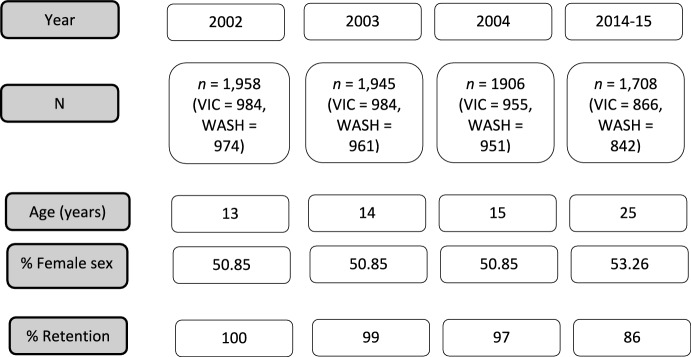 Figure 1
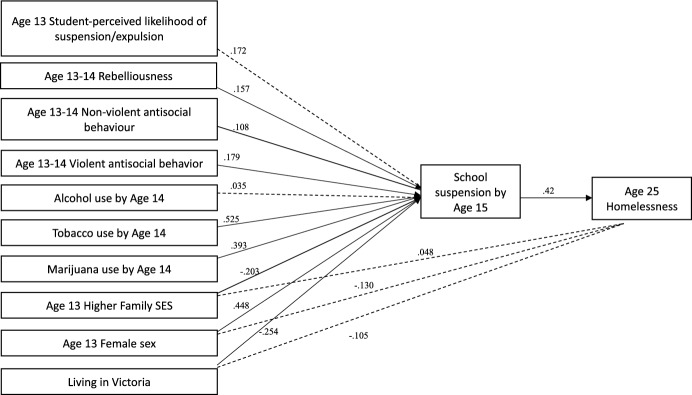 Figure 2
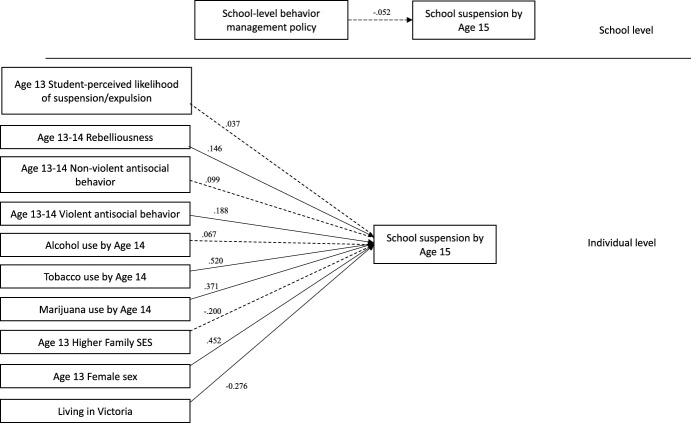 Figure 3
- —national health and medical research council
- —The University of Melbourne
- —http://dx.doi.org/10.13039/501100000923Australian Research Council
- —University of Melbourne
Peer Reviews
No public reviews on file for this paper yet. If you reviewed it on a platform where reviews are public (OpenReview, ICLR, NeurIPS, ICML), you can paste yours below so the community can read it here.
Videos
No videos yet. Explain this paper in a talk, walkthrough, or lecture? Add one.
Taxonomy
TopicsHomelessness and Social Issues · Youth Substance Use and School Attendance · Education Discipline and Inequality
Introduction
Adolescents spend a large amount of their time at school, which makes schools an important setting for promoting health (Marmot, 2003; Mielke & Farrington, 2021; Sawyer et al., 2021). Beyond the benefits of learning, school participation lays a foundation for healthy adolescent development and ideally provides students with the skills and competencies they need to successfully transition to adulthood (Heerde et al., 2023a; Jourdan et al., 2021). It is, therefore, not surprising that disruption to schooling, such as school suspensions, can have lasting negative consequences leading into young adulthood. Research shows that suspension during adolescence predicts homelessness in young adulthood, suggesting that it may be a point of intervention to reduce young adult homelessness (Heerde et al., 2021; van den Bree et al., 2009).
Suspension is one tool on a continuum of behavior management approaches used in school settings (Hemphill et al., 2017; Mielke & Farrington, 2021). Compared to moving students to different seating within the classroom or the use of detention as a short-term response, suspension is a more severe disciplinary approach designed to punish and then prevent behavior that is deemed unacceptable or that poses a risk to other students or staff by removing the student from the school environment (Camacho & Krezmien, 2020; Mielke & Farrington, 2021). There are multiple reasons for schools to suspend students, including misbehavior such as disruptive classroom behaviors to more challenging behaviors such as substance use and engagement in antisocial behavior or violence (e.g., Hemphill et al., 2020; Wilkerson & Afacan, 2022). Schools vary in their interpretation of student misbehavior; a behavior that is considered a minor indiscretion in one school may carry serious consequences in another. Schools also vary in their suspension policies and how strictly these policies are enforced in response to misbehavior or policy violations. There are also differences by country. For example, while suspension is used as a behavior management tool in both the United States and Australian school contexts, norms and policies around suspension that reflect a zero-tolerance approach to misbehavior are particularly common in the United States compared to Australia, where whole-school restorative approaches to addressing misbehavior are also common (Hemphill et al., 2016). Prior studies show rates of school suspension among adolescents in Victoria are lower than their counterparts in Washington State (Heerde et al., 2022a; Hemphill et al., 2020).
Past research has identified several risk factors associated with a higher likelihood of suspension. For example, using data from the International Youth Development Study (IYDS), Hemphill et al. (2014a) showed that alcohol use at the age of 13 increased the risk of suspension one year later. Additional risk factors for suspension across various adolescent social-ecological domains include male sex, lower socioeconomic status, behavioral difficulties (including engagement in antisocial or violent behaviors), academic underachievement, and lower commitment to schooling (e.g., Hemphill et al., 2014b, 2017; Sullivan et al., 2013).
There is also evidence of negative outcomes associated with suspension. Longitudinal studies demonstrate the negative effects suspension has on adolescent educational participation and outcomes (e.g., increased likelihood of future suspensions, school disengagement, reduced academic achievement, lower rates of school completion) and behavioral outcomes (e.g., future engagement in antisocial and violent behavior, substance use, contact with the justice system) (Arcia, 2006; Hemphill et al., 2016, 2017; Mielke & Farrington, 2021; Skiba & Rausch, 2013). For example, analysis of data from the IYDS showed that suspension uniquely predicted antisocial and violent behaviors and tobacco use, even after controlling for known risk factors such as prior antisocial behavior (Hemphill et al., 2006, 2009, 2012).
Young adults who experience homelessness commonly report disruption to school participation, including a suspension and expulsion, absenteeism, self-exclusionary behaviors (for example, truancy, engagement in behaviors likely to result in suspension or expulsion), and disconnection from school during adolescence (Heerde et al., 2020b; Robinson, 2021). As such, school policies, including those related to suspension, may constitute a point of intervention to reduce young adult homelessness at a population level. Despite its potential, research that examines this intervention approach is scant, and the existing literature is inconsistent. Using data from The National Longitudinal Study of Adolescent to Adult Health (Add Health), Shelton et al. (2009) found no effect of suspension or expulsion (retrospectively reported at age 18–26) on the risk for adult homelessness. Conversely, prior work using data from the IYDS showed that suspension between ages 13 to 15 was a strong predictor of homelessness in the past year by age 25 years (Odds Ratio 2.8) adjusting for a wide range of individual, family, peer, and community risk factors (Heerde et al., 2020a). Further, follow-up analyses mapping pathways to young adult homelessness showed that suspension at age 15 mediated associations between both family conflict and poor family management at age 13 and young adult homelessness (Heerde et al., 2021, 2022a).
Understanding the possible ways in which suspension during adolescence may be associated with homelessness in young adulthood is critically important. It is plausible that the exclusion of adolescents from school via suspension contributes to an increase in school disengagement, which is associated with school dropout, substance abuse, antisocial behavior, and justice system contact (Henry et al., 2012; Noltemeyer et al., 2015; Wolf & Kupchik, 2017), all commonly reported factors among young adults who experience homelessness (Heerde et al., 2023b). Further, removal from the school environment can disconnect adolescents from teachers and the protection that schools can provide in relation to facilitating access to support services (Heerde et al., 2023a; Mielke & Farrington, 2021). Identifying risk factors within school settings, such as student behaviors that may result in suspension, and understanding the enactment of policies that use suspension as a response to these behaviors, may help shape school-based prevention responses that seek to reduce risk and promote safe learning environments before more concerning health-compromising patterns (e.g., substance use, violence) or disengagement from school become established.
The present study used data from a population-based sample of young adult participants in the IYDS to examine the extent to which school behavior management policies and adolescent risk factors predict suspension by age 15 and young adult homelessness by age 25. We hypothesized that (1) both school-based behavior management policies and adolescent risk factors would be associated with young adult homelessness and (2) suspension would mediate the expected association between adolescent risk factors and young adult homelessness.
Methods
Sample
Data were drawn from a population-based sample of adolescent and young adult participants in the IYDS, a large, prospective, longitudinal study of the epidemiology of health and social behaviors in young people from Victoria, Australia, and Washington State, United States. Initially recruited as adolescents in state-representative secondary school samples, participants in both states have most recently been followed into young adulthood.
Details of the original IYDS sampling and recruitment methods have been previously published (McMorris et al., 2007). State-representative samples were achieved using a two-stage cluster sampling approach. In the first stage, public and private schools with Grades 5, 7, and 9 (younger, middle, and older cohorts, respectively) were randomly selected for recruitment using a probability proportionate to grade-level size sampling procedure (Kish, 1965). Three-hundred and sixty-eight schools in Washington State and 254 schools in Victoria were approached to participate. Of these, 155 in Washington State and 165 in Victoria agreed to participate (42% and 65%, respectively). In the second stage, one target classroom at each appropriate grade level, within each participating school, was randomly selected (McMorris et al., 2007). Across all grade levels, 73.5% of students in selected classrooms (n = 2884) in Victoria and 74.5% (n = 2885) in Washington State participated in the 2002 (baseline) survey. At the time of recruitment, Victoria and Washington State were similar in population size and urbanicity, had higher than national-average levels of educational participation, and had a low proportion of residents living in poverty (McMorris et al., 2007). To ensure seasonal and school year equivalence, annual surveys were conducted from February to June in Washington State and from May to November in Victoria.
This study analyzed data from the middle cohort (students in Grade 7 in 2002, n = 1,945 [984 in Victoria], 51% female; See Fig. 1) at ages 13 (median = 12.97 years), 14, 15, and 25 years (median = 25.11 years). Over 90% of the Victorian sample identified as Australian, and 65% of the Washington State sample identified as White. In Victoria, the remaining participants identified as 5% Asian, 1% Aboriginal and Torres Strait Islander, and < 1% African, Spanish/Hispanic/Latino, or Pacific Islander. In Washington, the remaining participants identified as 16% Hispanic/Latinx, 4% African American, 6% Native American, and 6% Asian/Pacific Islander. In young adulthood, participants self-reported their sexual identity, with a majority of the sample identifying as heterosexual (81% in Victoria, and 79% in Washington State).Fig. 1. Sample recruitment and retention across the study waves. Note: VIC = Victoria. WASH = Washington State
Procedure
In Australia, the University of Melbourne Human Ethics in Research Committee and the Royal Children's Hospital (Melbourne) approved the study. In the US, the University of Washington Human Subjects Institutional Review Board approved the study. Relevant educational authorities for public and private schools in both states provided permission to conduct the study in schools. Prior to study commencement, the IYDS design and methods underwent multiple processes to ensure cross-national validity and reduce method differences that are commonly seen in studies drawing international comparisons (Segall et al., 1998). These processes included matching sampling and recruitment strategies, surveys, and survey administration procedures. The survey also underwent cognitive pre-testing and piloting, including language review and cross-national item adaptation, to ensure content validity across the two states (McMorris et al., 2007). As the IYDS is a prospective, longitudinal study, it has detailed and comprehensive protocols for repeated follow-up of participants over time, designed to maximize participant retention.
In 2002, written parental consent and participant assent were obtained for all participants. Participant consent was obtained for the young adult survey. The adolescent surveys were administered to class groupings within schools, and the young adult survey was administered online. Surveys took 50–60 min to complete. During adolescence, Victorian participants received a small gift (e.g., stress ball), and Washington State participants received USD40 gift voucher.
At the time of the baseline survey, the study also included a school administrator survey completed by the school principal (or nominee) from each participating school. The survey was conducted via mail (97.4% participation rate; Evans-Whipp et al., 2015).
Measures
The IYDS used self-report measures adapted from the Communities That Care youth survey (Arthur et al., 2002; Glaser et al., 2005). Survey measures were reviewed and adjusted to be developmentally appropriate as the sample aged from adolescence into young adulthood. Measures of school-level behavior management policies were specifically developed for the IYDS (Beyers et al., 2005; Evans‐Whipp et al., 2007). Survey measures analyzed in this study have demonstrated longitudinal validity and reliability in the state-based samples (Evans-Whipp et al., 2015; Heerde et al., 2021).
Person-Level Variables
Young adult homelessness (age 25) was measured using the item “In the past year, have you been homeless (i.e., not had a regular place to live?)” Response options were dichotomous, ‘No’ (0, reference group) and ‘Yes’ (1).
Suspension. At ages 13, 14, and 15, students reported the number of times in the past year they had been suspended from school. Response options ranged from “never” (1) through to “40 + times” (8). At each age, responses were dichotomized (0 not suspended, 1 suspended). Scores were collapsed across ages to create a variable indexing suspension by age 15, “Not suspended by Age 15” (0, reference group) and “Suspended by Age 15” (1).
Student-perceived likelihood of suspension/expulsion (age 13). Participants were asked to indicate the severity of consequences for each of the following four scenarios: “If a student was found smoking cigarettes [drinking alcohol/ using marijuana/ using other illegal drugs] at school, which of the following would most likely happen?”. Proposed consequences were: ‘He or she would be talked to by a teacher about the dangers of (behavior),’ ‘He or she would be suspended,’ ‘He or she would be expelled,’ and ‘The police would be called.’ Response options for each of these consequences were ‘No’ (0) and ‘Yes’ (1). Dichotomized scores for each item were then collapsed to create a variable indexing likelihood of suspension/expulsion: “Not likely to be suspended/expelled” (0, reference group) and “Likely to be suspended/expelled” (1).
Covariates (Ages 13 & 14) included rebelliousness, non-violent antisocial behavior, violent antisocial behavior, and substance use. Three items were used to assess rebelliousness (e.g., “I ignore rules that get in my way”). Response options ranged from ‘definitely no’ (1) through to ‘definitely yes’ (4). Scores across each of these items were averaged to obtain a single scale score across ages 13 and 14. Non-violent antisocial behavior was measured using seven items, of which “How many times in the past year (12 months) have you stolen something worth more than 10?” is an example. Participants reported their engagement in violent antisocial behavior using three items. “How many times in the past year have you beat up someone so badly that they probably needed to see a doctor or nurse?” was one of these items. Response options for the rebelliousness, non-violent, and violent antisocial behavior items ranged from ‘never’ (1) through to ‘40 + times’ (8). Within each scale (rebelliousness, non-violent, and violent antisocial behavior), item scores were averaged to obtain a single scale score across ages 13 and 14. Scores were coded such that higher scores indicated higher rebelliousness, non-violent, and violent antisocial behavior.
Participants self-reported their use of alcohol, tobacco, and cannabis by age 14 using the items: “In the past 30 days, on how many occasions (if any) have you had more than just a few sips of an alcoholic beverage (like beer, wine or liquor/spirits)? “, “How frequently have you smoked cigarettes in the past 30 days?” and “In the past 30 days on how many occasions (if any) have you: used marijuana (pot, weed, grass)?”. Response options for each item at ages 13 and 14 ranged from “never” (1) through to “40 + times” (8). Responses for each item were dichotomized: (“no use” [0, reference group], used in the past 30 days [1]) and collapsed to create use by age 14 measures of alcohol, tobacco, and cannabis.
Demographic factors Participants reported their sex (female [0], male [1]) and the state in which they resided (Washington State [0], Victoria [1]). Family socioeconomic status was created using parent (mother and father) self-reported annual family income (ranging from ‘less than 200,000 and above’) and the highest level of education (e.g., ‘less than secondary school,’ ‘completed secondary school,’ and ‘completed post-secondary school’), obtained in phone interviews conducted at the time of the 2002 survey.
School-Level Variable
School behavior management policy was reported by school principals (or nominee) using three items: “When students are caught using or possessing tobacco on school grounds or at school events, how often are they …”, “When students are caught using, possessing or being under the influence of alcohol on school grounds or at school events, how often are they …”, and “When students are caught using, possessing, or being under the influence of illicit drugs on school grounds or at school events, how often are they…”. Response categories reflect the likelihood of specific consequences: ‘Referred to legal authorities (police),’ ‘Suspended from school,’ and ‘Expelled from school’ rated on a 4-point scale of ‘Almost or always (4)’, ‘Sometimes (3)’, ‘Rarely (2)’ and ‘Never (1)’. Scores for the three items were averaged to obtain a single scale score where higher scores indicated a greater likelihood of the consequence.
Survey response accuracy was examined at ages 13, 14, and 15. Responses were coded as questionable if participants reported (1) “I was not honest all of the time” when asked how honest they were when completing the survey, (2) use of a fictitious drug (included in the survey for accuracy checking) in the past month, and (3) drug use on > 120 occasions in the past month.
Statistical Analysis
Descriptive analyses were conducted using Stata SE software for Windows, version 15.1 (StataCorp LLC, 2017). Tests of differences in means and frequencies for adolescent predictors and young adult homelessness were completed using *t-*tests and chi-square analyses, respectively. Effect sizes were calculated using pooled standard deviations (Cohen, 1977). Zero-order correlations were examined to identify highly correlated pairs or sets of variables that might have resulted in collinearity in the subsequent path modeling (Tabachnick & Fidell, 2013). Fifteen participants at age 13, 35 at age 14, and 27 at age 15 met the criteria for questionable responses (e.g., use of a fictitious drug) and were excluded from the analyses. The percentage of missing data on the analyzed variables ranged from 0.05% to 12.60% (M = 1.47%).
We estimated two multilevel, longitudinal path models using Mplus, version 8.7 (Muthén & Muthén, 2017). Full information maximum likelihood estimation was used to minimize potential bias due to missing data using the robust Maximum Likelihood Estimator and the weighted least squares means and variance adjusted estimator (Muthén & Muthén, 2017; Schafer & Graham, 2002). We started with estimating the person-level portion of the model. Indirect (i.e., mediated) effects of individual predictors on age 25 homelessness were estimated using the model indirect function. We then included the school-level portion of the model by clustering by school and incorporating school principal (or nominee) reports of school-level behavior management policies. Demographic factors were included in all analyses. Model fit indices were examined in accordance with current recommendations (Cangur & Ercan, 2015). Standardized parameter estimates are presented.
Results
Young adults in Washington reported a significantly higher rate of homelessness than in Victoria (Table 1), with rates of 5.25% [95% CI 3.92, 6.97] and 3.25% [95% CI = 2.25, 4.67], respectively. They also reported significantly higher family socio-economic status and higher rates of both marijuana use by age 14 and suspension by age 15 compared to Victorian respondents. By age 14, Victorian participants showed higher levels of rebelliousness and rates of alcohol and tobacco use compared to those in Washington State. They also reported a greater perceived likelihood of suspension/expulsion being enacted by their school. Intercorrelations were low-moderate and in the expected direction (range r = < 0.01 to r = 0.77; see Table S1, Online Resource 1). Overall, young adults who reported experiencing homelessness at age 25 reported higher levels of adolescent rebelliousness and higher rates of non-violent and violent behavior, tobacco and cannabis use, and suspension compared to those who had not experienced homelessness (Table S2, Online Resource 1). Notably, over half of young adults who reported past year homelessness at age 25 reported a history of suspension in adolescence.Table 1. Summary statistics and tests of differences for individual and school predictors and young adult homelessness, by stateCombined sample(n = 1945)Victoria(n = 984)Washington state(n = 961)p valueDifference t/χ^2^Effect size d%%%Young adult homelessness4.243.255.25.0404.200.099Demographic factorsFemale sex49.1549.1949.12.975.001-.001M(SD)95% CIM(SD)95% CIM(SD)95% CIHigher family socio-economic status2.00(.43)1.98, 2.021.94(.49)1.91, 1.972.06(.37)2.03, 2.08 < .0015.809.268Individual predictorsAge 13–14 Rebelliousness1.87(.58)1.84, 1.891.90(.59)1.87, 1.941.83(.56)1.79, 1.86.003-2.933-.133Age 13–14 Non-violent antisocial behavior1.11(.33)1.10, 1.131.11(.37)1.09, 1.131.12(.29)1.10, 1.14.457.743.033Age 13–14 Violent antisocial behavior1.09(.34)1.08, 1.111.10(.38)1.08, 1.131.08(.29)1.06, 1.09.069-1.820-.083%%%Alcohol use by age 1439.9052.5426.95 < .001132.766-.541Tobacco use by age 1413.7916.4811.03 < .00112.143-.158Marijuana use by age 148.896.2011.65 < .00117.855.192School predictorsSuspension by age 1523.3921.2425.60.0235.154.103Student-perceived likelihood of suspension/expulsion95.1796.1494.17.0434.804-.092School-level behavior management policy2.28(.63)2.25, 2.312.61(.61)2.57, 2.651.95(.43)1.92, 1.97 < .001-27.354-1.260M = mean, SD = standard deviation. % = per cent. χ^2^ = chi-square. t = t-statistic. 95% CI = 95% confidence interval. Young adult homelessness (past year; coded 0 = no, 1 = yes). School suspension by age 15 (coded 0 = no, 1 = yes). Alcohol, tobacco and marijuana use (coded 0 = no use, 1 = past month use). Student-perceived likelihood of suspension/expulsion (coded 0 = Not likely to be suspended/expelled, 1 = Likely to be suspended/expelled). Statistically significant state differences for continuous variables calculated using independent t-tests. Statistically significant state differences for dichotomous variables calculated using chi-square tests
Path model analyses of person-level data showed that early adolescent rebelliousness, violent and non-violent antisocial behavior, and tobacco or marijuana use predicted suspension by age 15 (see Fig. 2). Male sex, lower family socioeconomic status, and living in Washington State also predicted suspension. Student perceptions of the likelihood of suspension/expulsion were unrelated to suspension. Suspension uniquely increased the risk of young adult homelessness. No other model variables were uniquely associated with homelessness. However, statistically significant indirect effects of rebelliousness, violent antisocial behavior, tobacco use, and marijuana use on young adult homelessness were found. Full results for the model are included in Table S3 (Online Resource 1).Fig. 2. Results from the path model: individual and school predictors of young adult homelessness. Note. Model fit statistics: χ^2^(21, n = 1879) = 235.23, p < .0001, CFI = .987, TLI = 0.962, RMSEA estimate = 0.014. Standardized parameter estimates shown. Dashes indicate non-significant paths. Solid lines indicate paths significant at p < .05. Victoria (coded 0 = Washington State, 1 = Victoria). Alcohol, tobacco and marijuana use (coded 0 = no use, 1 = past month use). School suspension by age 15 (coded 0 = no, 1 = yes). Young adult homelessness (past year; coded 0 = no, 1 = yes). Student-perceived likelihood of suspension/expulsion (coded 0 = Not likely to be suspended/expelled, 1 = Likely to be suspended/expelled)
Given the small proportion of individuals who experienced homelessness, adding school principal reports of behavior management policy (school-level) and accounting for school clustering resulted in problems with model estimation. As current and prior analyses confirmed an association between suspension and later homelessness, we dropped homelessness from between-person models and focused on predicting suspension as a more prevalent outcome. The between-person school behavior management policy variable was not uniquely related to suspension (Fig. 3). Instead, suspension was predicted by within-person risk behaviors, male sex, and living in Washington State. Full results for the model are included in Table S4 (Online Resource 1).Fig. 3. Results from the multilevel model: individual predictors of school suspension. Note. The model is fully saturated. Standardized parameter estimates shown. Dashes indicate non-significant paths. Solid lines indicate paths significant at p < .05. Victoria (coded 0 = Washington State, 1 = Victoria). Alcohol, tobacco and marijuana use (coded 0 = no use, 1 = past month use). School suspension by Age 15 (coded 0 = no, 1 = yes). Student-perceived likelihood of suspension/expulsion (coded 0 = Not likely to be suspended/expelled, 1 = Likely to be suspended/expelled)
Discussion
The current study tested whether adolescent problem behaviors, student-perceived school behavior management policies, and school-level behavior management policies were related to suspension by age 15 and, in turn, the probability of homelessness at age 25. Results showed that suspension at age 15 predicted young adult homelessness at the person-level. Interestingly, after controlling for individual factors, school behavior management policy, defined as the likelihood of suspension/expulsion for substance use perceived by students or reported by principals, was not related to a history of suspension at either the individual or school levels. Rather, the individual factors that included adolescent rebelliousness, non-violent and violent antisocial behavior, and substance use predicted suspension. Further, these individual level problem behaviors were indirectly related to increased risk for homelessness at age 25. This finding indicates that suspension is a risk factor for later homelessness and suggests that prevention programs targeting problem behaviors and strengthening bonds to school could be effective strategies for reducing young adult homelessness (Markowitz, 2017; Mielke & Farrington, 2021).
In the current sample, more than one in two (55.56%) young adults who experienced homelessness within the past year at the age of 25 reported being suspended from school during adolescence. High rates of suspension among this group are worrying, particularly in the context of existing research that links suspension with various adverse outcomes in young adulthood (Arcia, 2006; Hemphill et al., 2016; Mielke & Farrington, 2021; Skiba & Rausch, 2013). These findings are also important given that school connectedness has been shown to enhance student mental health (Jourdan et al., 2021; Raniti et al., 2022) and that many young adults who experience homelessness report barriers to schooling which often lead to school disengagement, exclusion, and early school leaving (Heerde et al., 2020b; Robinson, 2021). Our findings add to the evidence by identifying severe, long-term negative consequences of suspension, and suggest a critical need for effective discipline approaches that do not involve disconnecting adolescents from their school environment.
Although the intersection of housing and education as determinants of health equity has been recognized (Lancet Public Health, 2020; Marmot & Allen, 2014), the specific risk factors that define pathways to homelessness across the life course are not well understood. Similarly, school-based responses to homelessness have been historically neglected. Current strategies are overwhelmingly designed to reduce early school leaving among adolescents at risk of homelessness (e.g., MacKenzie, 2016; Malenfant et al., 2020). However, the evidence supporting the effectiveness of early intervention responses in reducing rates of homelessness among adolescents or improving long-term educational or housing outcomes is limited (Morton et al., 2020; Toumbourou & Heerde, 2022). In this context, responses to young adult homelessness may be strengthened by using whole-school approaches as these encompass the spectrum of responses from prevention through to postvention support (Heerde et al., 2023a). Frameworks such as health-promoting schools (Langford et al., 2015; World Health Organization, 2021), comprehensive school health programs (American School Health Association, 1995), and the Whole School, Whole Community, Whole Child model (Centers for Disease Control & Prevention, 2023) are designed to facilitate positive education and health outcomes through a whole-school approach. Yet there are important evidence gaps that could inform the application of these frameworks within specific contexts, including risk factors that define pathways to homelessness in the transition from adolescence to adulthood.
The finding that suspension was predicted by substance use and violent antisocial behavior underscores the need for preventive intervention in multiple areas of adolescents’ lives and hints that such interventions may also help to prevent later homelessness (Bonell et al., 2018). These behaviors might not only influence adolescents’ behavioral and emotional disengagement from schooling but also instigate the enforcement of exclusionary school-based behavior management policies (e.g., suspension, expulsion). Moreover, these behaviors may share common antecedents (e.g., low family SES, family conflict; Heerde et al., 2022a; Hemphill et al., 2015). Young adults who experience homeless often experience health issues stemming from their marginalization, including poorer physical and mental health (Edidin et al., 2012; Hodgson et al., 2013), high rates of substance use (Kulik et al., 2011), and high rates of preventable morbidities arising from violence (Boivin et al., 2005). Widespread implementation of effective substance use and positive youth development programs, such as those listed by Blueprints for Healthy Youth Development (blueprintsprograms.org) that have been shown to reduce adolescent substance use and antisocial behavior and increase effective school behavior management practices (e.g., Communities That Care; Hawkins et al., 2008), may help to prevent later homelessness and associated poor health by reducing rates of suspensions.
We have previously shown that there are higher rates of homelessness in Washington State than in Victoria, Australia (Heerde et al., 2021, 2022a). In this study, we show that Washington State also has higher rates of suspension than Victoria. Differences in cultural and economic contexts, such as funding for social safety nets and housing investments between the two states, as well as differences in school behavior management policy orientations (a harm minimization approach in Victoria compared to a zero-tolerance approach in Washington State), likely underpin these findings. Future analyses should investigate these differences to identify the features of state and country policy that influence these housing and educational outcomes.
Study Strengths and Limitations
A significant strength of this study is the analysis of longitudinal data collected from a representative population-based sample that examined various predictors of homelessness that were measured across the formative years of early adolescence through to young adulthood. Data were collected from the cross-national samples using identical methods of recruitment, survey, and longitudinal follow-up (McMorris et al., 2007). Study retention rates remain high.
We acknowledge several study limitations. The single-item measure of homelessness, although typical in studies of adolescents and young adults (Heerde & Hemphill, 2016), limited our capacity to examine the variety of housing circumstances that represent homelessness such as couch surfing or staying with friends temporarily (e.g., couch surfing, staying with friends temporarily; Amore et al., 2011). However, prior qualitative follow-up of study participants demonstrated this single-item measure reflected the various forms of homelessness experienced by young adults (e.g. rough sleeping, couch surfing; Heerde et al., 2020b). Homelessness that may have occurred prior to age 25 was not assessed. While an important proportion, the relatively small number of participants experiencing homelessness limited our ability to test the direct association between school-level measures of policy and homelessness. A further limitation of this study is that is that the measure of school suspension did not distinguish between in-school suspension (removal of a student from the classroom environment where the student is still required to attend school) or out-of-school suspension (removal of a student from the physical school environment where the student is not permitted to attend school). Whether in- and out-of-school suspension are associated with later homelessness in similar ways requires additional investigation. The measure of school-level behavior management policy assumes that the policies are consistently enacted, which may not be the case. Although considered reliable in studies of adolescents and young adults (Jolliffe et al., 2003), the measures analyzed were based on self-report data. Participants were not asked about their gender identity in adolescence beyond the binary question of male or female, which was consistent with approaches at the time of the survey. High proportions of participants identifying as heterosexual and White (in Washington State) and Australian (in Victoria) means our analyses did not control for or examine differences in associations by sexual identity, gender identity, race, or ethnicity. Therefore, our findings are generalizable only to the state and cohort samples analyzed. We note that most population-based cohort studies analyzing risk for homelessness are commonly limited by a low prevalence of both homelessness and proportions of participants with diverse gender, sexuality, ethnicity and racial identities, meaning that there is a lack of statistical power to examine potential relationships between these determinants and later homelessness (Heerde et al., 2024; Shelton et al., 2009; van den Bree et al., 2009). Future research could consider the use of multi-cohort life course approaches that bring together and harmonize data across several high-quality cohort studies as a strategy to overcome this (Greenwood et al., 2024; Heerde et al., 2022b; O’Connor et al., 2022).
Conclusions
Young adults experiencing homelessness are identifiable in population-based samples. This study identified multiple, malleable adolescent risk factors for young adult homelessness, including substance use, antisocial behavior, rebelliousness, and suspension. Suspension emerged as a critical mediating variable for later homelessness. Widespread implementation of effective prevention programming is recommended to reduce the rate of adolescent substance use and antisocial behavior and reduce suspension, with a wider goal of shifting the rate of young adult homelessness.
Supplementary Information
Below is the link to the electronic supplementary material.Supplementary file1 (DOCX 36 KB)
The reference list from the paper itself. Each links out to its DOI / PubMed record.
- 1American School Health Association. (1995). Guidelines for comprehensive school health programs. American School Health Association.
- 2Centers for Disease Control and Prevention. (2023). Whole School, Whole Communty, Whole Child (WSCC). Centers for Disease Control and Prevention,. Retrieved 07/08/2023 from https://www.cdc.gov/healthyschools/wscc/index.htm#:~:text=The%20WSCC%20model%20is%20student,Physical%20education%20and%20physical%20activity
- 3Stata Corp LLC. (2017). Stata: Statistics/data analysis. In (Version 15:1 SE edition) Stata Corp LLC.
- 4World Health Organization. (2021). Making every school a health-promoting school–Global standards and indicators [Strategy]. https://www.who.int/publications/i/item/9789240025059