The role of agitated saline contrast echocardiography in the evaluation of pulmonary hypertension
Emilio Herrera, Jhon F. Salamanca, Luisa F. Durango

TL;DR
Agitated saline contrast echocardiography is a useful tool for diagnosing and understanding pulmonary hypertension.
Contribution
The paper highlights the role of bubble contrast echocardiography in characterizing and diagnosing pulmonary hypertension.
Findings
Agitated saline contrast echocardiography helps confirm the diagnosis of pulmonary hypertension.
It provides valuable information for identifying underlying causes of the condition.
The technique supports both diagnostic and prognostic assessments.
Abstract
The diagnostic approach to pulmonary hypertension using cardiac imaging, particularly echocardiography, provides a practical, accessible, and highly valuable tool. It helps establish the initial diagnostic probability, offers prognostic information, and supports aetiological assessment. The agitated saline contrast test, also referred to as bubble contrast echocardiography, can aid not only in confirming the diagnosis but also in characterising the condition and identifying various underlying causes of pulmonary hypertension.
Genes, proteins, chemicals, diseases, species, mutations and cell lines named across the full text — each resolved to its canonical identifier and authoritative record.
Click any figure to enlarge with its caption.
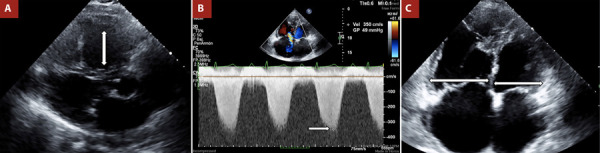 Figure 1
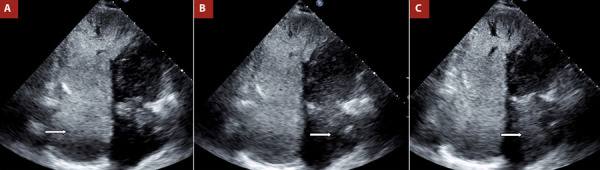 Figure 2
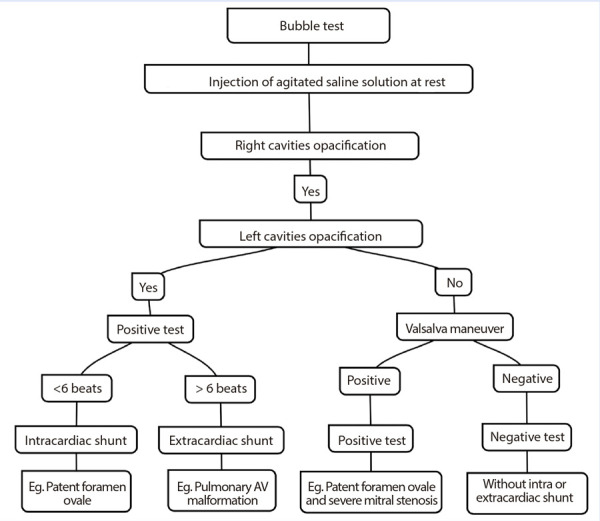 Figure 3
Peer Reviews
No public reviews on file for this paper yet. If you reviewed it on a platform where reviews are public (OpenReview, ICLR, NeurIPS, ICML), you can paste yours below so the community can read it here.
Videos
No videos yet. Explain this paper in a talk, walkthrough, or lecture? Add one.
Taxonomy
TopicsPulmonary Hypertension Research and Treatments