MagNanoTrap enrichment empowers ultra-sensitive quantification of mixed nanoplastic particles from environmental water samples
Maochao Mao, Marian Bienstein, Francisca Contreras, Dong Wang, Lilin Feng, Ulrich Schwaneberg

TL;DR
A new method called MagNanoTrap helps detect and measure tiny plastic particles in water with high sensitivity and accuracy.
Contribution
MagNanoTrap introduces a novel bifunctional peptide-coated magnetic nanoparticle system for universal and sensitive nanoplastic quantification.
Findings
MagNanoTrap achieved a maximum adsorption capacity of 3.95 ± 0.14 g/g for PS-COOH 500 nm NPs.
The method can quantify nanoplastics down to 0.061 µg in 1 L of water using only 16 mg of coated SPIONs.
MagNanoTrap successfully enriched and quantified mixed nanoplastics from diverse environmental water sources.
Abstract
Detection and quantification of nanoplastic particles (NPs) in environmental water are important for monitoring NPs’ fate and assessing health impacts, but the lack of sensitive and universal detection systems hinders regulation according to the EU Commission (Allan, J. et al., 2021). The MagNanoTrap termed enrichment platform is based on a bifunctional peptide (LCI-DZ-MBP1) combined with Fe3O4 superparamagnetic nanoparticles (SPIONs); the bifunctional peptide was designed to decorate SPIONs for NPs capture, with the LCI-peptide binding to SPIONs and the MBP1-peptide acting as a general binder for polypropylene (PP), polyethylene (PE), polystyrene (PS), and polyethylene terephthalate (PET) particles. The MagNanoTrap enrichment platform, with a maximum MagNanoTrap adsorption capacity of 3.95 ± 0.14 g/g for PS-COOH 500 nm NPs, enables in combination with pyrolysis-gas chromatography/mass…
Genes, proteins, chemicals, diseases, species, mutations and cell lines named across the full text — each resolved to its canonical identifier and authoritative record.
Click any figure to enlarge with its caption.
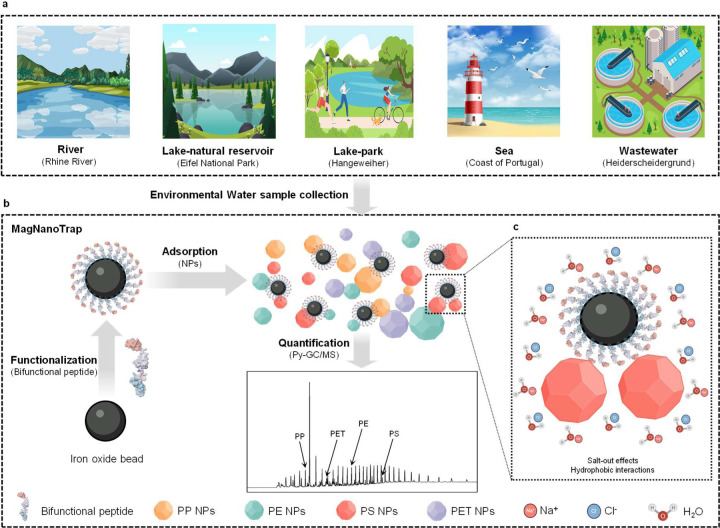 Figure 1
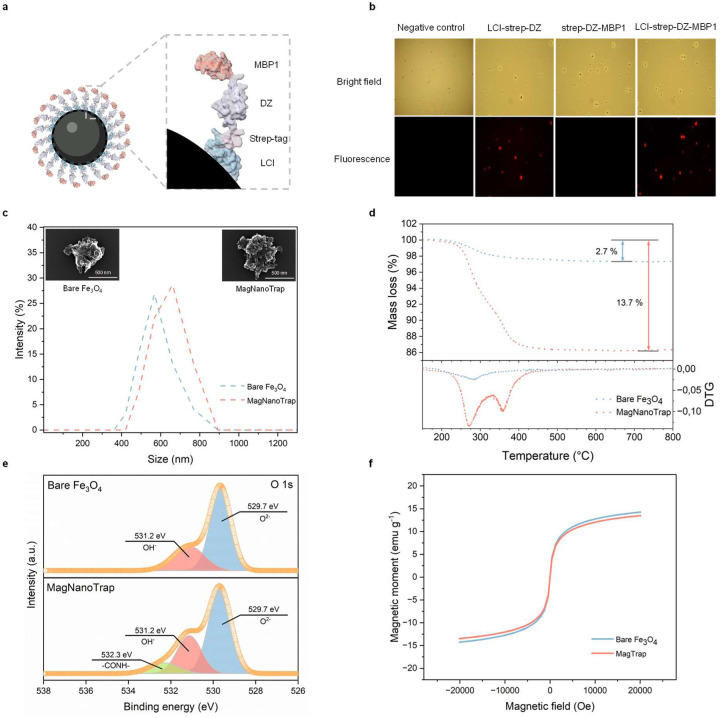 Figure 2
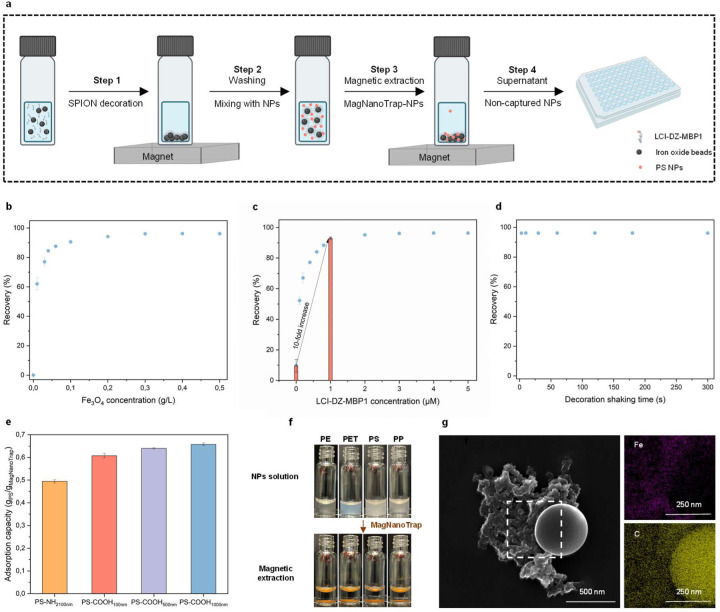 Figure 3
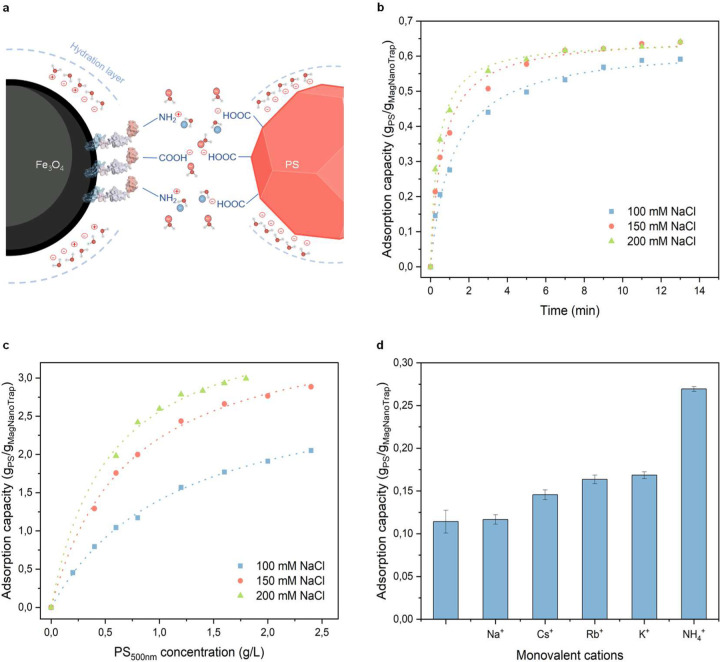 Figure 4
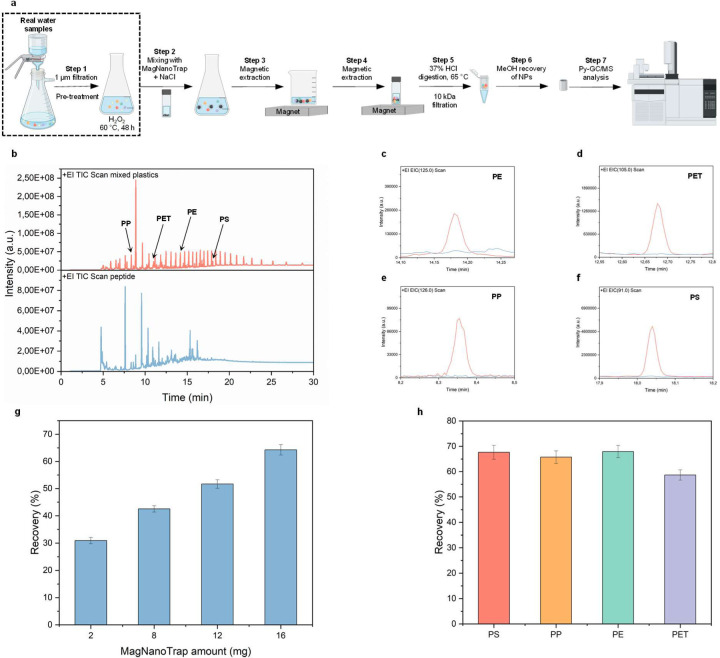 Figure 5
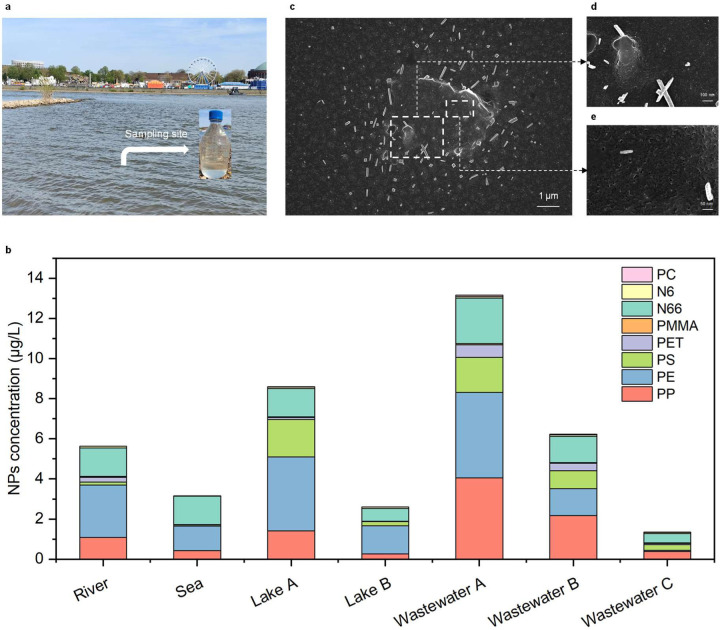 Figure 6
Peer Reviews
No public reviews on file for this paper yet. If you reviewed it on a platform where reviews are public (OpenReview, ICLR, NeurIPS, ICML), you can paste yours below so the community can read it here.
Videos
No videos yet. Explain this paper in a talk, walkthrough, or lecture? Add one.
Taxonomy
TopicsMicroplastics and Plastic Pollution