Elevated apolipoprotein C3 heightens atherosclerosis risk by mediating arterial accumulation of free cholesterol and local inflammation in diabetes
Jenny E. Kanter, Cheng-Chieh Hsu, Farah Kramer, Baohai Shao, Tomas Vaisar, Laura J. den Hartigh, Abigail Reed, Jason Luo, Alan Tran, Jingjing Tang, Henry Mangalapalli, Jocelyn Cervantes, Masami Shimizu-Albergine, Peter D. Reaven, Juraj Koska, Majken K. Jensen

TL;DR
High levels of apolipoprotein C3 increase heart disease risk in diabetes by causing cholesterol buildup and inflammation in arteries.
Contribution
APOC3 silencing is shown to reduce cholesterol and inflammation in diabetes-related atherosclerosis, suggesting it as a promising therapeutic target.
Findings
Plasma APOC3 levels are elevated in diabetes-accelerated atherosclerosis mouse models.
APOC3 silencing prevents arterial free cholesterol accumulation and inflammation in diabetes.
ANGPTL3 silencing only reduces triglycerides but not cholesterol in this context.
Abstract
Cardiovascular outcome trials are being considered for therapeutics that silence apolipoprotein C3 (APOC3) or angiopoietin-like 3 (ANGPTL3) because of their abilities to lower triglyceride-rich lipoproteins (TRLs) and their remnants in individuals with increased cardiovascular disease (CVD) risk1–4. Here we demonstrate that plasma APOC3 predicts CVD events in individuals with diabetes more strongly than in those without diabetes. Accordingly, plasma APOC3 levels are elevated, clearance of TRLs/remnants is slowed, and plasma TRL remnants are increased in two mouse models of diabetes-accelerated atherosclerosis. Silencing mouse APOC3 by a liver-targeted antisense oligonucleotide lowers both cholesterol and triglycerides carried by TRL/remnants and LDL and prevents aortic free cholesterol accumulation in diabetes, while ANGPTL3 silencing reduces triglycerides. Single-cell RNA-sequencing…
Genes, proteins, chemicals, diseases, species, mutations and cell lines named across the full text — each resolved to its canonical identifier and authoritative record.
Click any figure to enlarge with its caption.
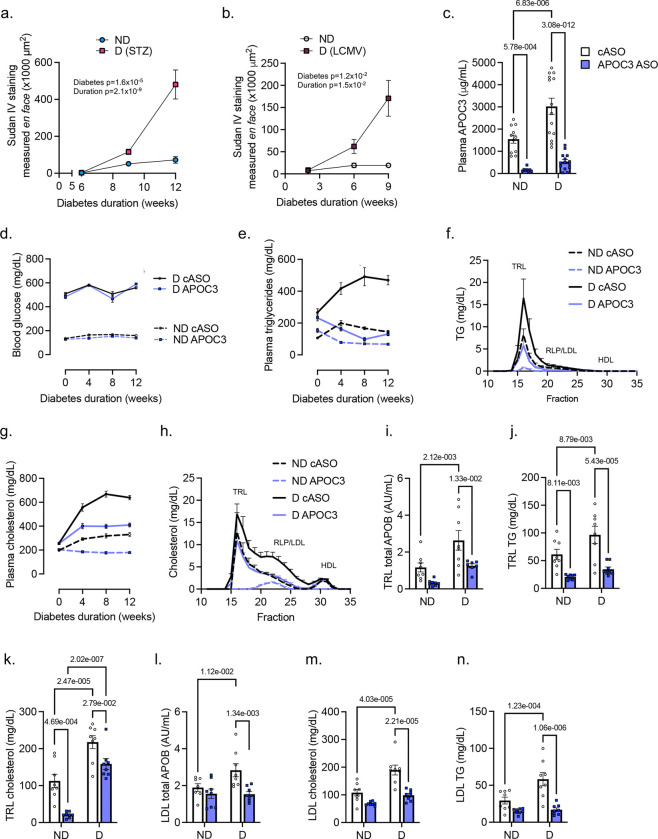 Figure 1
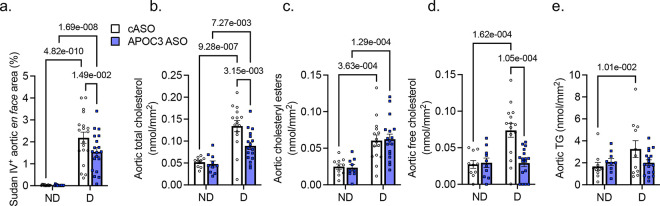 Figure 2
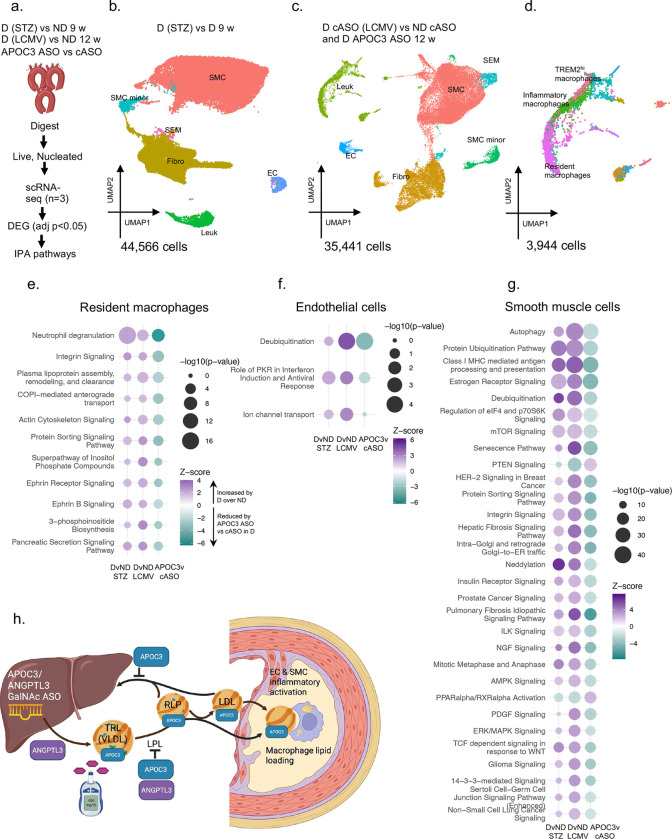 Figure 3
Peer Reviews
No public reviews on file for this paper yet. If you reviewed it on a platform where reviews are public (OpenReview, ICLR, NeurIPS, ICML), you can paste yours below so the community can read it here.
Videos
No videos yet. Explain this paper in a talk, walkthrough, or lecture? Add one.
Taxonomy
TopicsApelin-related biomedical research