Systematic evaluation of analytical methods for CSF proteomics
Aastha Aastha, Leonardo Jose Monteiro Macedo Filho, Michael Woolman, Vladimir Ignatchenko, Alexander Keszei, Gabriela Remite-Berthet, Alireza Mansouri, Thomas Kislinger

TL;DR
This study compares different methods for analyzing proteins in cerebrospinal fluid to determine which is best suited for various research goals.
Contribution
The paper provides a systematic benchmark of five CSF proteomics workflows, revealing their strengths and limitations for translational neuro-oncology.
Findings
Seer achieved the highest proteomic depth with ~17,000 unique peptides detected.
Each workflow highlighted distinct biological signatures, such as mitochondrial, lysosomal, or nuclear proteins.
The study found no single method is universally optimal; workflow choice should align with research goals and constraints.
Abstract
Cerebrospinal fluid (CSF) provides a unique window into brain pathology, yet challenges in unbiased mass-spectrometric (MS) discovery persist due to sample complexity and the need for optimized analytical workflows. Multiple laboratory workflows have been developed for CSF proteomics, each with distinct advantages for specific applications. To interrogate which laboratory workflow is most suitable for this biological matrix, we benchmarked five orthogonal sample-preparation strategies—MStern, Proteograph™ nanoparticle enrichment (Seer), N-glycopeptide capture (N-Gp), and two extracellular-vesicle (EV) fractions isolated by differential ultracentrifugation (P20- and P150-EV)—in CSF from 19 patients with central nervous system lymphoma. The protocols span a practical spectrum of input volume (6000–50 μL), hands-on time, and reagent cost, enabling informed method selection for…
Genes, proteins, chemicals, diseases, species, mutations and cell lines named across the full text — each resolved to its canonical identifier and authoritative record.
Click any figure to enlarge with its caption.
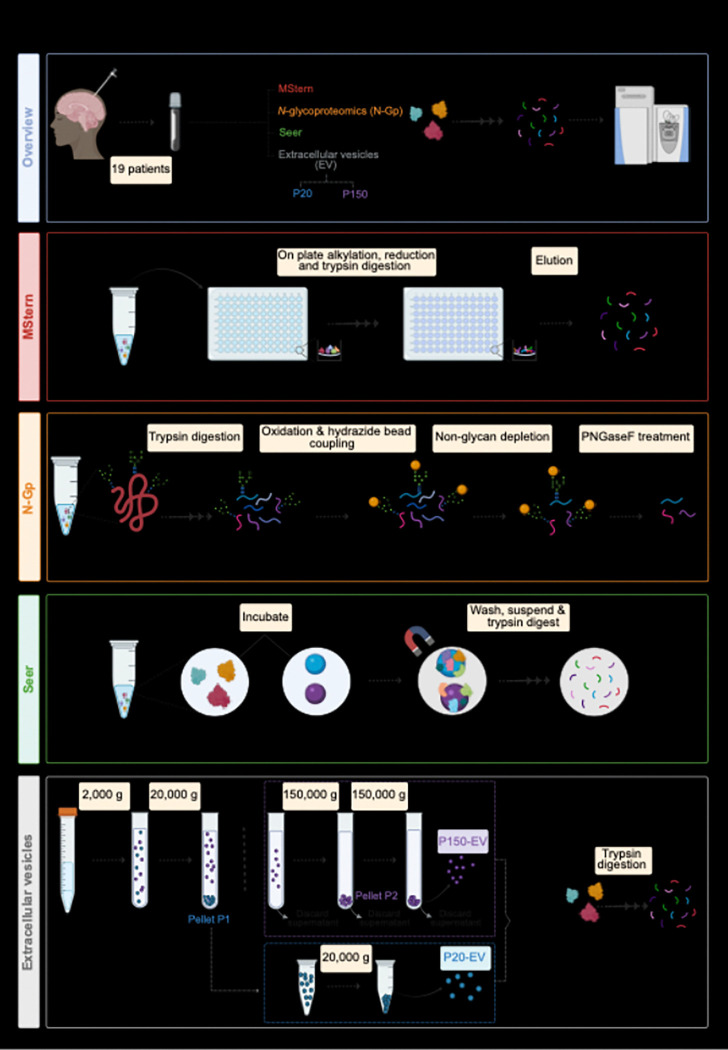 Figure 1
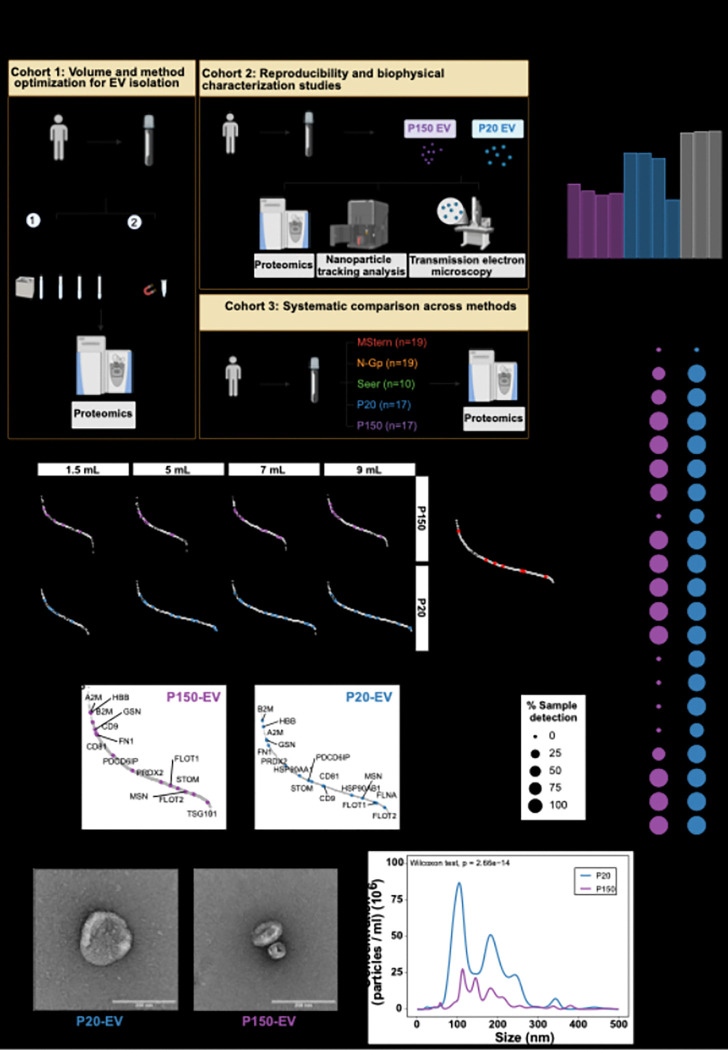 Figure 2
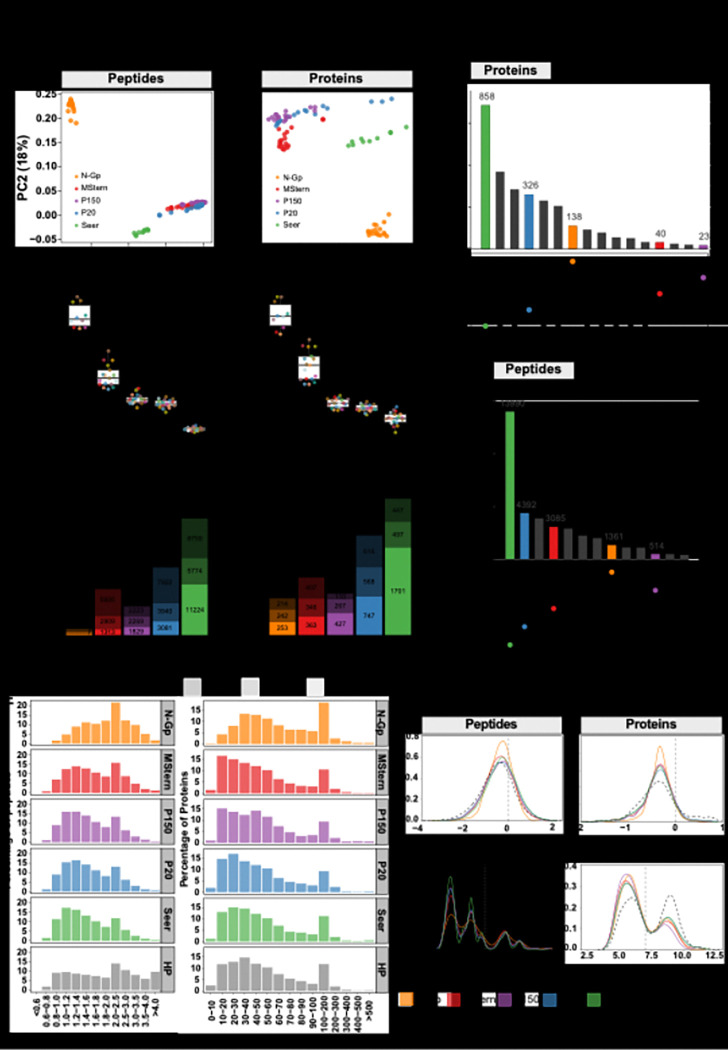 Figure 3
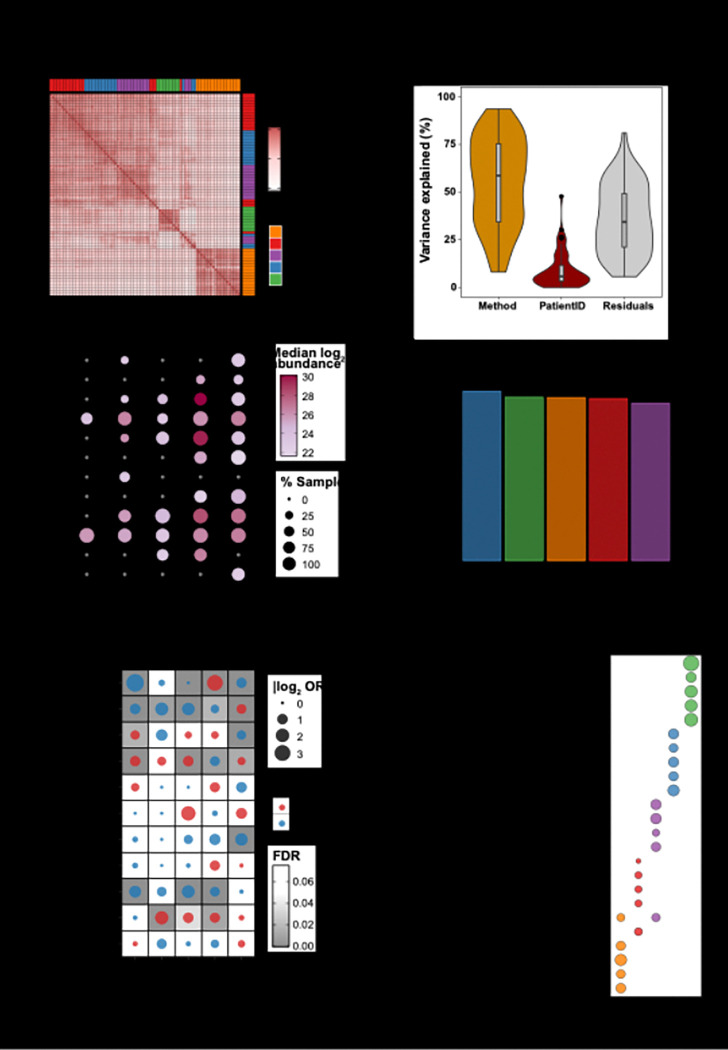 Figure 4
Peer Reviews
No public reviews on file for this paper yet. If you reviewed it on a platform where reviews are public (OpenReview, ICLR, NeurIPS, ICML), you can paste yours below so the community can read it here.
Videos
No videos yet. Explain this paper in a talk, walkthrough, or lecture? Add one.
Taxonomy
TopicsAdvanced Proteomics Techniques and Applications · Advanced Biosensing Techniques and Applications · Biosensors and Analytical Detection