Multi-omic insights from a multi-ancestry genome-wide meta-analysis of ankylosing spondylitis reveal novel pathways of disease susceptibility
Matthew Brown, Zhixiu Li, Xin Wu, Nicholas Harvey, Jose Garrido-Mesa, Xiaobing Wang, Zhihao Xu, Geng Wang, Helena Marzo-Ortega, Dennis McGonagle, Ann Morgan, Nurullah Akkoc, Gokce Kenar Artin, Gary Macfarlane, Gareth Jones, Linda Bradbury, Paul Leo, Kate Zimmerman, Emma Duncan

TL;DR
This study identifies new genetic factors and pathways involved in ankylosing spondylitis, offering insights into disease mechanisms and potential treatments.
Contribution
The study reports the largest genome-wide meta-analysis of ankylosing spondylitis, revealing 27 novel loci and new causal pathways.
Findings
Variants in FUT2 and ABO genes are linked to increased ankylosing spondylitis risk.
Telomere length, influenced by TERT, TERC, and RTEL1, is causally associated with AS susceptibility.
Reduced B3GNT2 expression on chromosome 2p15 contributes to ankylosing spondylitis risk.
Abstract
We report the largest genome-wide association study meta-analysis in ankylosing spondylitis (AS) to date (25,645 cases, 71,224 controls), identifying 27 novel loci and 86 independent genetic associations. Variations in FUT2 (non-secretor status) and ABO (blood group A) increase AS risk, with Mendelian randomisation (MR) linking non-secretor status to increased AS risk from reduced gut carriage of Ruminococcus torques. Associations with three telomerase maintenance genes (TERT, TERC, RTEL1), and MR analysis, suggest increased telomere length causally increases AS susceptibility. Fine-mapping prioritised likely causal variants at multiple loci. Transcriptome- and proteome-wide association studies implicated 644 genes, highlighting immune-related pathways. Lower genetically-determined IL-6 and IL-12, and similar IL-23, levels were found in AS cases, offering a genetic explanation for the…
Genes, proteins, chemicals, diseases, species, mutations and cell lines named across the full text — each resolved to its canonical identifier and authoritative record.
Click any figure to enlarge with its caption.
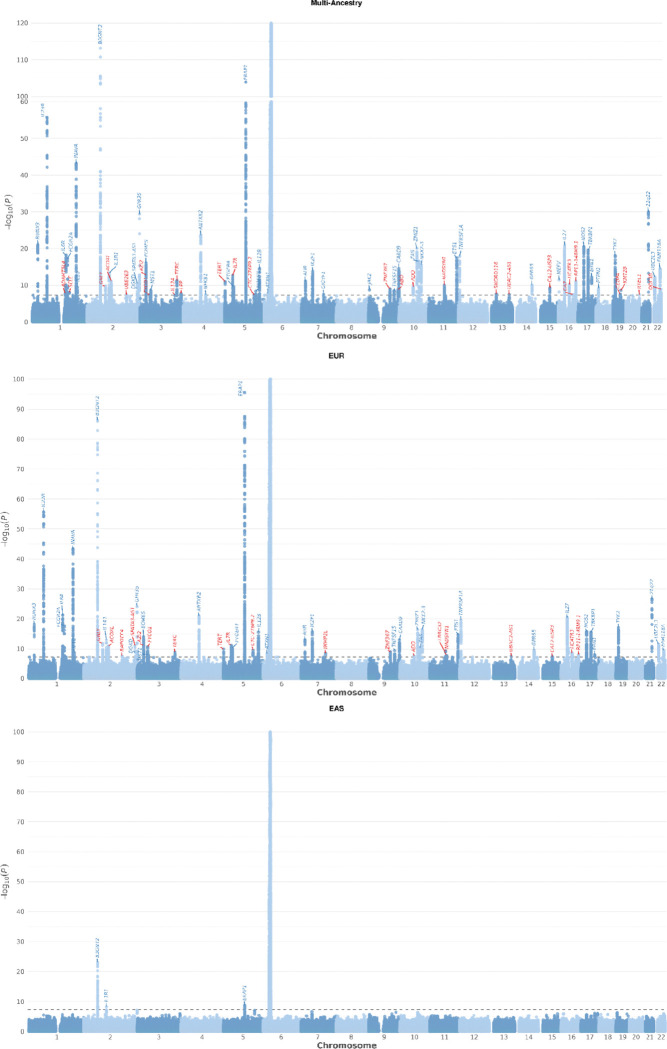 Figure 1
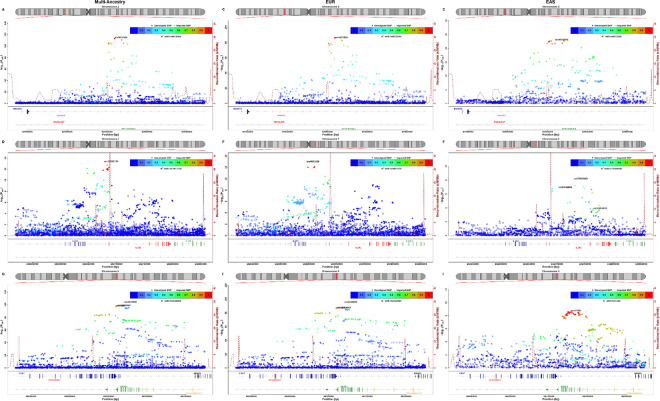 Figure 2
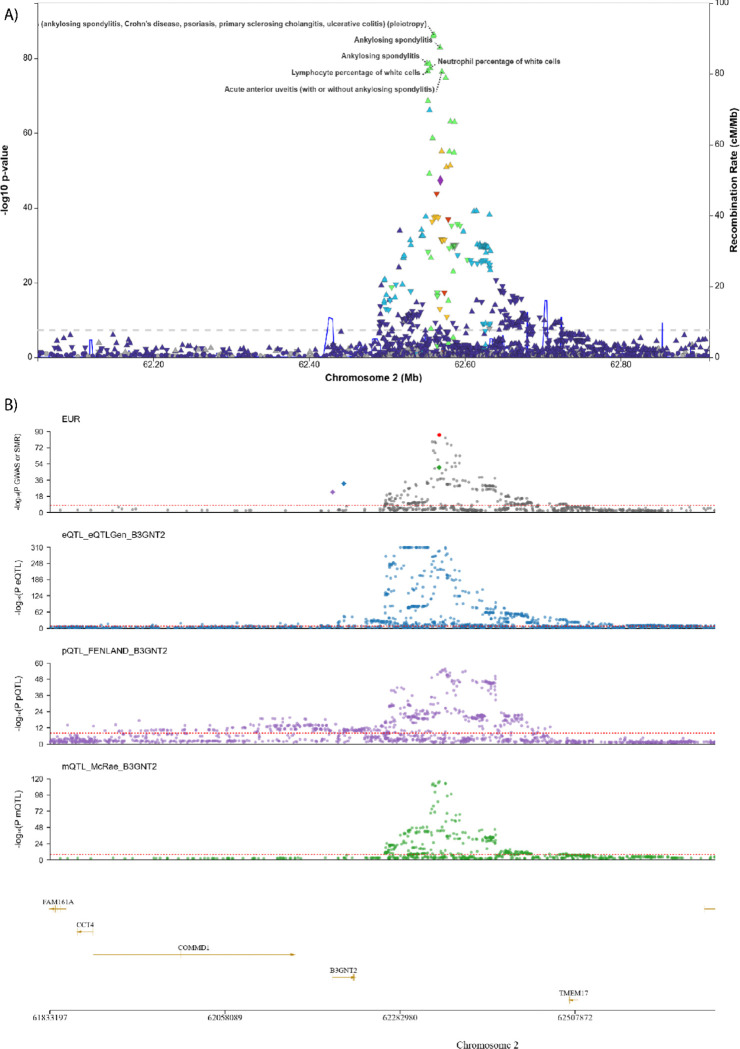 Figure 3
Peer Reviews
No public reviews on file for this paper yet. If you reviewed it on a platform where reviews are public (OpenReview, ICLR, NeurIPS, ICML), you can paste yours below so the community can read it here.
Videos
No videos yet. Explain this paper in a talk, walkthrough, or lecture? Add one.
Taxonomy
TopicsSpondyloarthritis Studies and Treatments · Rheumatoid Arthritis Research and Therapies · Systemic Lupus Erythematosus Research