Conjugative delivery of toxin genes ccdB and kil confers synergistic killing of bacterial recipients
Yang Grace Li, Daniel Haeusser, William Margolin, Peter J. Christie

TL;DR
Using bacteria to deliver toxin genes via conjugation can effectively kill other bacteria, offering a new approach to combat antibiotic resistance.
Contribution
Conjugative delivery of multiple toxin genes, rather than CRISPR-Cas9, shows stronger bacterial killing effects.
Findings
Toxin gene delivery was more effective than CRISPR-Cas9 in suppressing bacterial growth.
Combining CRISPR-Cas9 with toxin genes enhanced killing of transconjugant populations.
Capsule production in recipient bacteria had minimal protective effect against conjugative killing.
Abstract
The bacterial type IV secretion systems (T4SS) are medically problematic for their roles in the dissemination of mobile genetic elements or effector proteins, but they also have great potential for new antimicrobial therapies. Recent studies have deployed the T4SS subfamily of conjugation systems to deliver gene editing CRISPR/Cas systems to disrupt drug resistance genes or kill targeted bacterial recipients. However, the therapeutic potential of conjugative CRISPR/Cas delivery is compromised by mutations or host repair systems that diminish the efficiency with which CRISPR/Cas induces double-strand breaks in new transconjugants. Here, we compared the efficiencies of conjugation-based killing systems based on the delivery of CRISPR-Cas9 elements or toxin genes encoding the bacteriophage lambda Kil peptide or the F plasmid-encoded CcdB. Escherichia coli equipped with one of two efficient…
Genes, proteins, chemicals, diseases, species, mutations and cell lines named across the full text — each resolved to its canonical identifier and authoritative record.
Click any figure to enlarge with its caption.
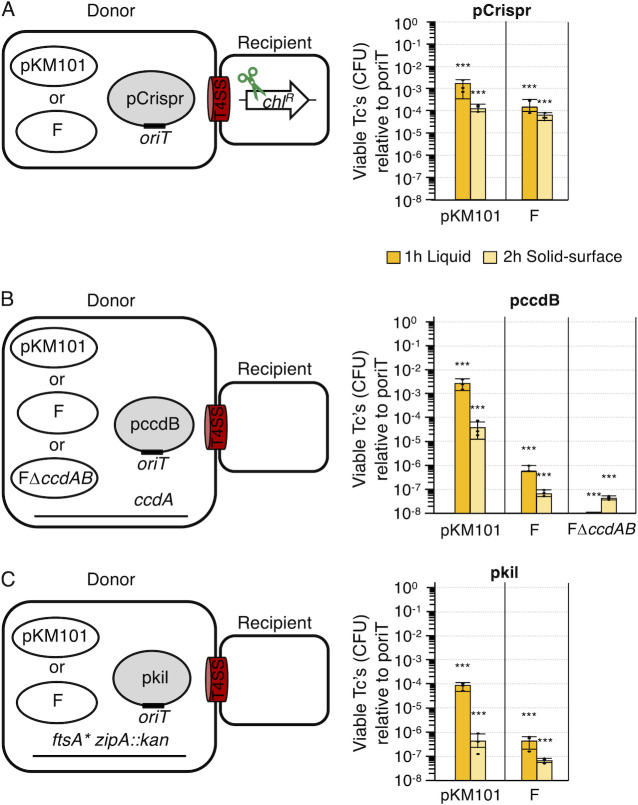 Figure 1
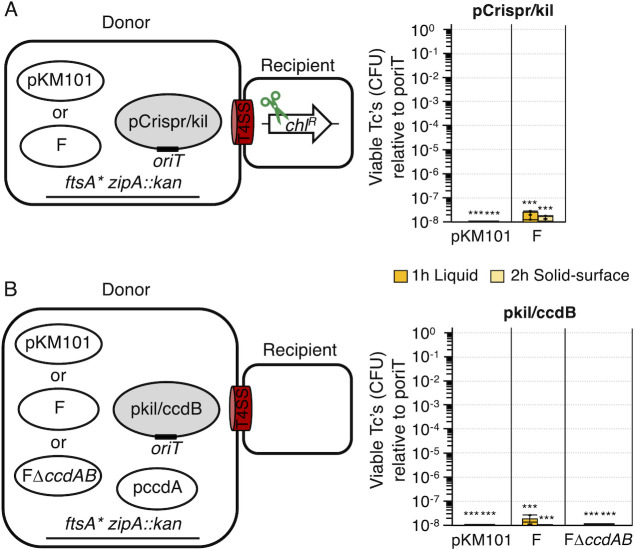 Figure 2
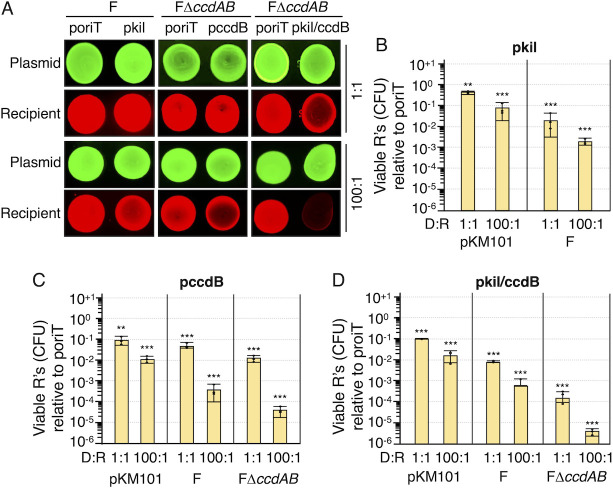 Figure 3
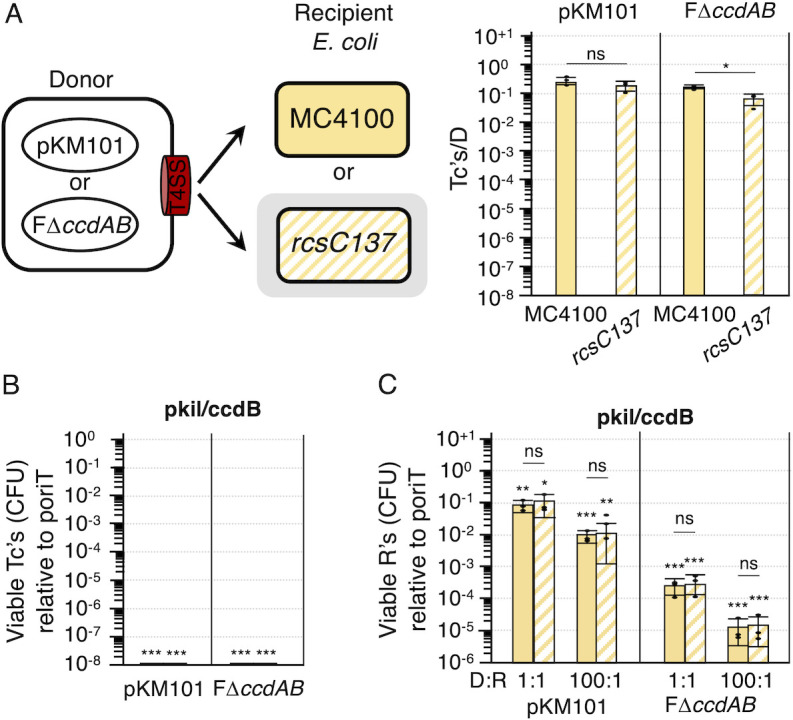 Figure 4
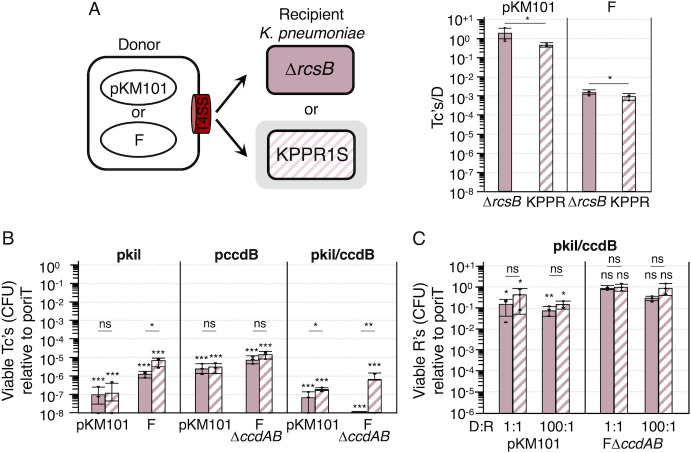 Figure 5
Peer Reviews
No public reviews on file for this paper yet. If you reviewed it on a platform where reviews are public (OpenReview, ICLR, NeurIPS, ICML), you can paste yours below so the community can read it here.
Videos
No videos yet. Explain this paper in a talk, walkthrough, or lecture? Add one.
Taxonomy
TopicsVibrio bacteria research studies · Bacterial Genetics and Biotechnology · Bacteriophages and microbial interactions