Genetic analysis of flagellar-mediated surface sensing by Pseudomonas aeruginosa PA14
Sherry L. Kuchma, C. J. Geiger, Shanice S. Webster, Yu Fu, Robert Montoya, George A. O’Toole

TL;DR
This paper explores how Pseudomonas aeruginosa uses its flagellum to sense surfaces and initiate biofilm formation.
Contribution
The study identifies new genetic components involved in flagellar-mediated surface sensing and c-di-GMP signaling in P. aeruginosa.
Findings
Mutations in flagellar genes ΔflgK or ΔfliC increase Pel EPS and c-di-GMP levels.
MotAB, MotCD, and FliG are key in surface-dependent c-di-GMP signaling.
SadC, RoeA, and SadB mutations block increased c-di-GMP phenotypes in ΔflgK mutants.
Abstract
Surface sensing is a key aspect of the early stage of biofilm formation. For Pseudomonas aeruginosa PA14, the type IV pili (T4P), the T4P alignment complex, and PilY1 were shown to play a key role in c-di-GMP signaling upon surface contact. The role of the flagellar machinery in surface sensing is less well understood for P. aeruginosa. Here, we show, consistent with findings from other groups, that a mutation in the gene encoding the flagellar hook protein (ΔflgK) or flagellin (ΔfliC) results in a strain that overproduces the Pel exopolysaccharide (EPS) with a concomitant increase in c-di-GMP levels. We use a candidate gene approach and genetic screens, combined with phenotypic assays, to identify key roles for the MotAB and MotCD stators and the FliG protein, a component of the flagellar switch complex, in stimulating the surface-dependent, increased c-di-GMP level noted for these…
Genes, proteins, chemicals, diseases, species, mutations and cell lines named across the full text — each resolved to its canonical identifier and authoritative record.
Click any figure to enlarge with its caption.
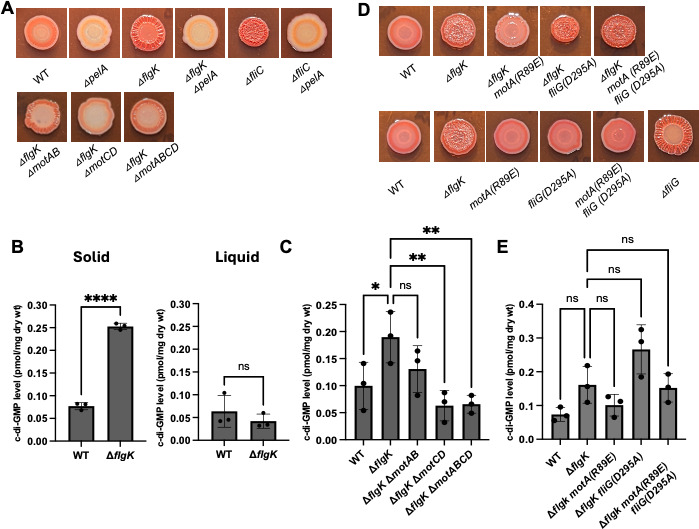 Figure 1
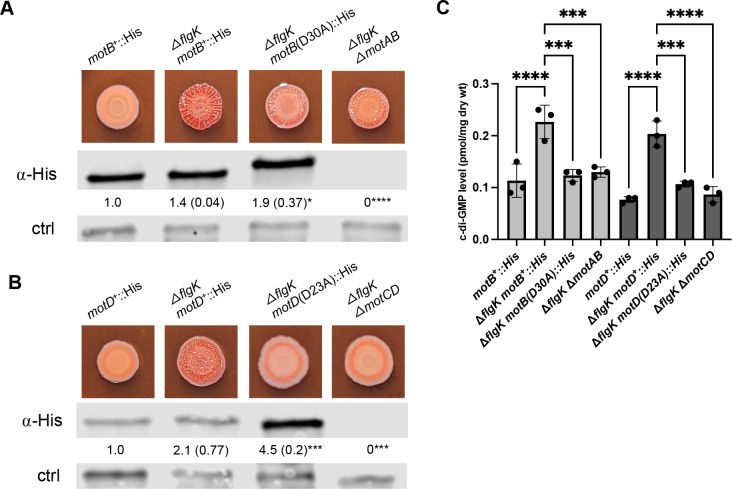 Figure 2
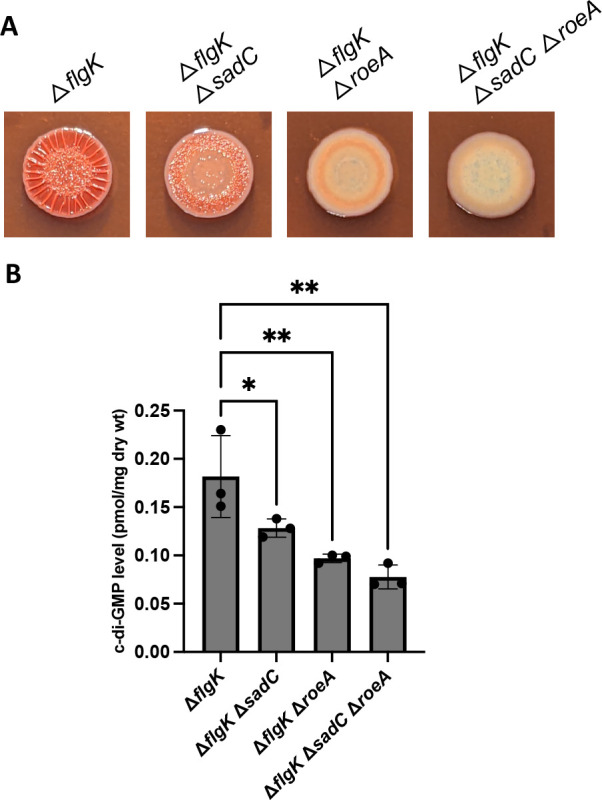 Figure 3
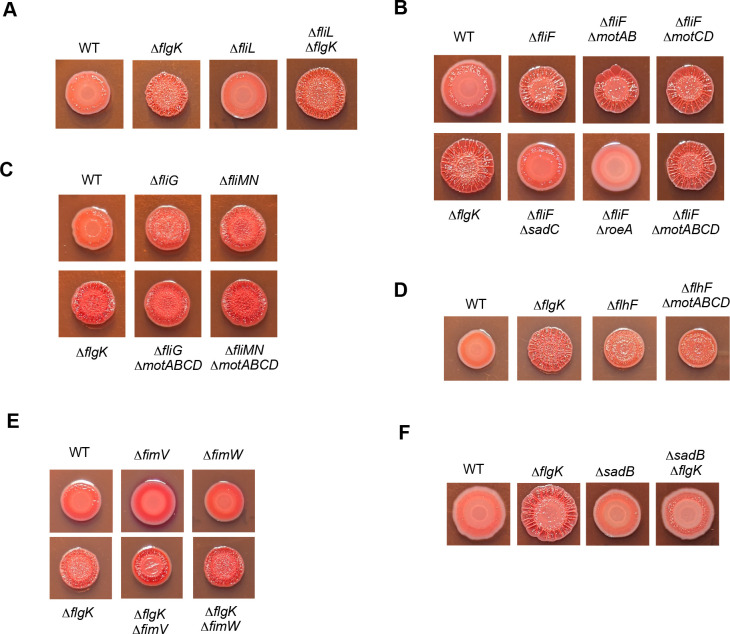 Figure 4
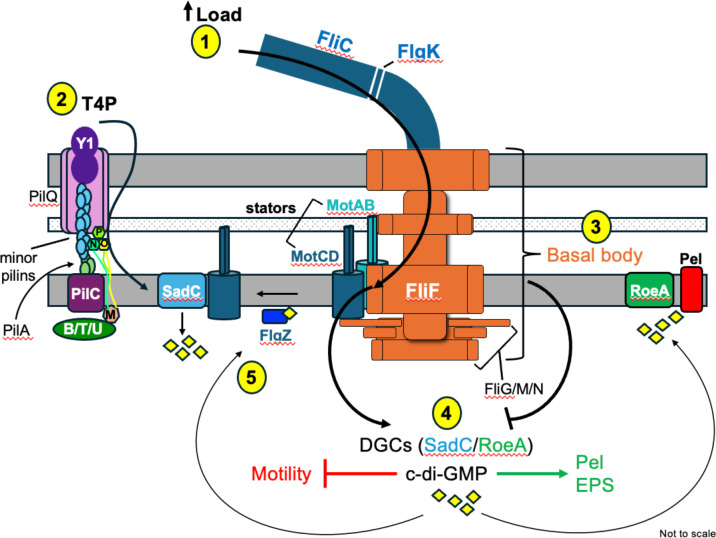 Figure 5
Peer Reviews
No public reviews on file for this paper yet. If you reviewed it on a platform where reviews are public (OpenReview, ICLR, NeurIPS, ICML), you can paste yours below so the community can read it here.
Videos
No videos yet. Explain this paper in a talk, walkthrough, or lecture? Add one.
Taxonomy
TopicsBacterial biofilms and quorum sensing · Microfluidic and Bio-sensing Technologies · Plant and Biological Electrophysiology Studies