Functional consequences of genetic variations in DgoR, a GntR/FadR family transcriptional repressor of D-galactonate metabolism in Escherichia coli
Swati Singh, Rajesh Mishra, Richa Ashok Kakkar, Shivam Singla, Akhil Pratap, Gaurav Sharma, Monika Sharma, Rachna Chaba

TL;DR
This study explores how genetic changes in a bacterial protein called DgoR affect its ability to control metabolism of D-galactonate, a sugar acid important for bacterial survival in the host.
Contribution
The study identifies specific genetic variations in DgoR that impact its DNA-binding and effector response functions, revealing their functional consequences in natural isolates.
Findings
Variants P24L and A152E show partial loss of DNA-binding ability.
Variants R71C and P92L exhibit decreased response to D-galactonate.
These variations affect growth of natural isolates on D-galactonate.
Abstract
Genetic variations in transcriptional regulators (TRs) of metabolic loci can influence host-bacterial interactions by affecting carbon utilization. Although the metabolism of sugar acids, including D-galactonate, is extensively implicated in the colonization and virulence of enteric bacteria, there has been no investigation on the extent of variations in their pathway-specific TRs. DgoR, the TR of D-galactonate metabolism, is the best-characterized GntR/FadR family sugar acid TR in enteric bacteria, recognized by the presence of an N-terminal winged helix-turn-helix DNA-binding domain and a C-terminal effector-binding and oligomerization (E-O) domain connected by a linker. Here, we examined 340 Escherichia coli isolates for variations in dgoR and studied their effect on repressor function. Genetic and biochemical studies identified variants with a partial loss of DNA-binding ability…
Genes, proteins, chemicals, diseases, species, mutations and cell lines named across the full text — each resolved to its canonical identifier and authoritative record.
Click any figure to enlarge with its caption.
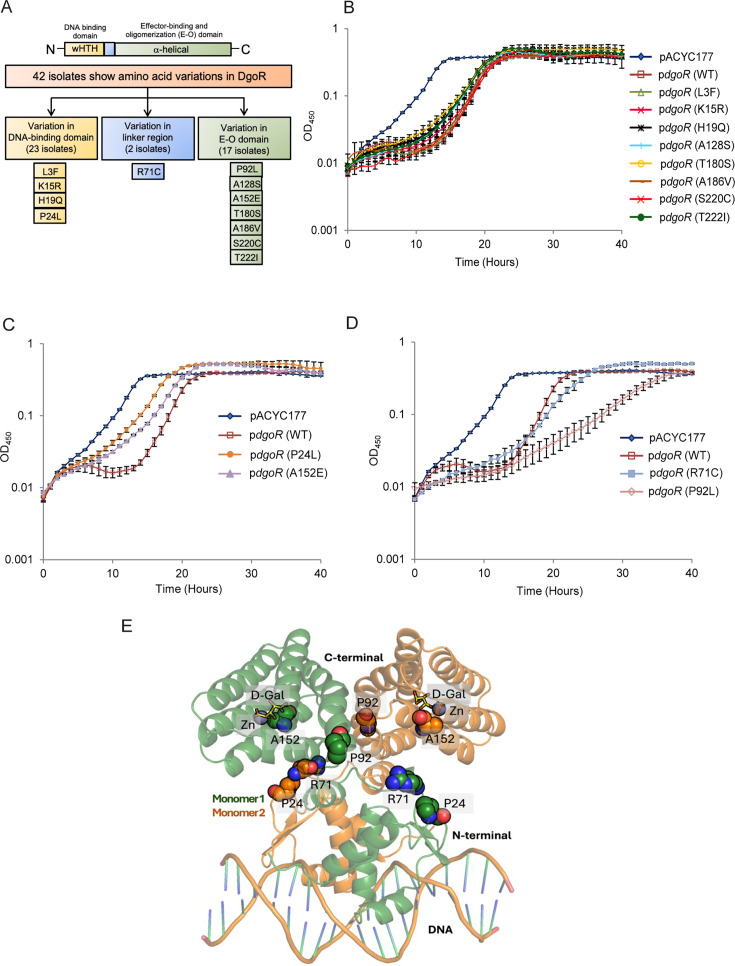 Figure 1
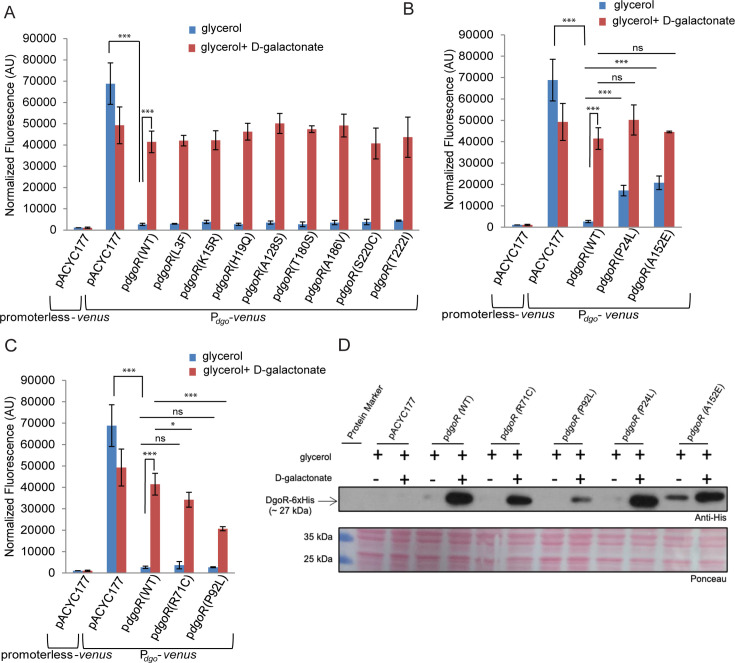 Figure 2
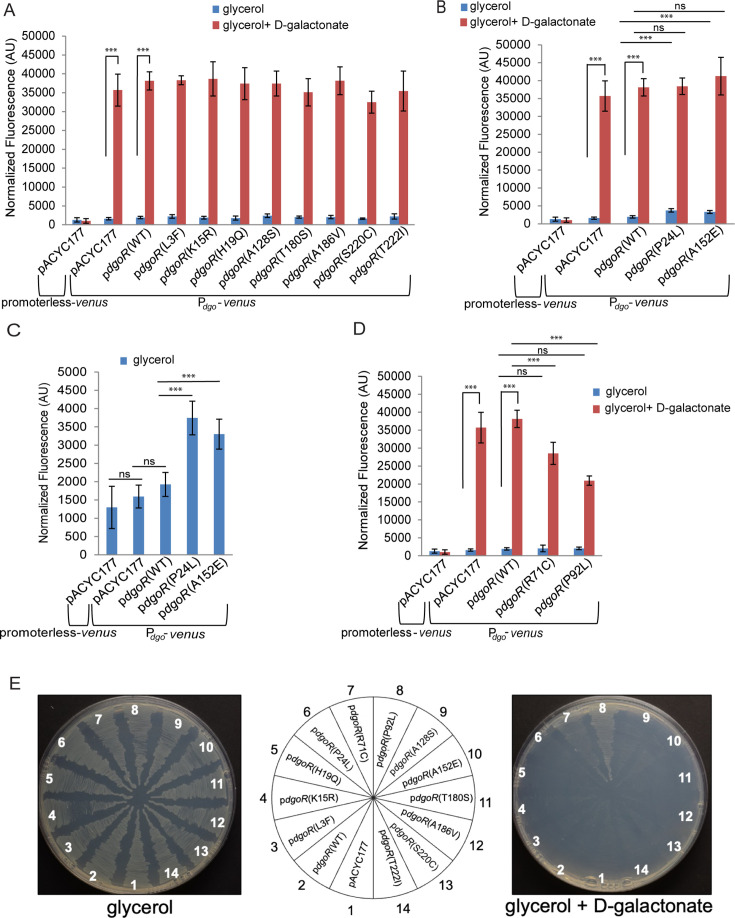 Figure 3
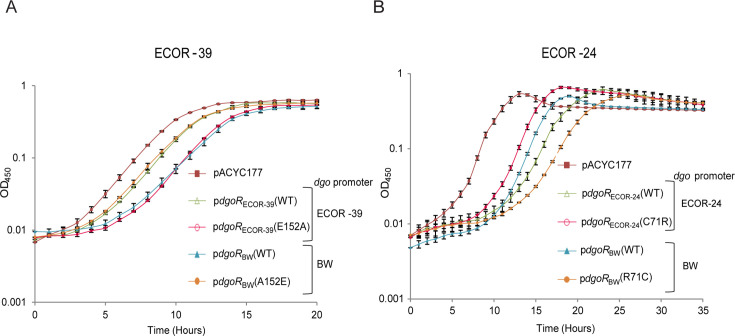 Figure 4
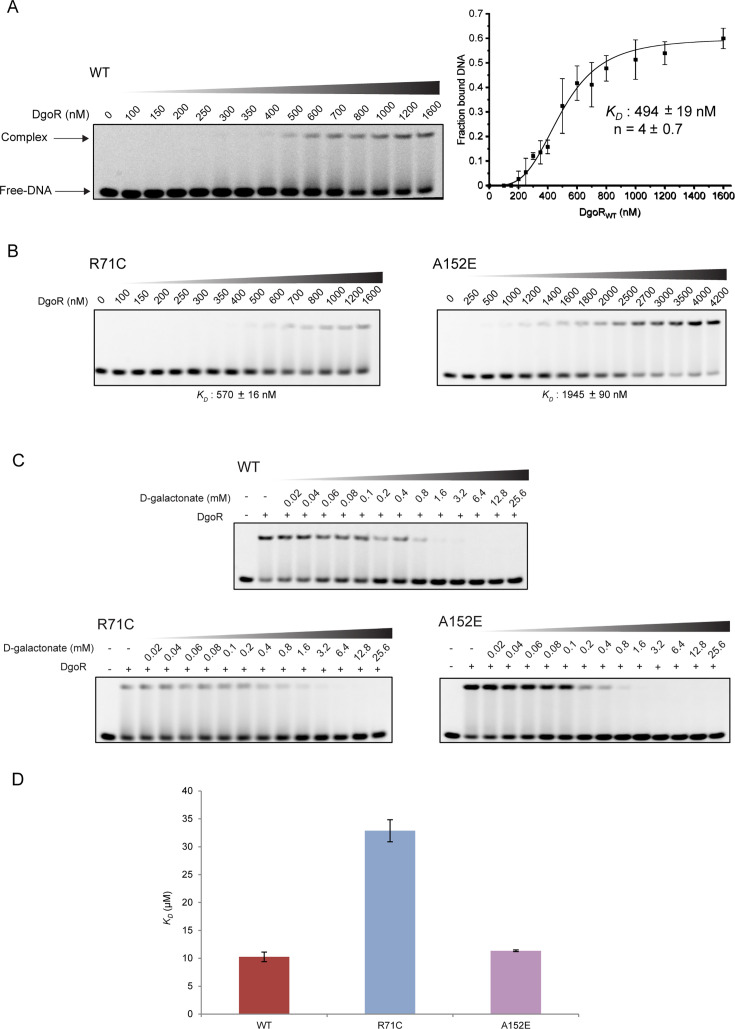 Figure 5
 Figure 6
 Figure 7
Peer Reviews
No public reviews on file for this paper yet. If you reviewed it on a platform where reviews are public (OpenReview, ICLR, NeurIPS, ICML), you can paste yours below so the community can read it here.
Videos
No videos yet. Explain this paper in a talk, walkthrough, or lecture? Add one.
Taxonomy
TopicsAmino Acid Enzymes and Metabolism · Diet, Metabolism, and Disease · Diet and metabolism studies