A novel membrane stress response that blocks chromosomal replication by targeting the DnaA initiator via the ClpP protease
Alabi Gbolahan, Tong Li, Rishit Saxena, Karen Wolcott, Aamna Sohail, Ishika Ahmed, Dhruba K. Chattoraj, Elliott Crooke, Rahul Saxena

TL;DR
The study reveals a new bacterial stress response where membrane stress blocks DNA replication by degrading a key protein called DnaA through the ClpP protease.
Contribution
A novel stress response pathway is identified that links membrane stress to replication arrest via ClpP protease and DnaA degradation, independent of Lon and (p)ppGpp.
Findings
Membrane stress activates ClpP protease, which degrades DnaA and blocks DNA replication.
DnaA loss is sufficient to cause growth arrest under membrane stress.
The pathway operates independently of Lon protease and (p)ppGpp, distinguishing it from other stress responses.
Abstract
In Escherichia coli, membrane stress due to interrupted lipoprotein (Lpp) maturation impairs DNA replication and arrests cell growth. How Lpp maturation and DNA replication are connected remains unclear. We demonstrate that upon membrane stress, the Rcs stress-response pathway is activated, and the replication initiator DnaA is lost, which explains the replication block. However, Lon protease, a key regulator of the Rcs pathway, is not required for the DnaA loss. We further ruled out the involvement of (p)ppGpp, one of the major mediators of stress responses in bacteria. On the other hand, upon deletion of the ClpP protease gene, DnaA was stable, replication was not inhibited, and there was no cell-growth arrest. In wild-type cells, overexpression of DnaA was lethal even without the membrane stress apparently from hyperinitiation. In ∆crp cells, hyperinitiation was restrained, and…
Genes, proteins, chemicals, diseases, species, mutations and cell lines named across the full text — each resolved to its canonical identifier and authoritative record.
Click any figure to enlarge with its caption.
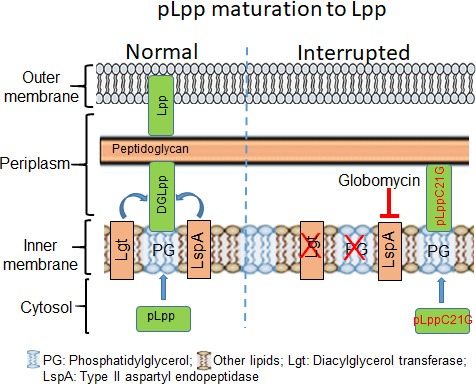 Figure 1
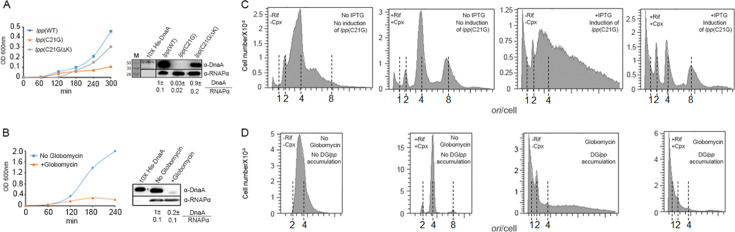 Figure 2
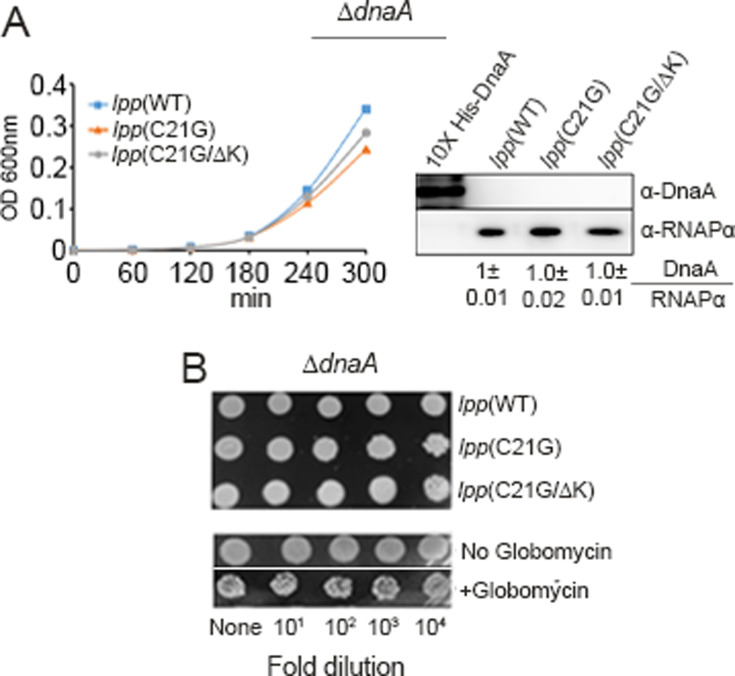 Figure 3
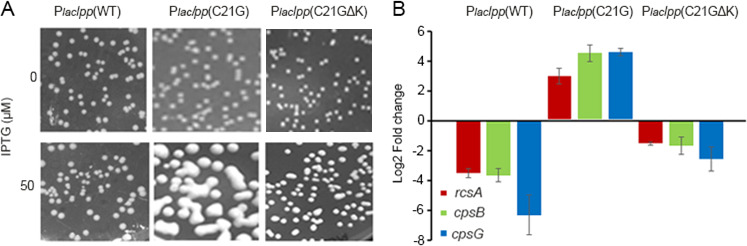 Figure 4
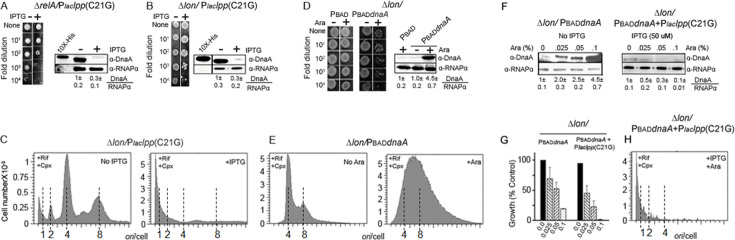 Figure 5
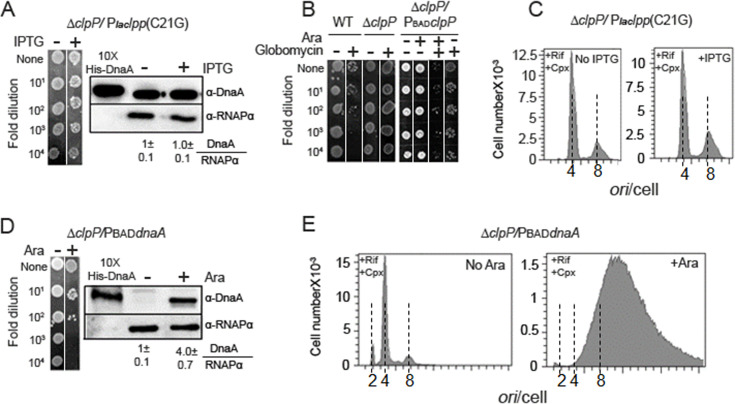 Figure 6
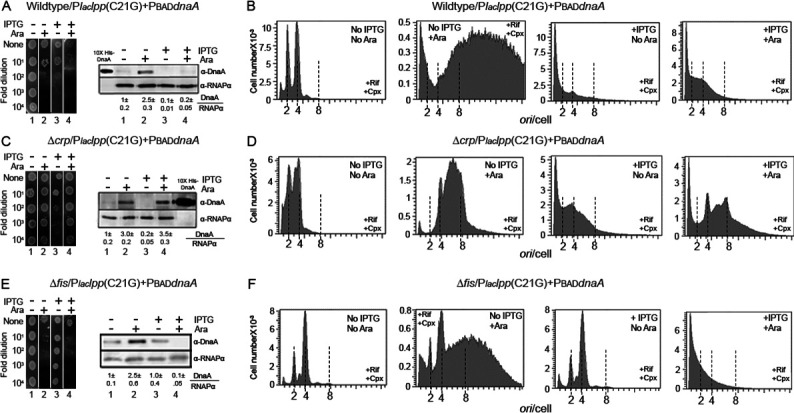 Figure 7
 Figure 8
Peer Reviews
No public reviews on file for this paper yet. If you reviewed it on a platform where reviews are public (OpenReview, ICLR, NeurIPS, ICML), you can paste yours below so the community can read it here.
Videos
No videos yet. Explain this paper in a talk, walkthrough, or lecture? Add one.
Taxonomy
TopicsDNA Repair Mechanisms · Bacterial Genetics and Biotechnology · Enzyme Structure and Function