Targeted degradation of sICOSL reverses cytotoxic T cells dysfunction
Zhenghao Wu, Peng Zheng, Ruobing Qi, Yunxiao Xiao, Zihan Xi, Lei Dai, Tao Chen, Qianheng Wang, Furong Zhang, Rong Wang, Zimei Tang, Xiangwang Zhao, Jie Tan, Jie Ming, Ping Lei, Chunping Liu, Tao Huang

TL;DR
A soluble form of ICOSL weakens T cell function in cancer, and targeting its degradation could improve immunotherapy.
Contribution
A nanobody-DPP4 fusion protein is developed to specifically degrade sICOSL and restore T cell function.
Findings
Increased sICOSL causes T cell dysfunction and poor breast cancer survival.
DPP4 degrades sICOSL, but chemotherapy drugs reduce DPP4 via EZH2 activation.
Nanobody-DPP4 fusion proteins selectively target and degrade sICOSL in tumors.
Abstract
Dysfunction of cytotoxic T cells (CTL) remains a major cause of tumor immune evasion and is correlated with poor cancer survival. Here, we found that increased soluble form of ICOSL (sICOSL) induced CTL dysfunction and was associated with shorter survival of patients with breast cancer. sICOSL emerged as a formidable adversary to CTLs, by directly triggering ICOS internalization and subsequent degradation—a critical blow to the co-stimulatory machinery essential for CTL activation. Our research shows that dipeptidyl peptidase-4 (DPP4) mainly breaks down sICOSL. Notably, certain chemotherapeutic drugs activate the histone methyltransferase Enhancer of zeste homolog 2 (EZH2), which in turn suppresses DPP4 expression. To address this issue, we have developed nanobody-DPP4 fusion proteins that can specifically degrade sICOSL, achieving substrate selectivity and tumor targeting. Overall,…
Genes, proteins, chemicals, diseases, species, mutations and cell lines named across the full text — each resolved to its canonical identifier and authoritative record.
Click any figure to enlarge with its caption.
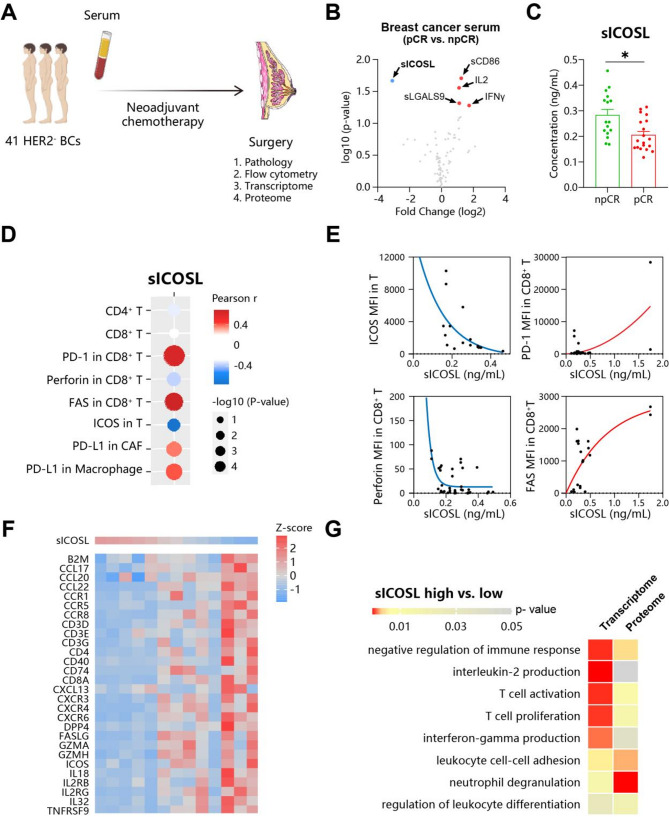 Figure 1
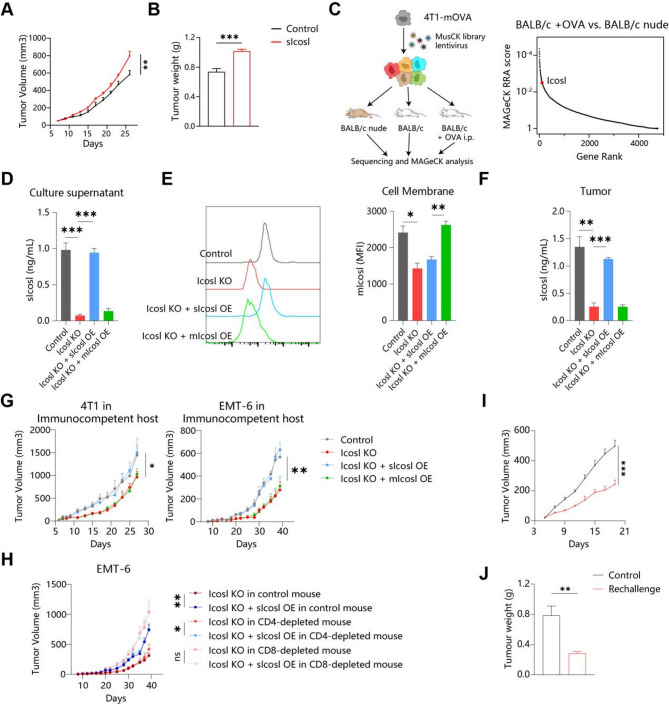 Figure 2
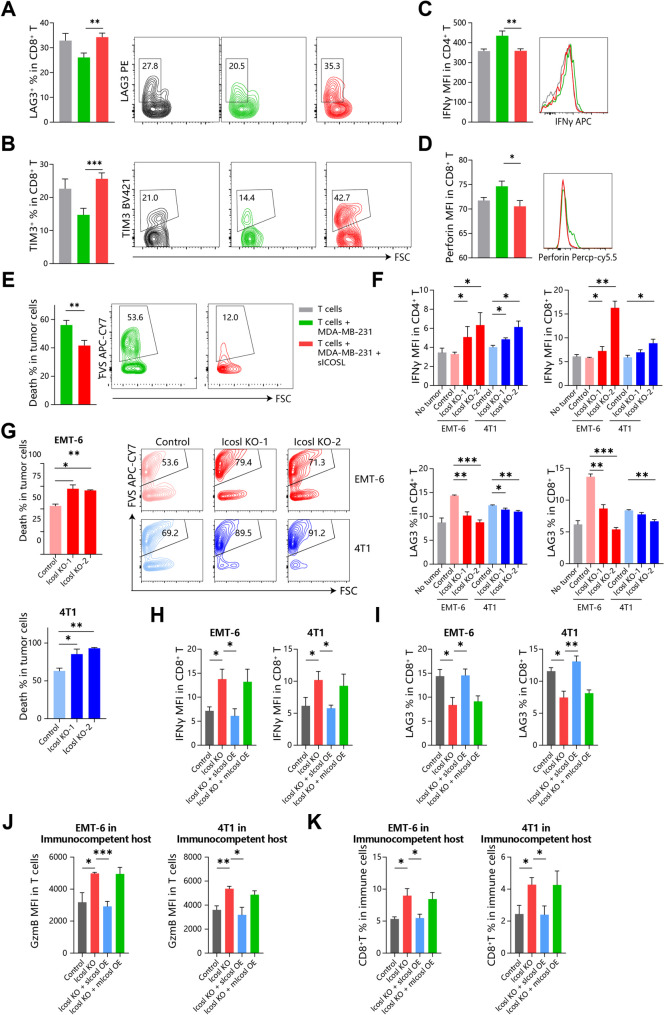 Figure 3
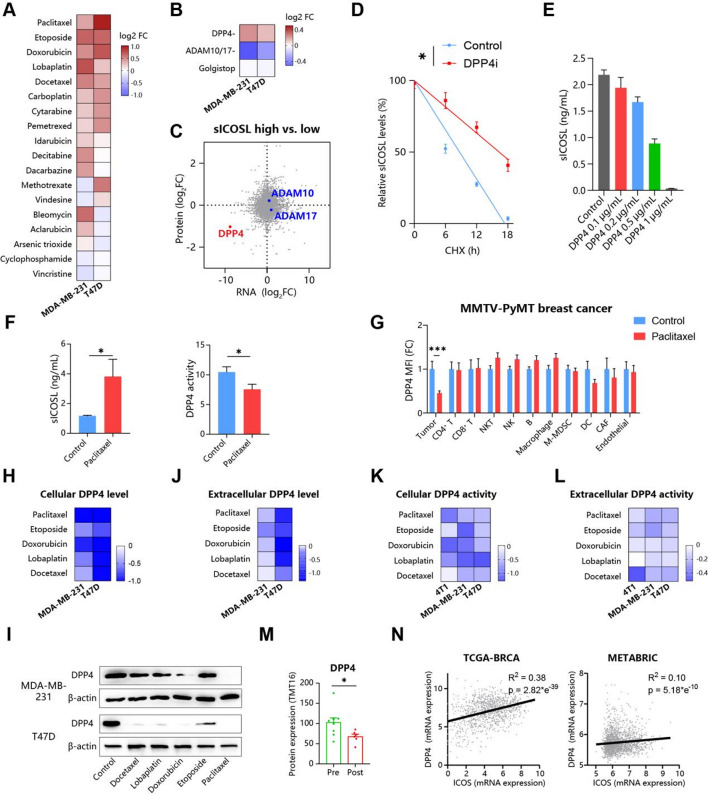 Figure 4
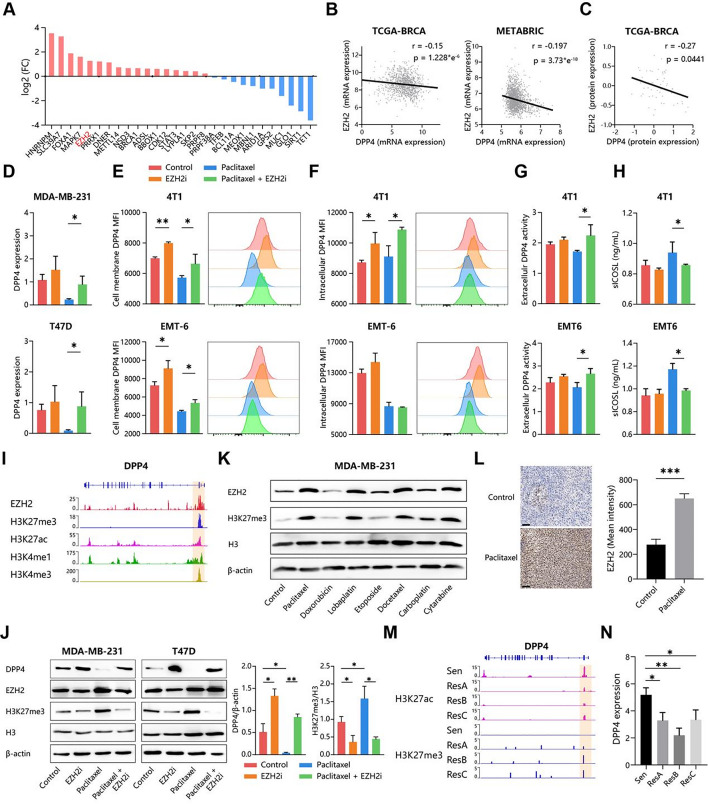 Figure 5
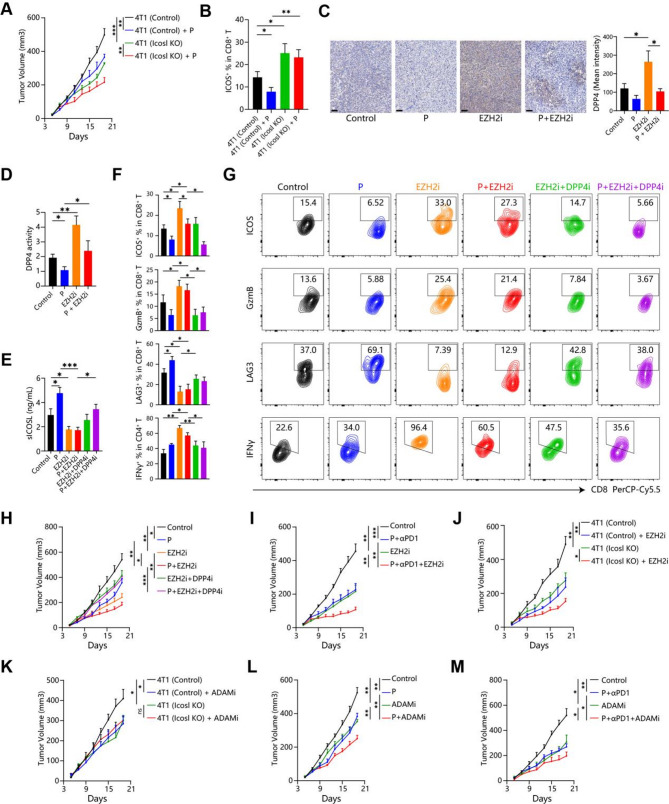 Figure 6
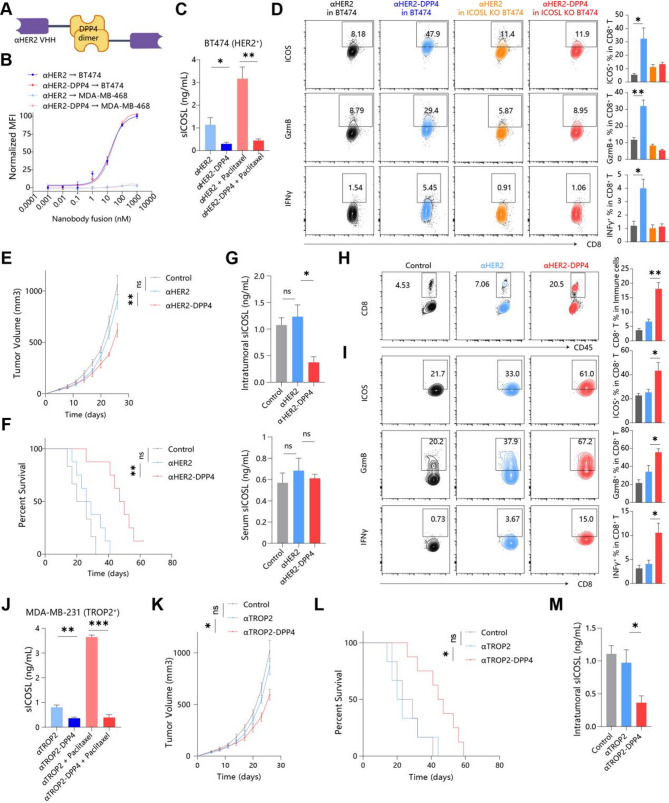 Figure 7
Peer Reviews
No public reviews on file for this paper yet. If you reviewed it on a platform where reviews are public (OpenReview, ICLR, NeurIPS, ICML), you can paste yours below so the community can read it here.
Videos
No videos yet. Explain this paper in a talk, walkthrough, or lecture? Add one.
Taxonomy
TopicsPeptidase Inhibition and Analysis · CAR-T cell therapy research · Immunotherapy and Immune Responses