Genome-wide association studies of Alzheimer’s disease and related disorders stratified by sex, onset age, and Apolipoprotein E genotype reveal novel risk loci in African Americans
Richard Sherva, Congcong Zhu, Rui Zhang, Jesse Mez, Richard Hauger, Victoria C. Merritt, Matthew Panizzon, J. Michael Gaziano, Vidriana Catanzaro, Gerard D. Schellenberg, Margaret Pericak-Vance, Jonathan L. Haines, Li-San Wang, Richard Mayeux, J. Michael Gaziano

TL;DR
This study identifies new genetic risk factors for Alzheimer's disease in African Americans by analyzing data stratified by age, sex, and APOE genotype.
Contribution
The study reveals novel risk loci in African Americans through stratified genome-wide analyses that were previously underpowered.
Findings
A novel risk locus near EPHA5 was found in individuals with early-onset Alzheimer's disease.
GRIN3B showed significant association in females and TSPEAR in APOE-ε4 non-carriers.
Stratified analyses highlight genetic heterogeneity in dementia risk among African Americans.
Abstract
Alzheimer’s disease (AD) risk variants have been identified in European ancestry cohorts that have stronger effects at certain ages, in individuals with a specific sex, or in those with specific isoforms of APOE, the strongest AD risk locus. However, sample sizes in African ancestry (AA) cohorts have been underpowered to perform stratified analyses. We generated genome-wide association study datasets stratified by sex, age at onset (< 75 vs ≥ 75), and APOE-ε4 carrier status in AA cohorts from MVP and the Alzheimer’s Disease Genetics Consortium (ADGC). Outcomes in MVP were AD and related dementias (ADRD; n = 4073 cases and 19,648 controls) and proxy dementia (i.e., reported dementia in a parent, n = 6216 cases and 21,566 controls) while ADGC analyses examined AD (n = 2425 cases and 5069 controls). The proxy dementia GWASs were included in the sex-stratified meta-analysis corresponding…
Genes, proteins, chemicals, diseases, species, mutations and cell lines named across the full text — each resolved to its canonical identifier and authoritative record.
Click any figure to enlarge with its caption.
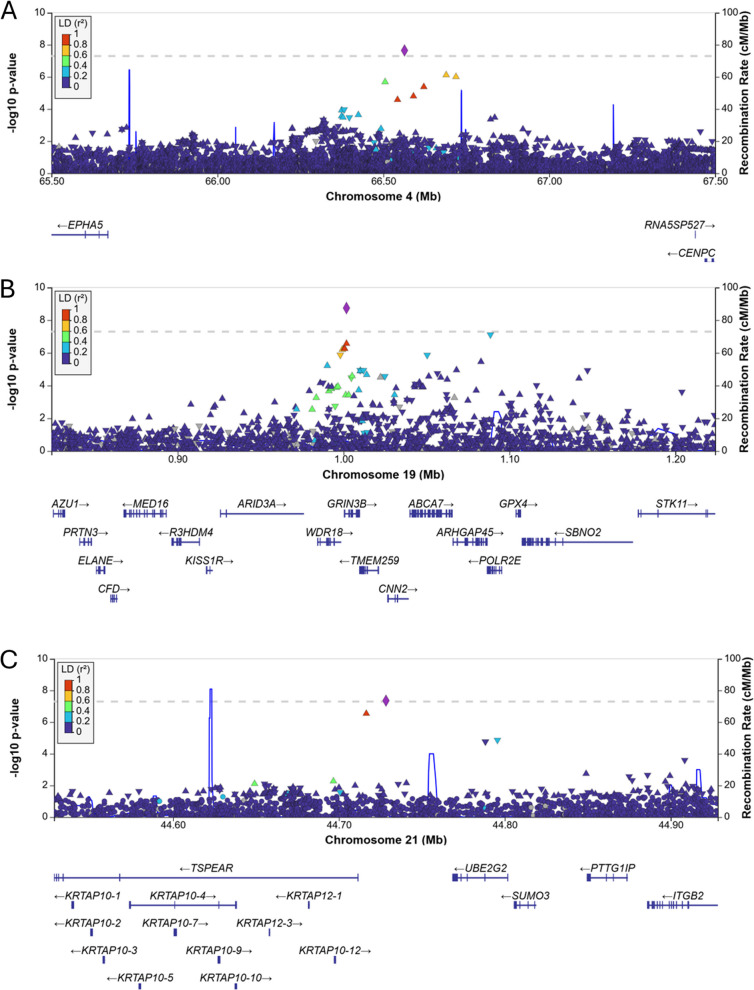 Figure 1
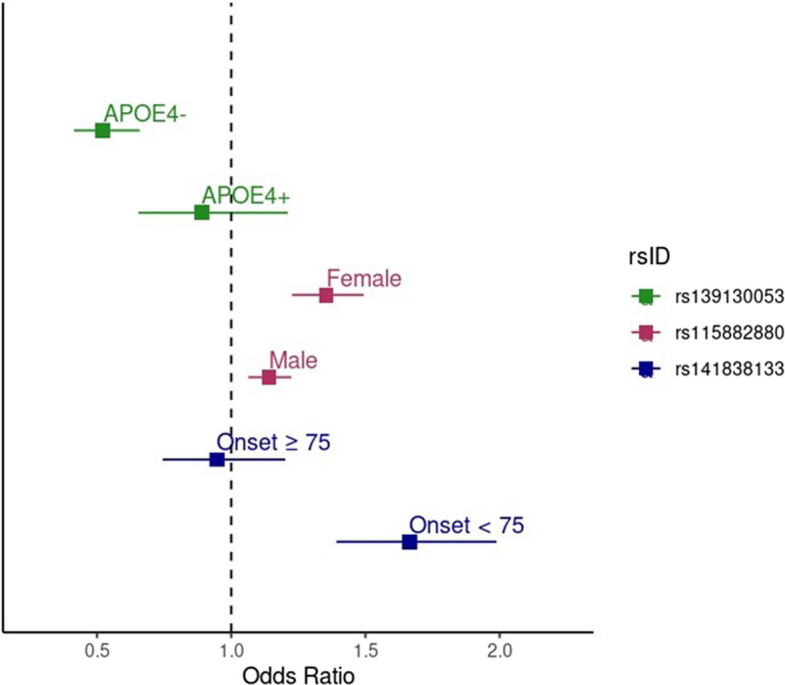 Figure 2
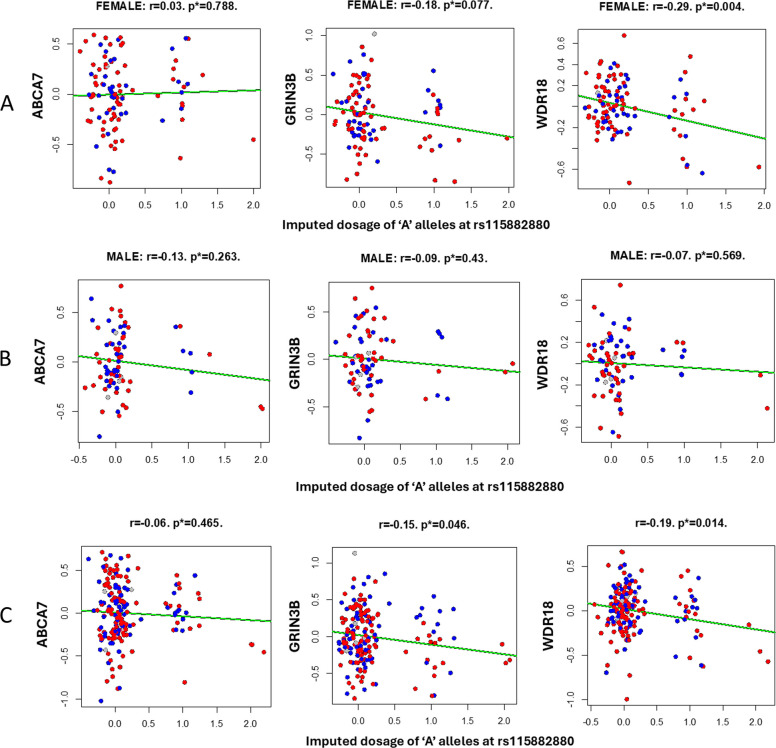 Figure 3
Peer Reviews
No public reviews on file for this paper yet. If you reviewed it on a platform where reviews are public (OpenReview, ICLR, NeurIPS, ICML), you can paste yours below so the community can read it here.
Videos
No videos yet. Explain this paper in a talk, walkthrough, or lecture? Add one.
Taxonomy
TopicsGenetic Associations and Epidemiology · Alzheimer's disease research and treatments · Wnt/β-catenin signaling in development and cancer