Meteorological and environmental factors associated with the exposure to tick-borne encephalitis virus (TBEV) in cattle, north-eastern France, 2018–2019
Laure Mathews-Martin, Raphaëlle Metras, Jean-Marc Boucher, Christophe Caillot, Sandrine A. Lacour, Marine Dumares, Cécile Beck, Gaëlle Gonzalez, Laure Bournez

TL;DR
This study found that cattle in northeastern France are exposed to tick-borne encephalitis virus, with higher risk in cooler, forested areas.
Contribution
This is the first large-scale serological survey of TBEV in cattle in France.
Findings
TBEV antibodies were detected in 7.5% of cattle in northeastern France.
Highest seroprevalence (72.5%) was observed in the southern Vosges Mountains.
Exposure was linked to cooler temperatures, mixed forests, and proximity to wooded areas.
Abstract
Tick-borne encephalitis virus (TBEV) is a severe neurological disease that can be transmitted to humans through the bites of infected ticks or the consumption of unpasteurised dairy products from infected but asymptomatic ruminants. The recent detection of food-borne cases in France is a rising concern, since the production and consumption of raw milk cheese is common. There is limited data available on seroprevalence and factors associated with the exposure to TBEV of domestic ungulates in Europe, and to date, such data are not available in France. A total of 4,483 cattle sera were collected between 2018 and 2019. We used principal component analysis and spatial random forest modelling to explore meteorological and landscape predictors and their relationships with seroprevalence levels. TBEV antibodies were detected in cattle across the region, with an overall apparent seroprevalence…
Genes, proteins, chemicals, diseases, species, mutations and cell lines named across the full text — each resolved to its canonical identifier and authoritative record.
Click any figure to enlarge with its caption.
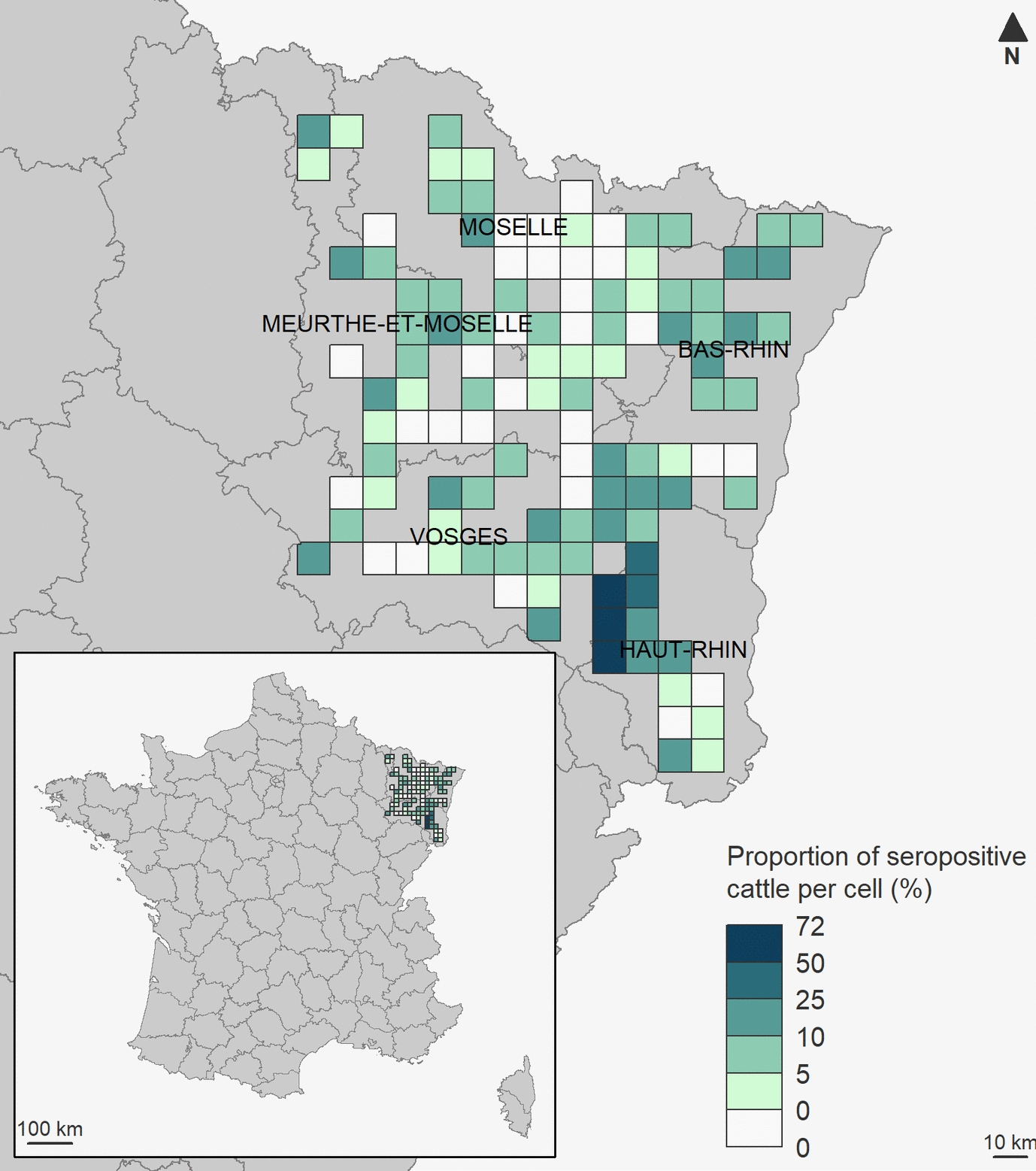 Figure 1
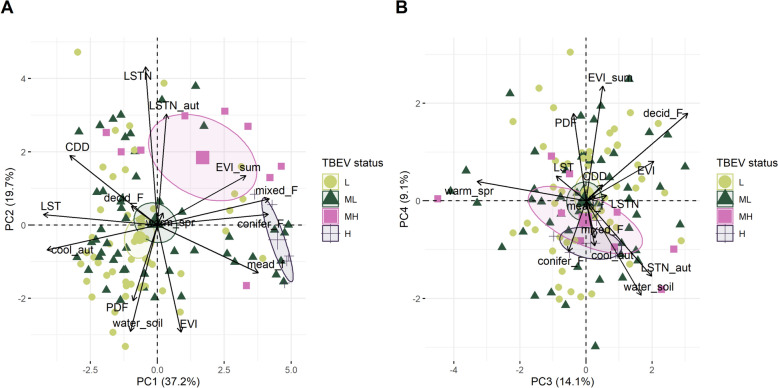 Figure 2
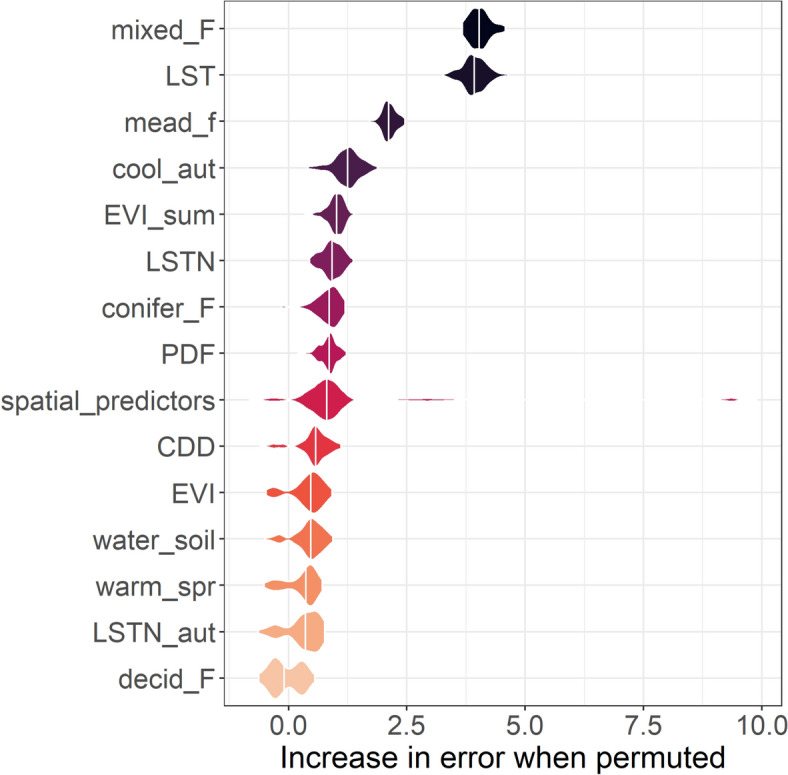 Figure 3
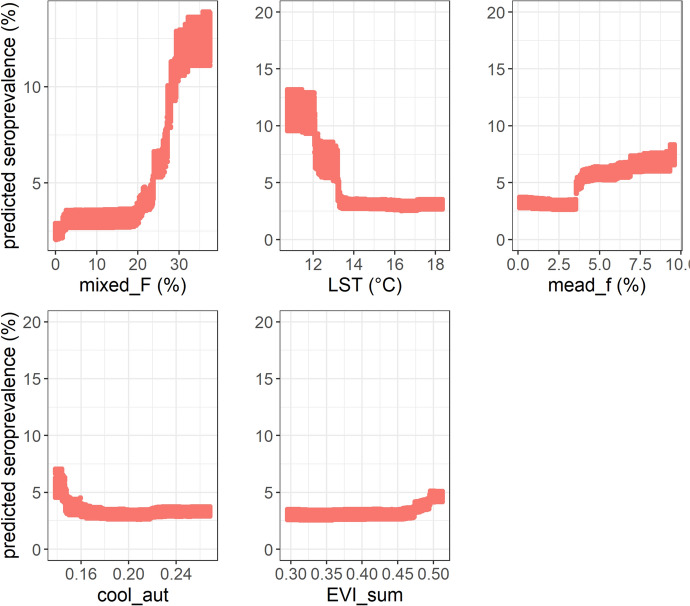 Figure 4
Peer Reviews
No public reviews on file for this paper yet. If you reviewed it on a platform where reviews are public (OpenReview, ICLR, NeurIPS, ICML), you can paste yours below so the community can read it here.
Videos
No videos yet. Explain this paper in a talk, walkthrough, or lecture? Add one.
Taxonomy
TopicsVector-borne infectious diseases · Viral Infections and Vectors · Vector-Borne Animal Diseases