Nuances in visual rehabilitation after pituitary surgery
Saksham Gupta, Wenya Linda Bi

TL;DR
This paper discusses how visual problems after pituitary surgery can persist and affect patients' lives, emphasizing the need for multidisciplinary care and better understanding of recovery.
Contribution
The paper highlights emerging concepts in visual monitoring and recovery after pituitary surgery and identifies gaps in current knowledge.
Findings
Persistent visual deficits after surgery significantly impact quality of life.
Multidisciplinary teams are essential for managing postoperative visual issues.
Intraoperative visual evoked potentials can help monitor potential vision damage during surgery.
Abstract
Patients with pituitary lesions often present with visual deficits attributable to mass effect along the optic pathway or on the cranial nerves controlling extraocular muscles. While symptoms often improve after treatment, persistent symptoms negatively impact quality of life. We reviewed the literature on emerging concepts in visual monitoring and recovery during and after pituitary surgery. Rigorous preoperative laboratory testing, neuro-ophthalmologic examination, and imaging abet planning of safe surgery. Intraoperative visual evoked potentials may provide an adjunct to monitor impending damage to vision during surgery, particularly for recurrent tumors that may have scarred onto visual structures. Treatment of persistent visual deficits depends on the physiological cause of the deficit, the duration of symptoms, and the degree and pace of spontaneous recovery. Management ranges…
Genes, proteins, chemicals, diseases, species, mutations and cell lines named across the full text — each resolved to its canonical identifier and authoritative record.
Click any figure to enlarge with its caption.
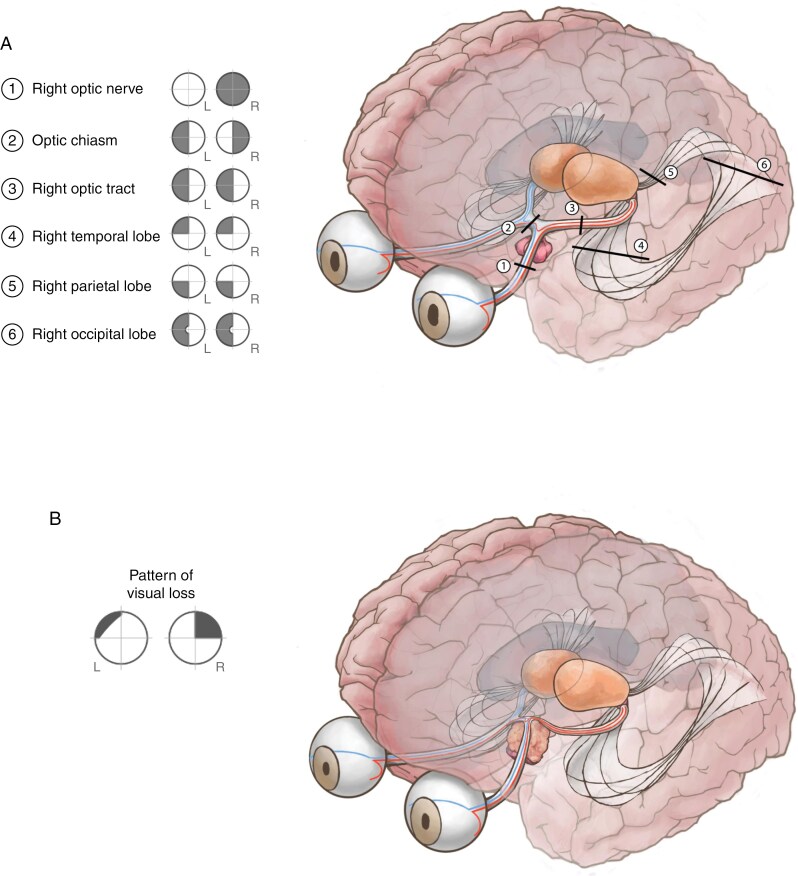 Figure 1
Peer Reviews
No public reviews on file for this paper yet. If you reviewed it on a platform where reviews are public (OpenReview, ICLR, NeurIPS, ICML), you can paste yours below so the community can read it here.
Videos
No videos yet. Explain this paper in a talk, walkthrough, or lecture? Add one.
Taxonomy
TopicsPituitary Gland Disorders and Treatments · Ophthalmology and Eye Disorders · Intraoperative Neuromonitoring and Anesthetic Effects