Boron-Rich Soft Hydrogels Based on the Coassembly of Cationic A‑B‑A Triblock Copolymers with Closo-Dodecaborate
Soňa Mesíková, Jianwei Li, Sami Kereïche, Zdeněk Tošner, Mariusz Uchman, Miroslav Štěpánek, Michael Gradzielski, Pavel Matějíček

TL;DR
This paper introduces a new type of hydrogel made from boron clusters and cationic polymers, showing unique structural and mechanical properties.
Contribution
The study presents a novel electrostatic hydrogel based on anionic boron clusters and cationic triblock copolymers.
Findings
The coassembly forms 10–15 nm domains that evolve into macroscopic gels with increasing concentration.
Rheology shows that longer PGEA blocks produce stronger, more gel-like systems with shear-thinning behavior.
The gels exhibit self-healing properties with structural reorganization.
Abstract
We present an unusual type of electrostatic hydrogel based on anionic boron cluster compounds, which remain almost unexplored in the literature. Cationic PGEA–PEO–PGEA triblock copolymers coassembled with dianionic closo-dodecaborate clusters to nanostructures with the PGEA/closo-dodecaborate domains with a diameter of around 10–15 nm. Flower-like micelles were observed only at high dilutions, and the dynamic character of the domains was expressed by the formation of bigger particles consisting of multiple domains connected by the PEO bridges. The size of the nanogel particles gradually increased with the sample concentration, leading to macroscopic gelation of the solutions. The SAXS analysis revealed that the shape of the domains is also changing with sample concentration, and isolated short cylinders merge into a continuous phase in the gel-like samples. The rheology measurements…
Genes, proteins, chemicals, diseases, species, mutations and cell lines named across the full text — each resolved to its canonical identifier and authoritative record.
Click any figure to enlarge with its caption.
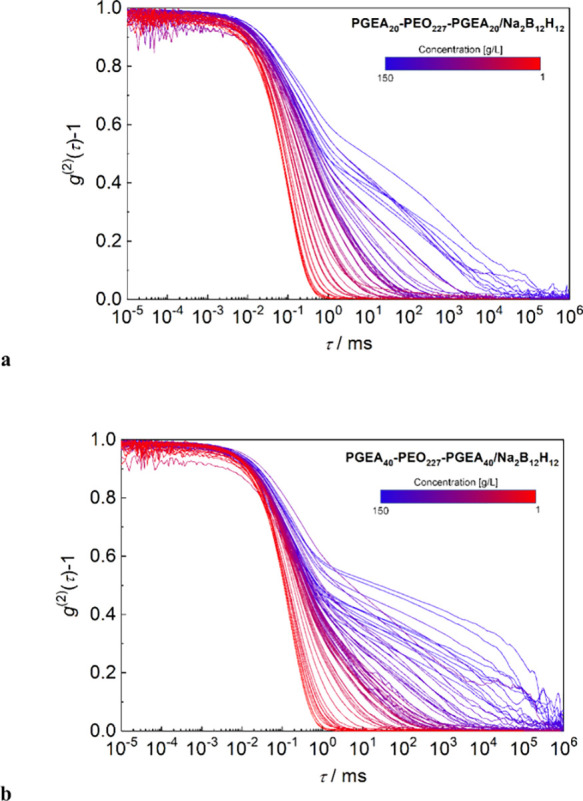 Figure 1
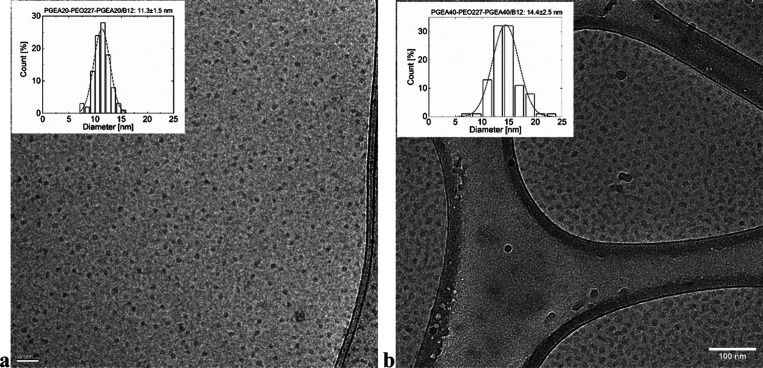 Figure 2
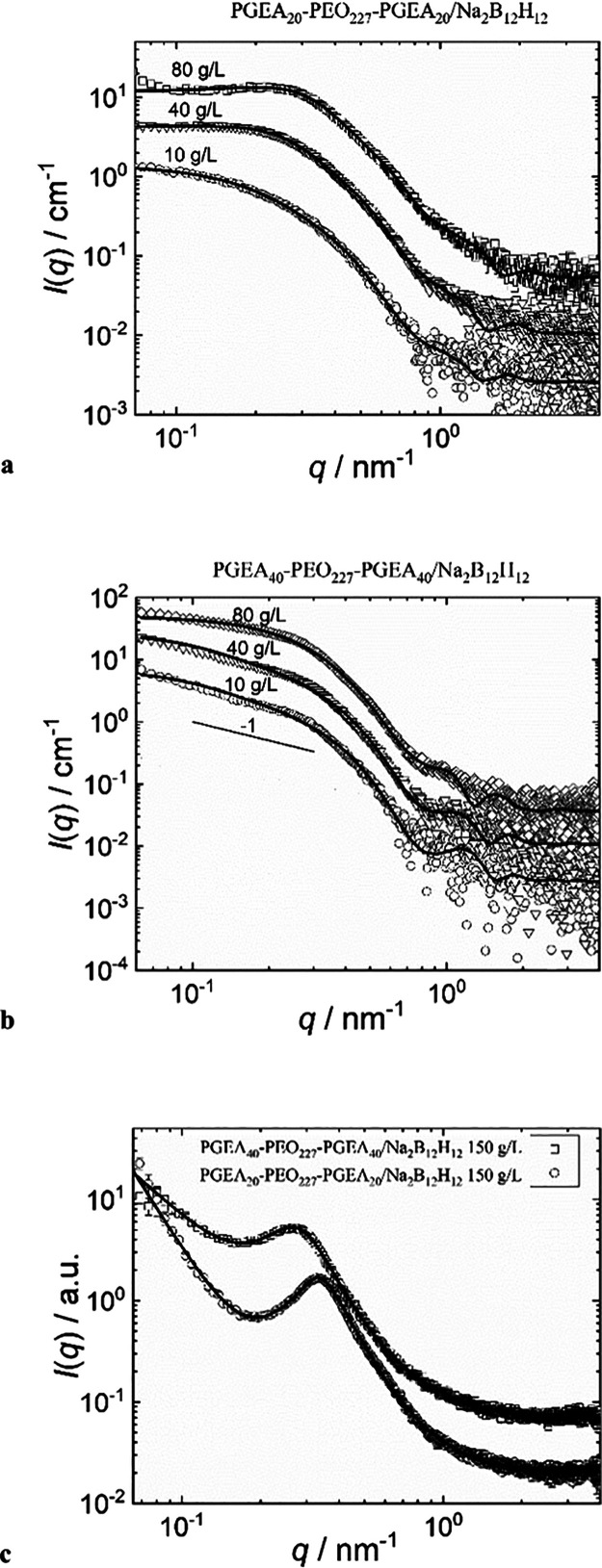 Figure 3
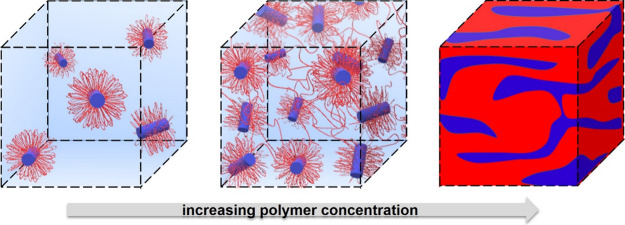 Figure 4
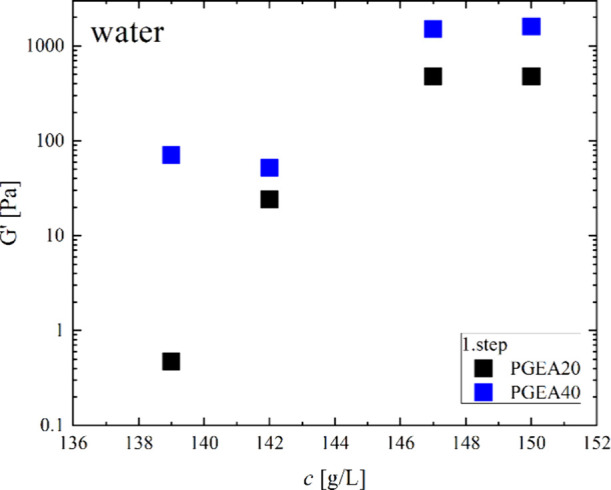 Figure 5
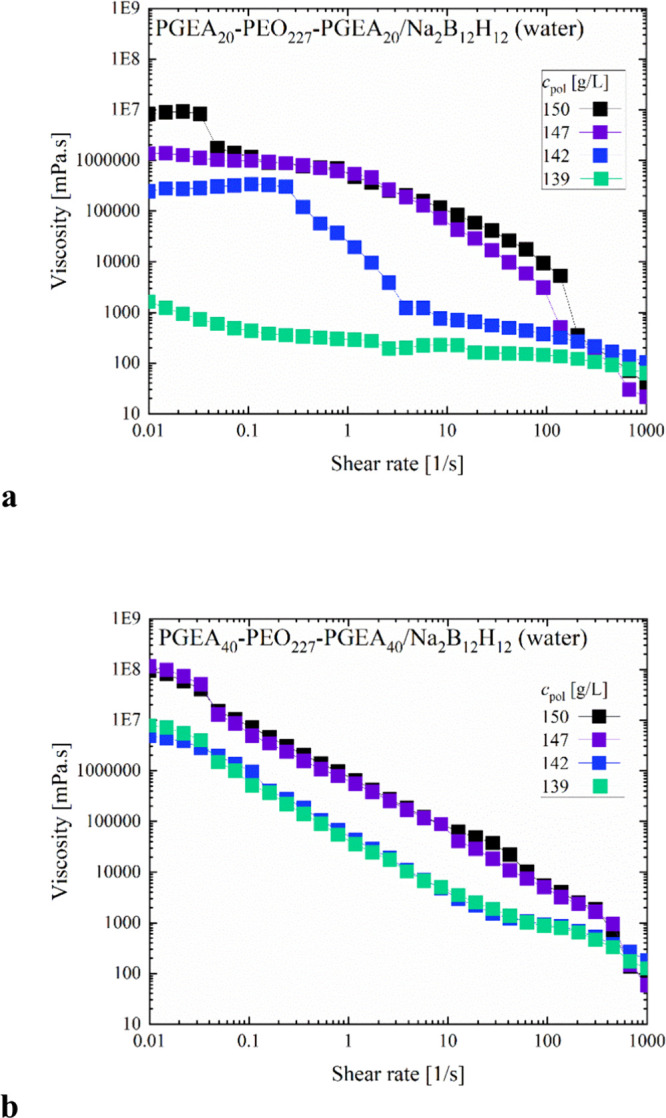 Figure 6
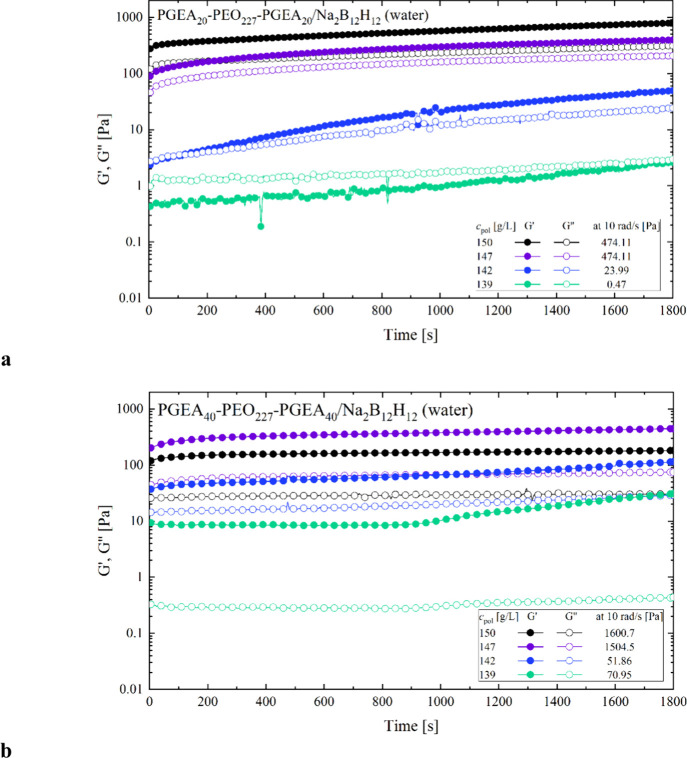 Figure 7
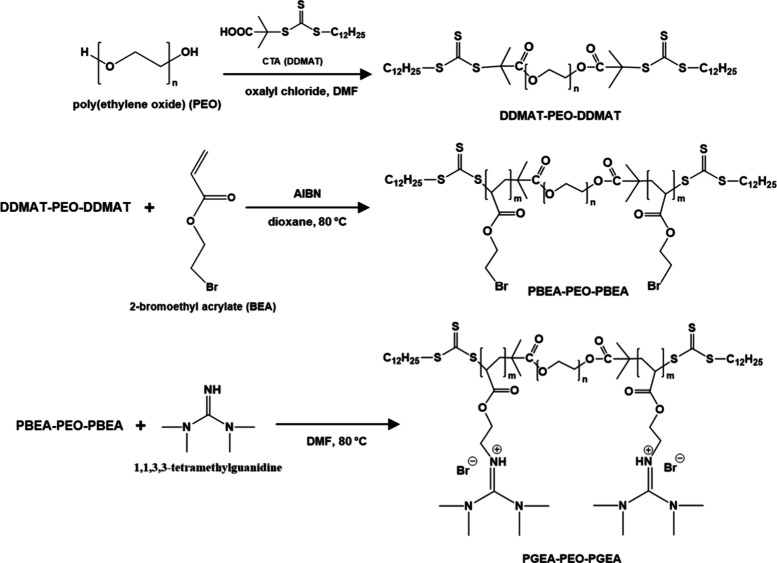 Figure 8
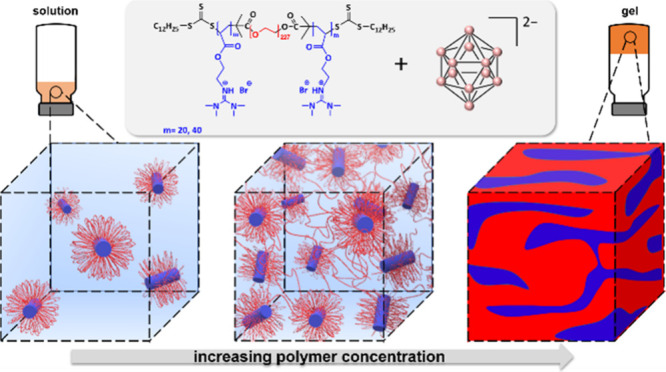 Figure 9
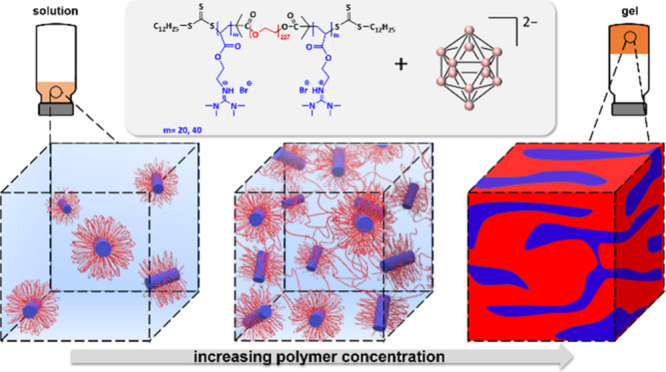 Figure 10
 Figure 11
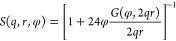 Figure 12
 Figure 13
 Figure 14
 Figure 15
 Figure 16
 Figure 17
Peer Reviews
No public reviews on file for this paper yet. If you reviewed it on a platform where reviews are public (OpenReview, ICLR, NeurIPS, ICML), you can paste yours below so the community can read it here.
Videos
No videos yet. Explain this paper in a talk, walkthrough, or lecture? Add one.
Taxonomy
TopicsBoron Compounds in Chemistry · Advanced Polymer Synthesis and Characterization · Chemical Synthesis and Characterization