Dissecting the biology of gliomagenesis: Evaluating the interaction between IDH tumor mutation and germline variants
Matthew L Kosel, Paul A Decker, Thomas M Kollmeyer, Kristen L Drucker, Anne K Shurtz, Annette M Molinaro, Gian Marco Conte, Mana Moassefi, Bradley J Erickson, John K Wiencke, Stephen Francis, Terry C Burns, Rachel A Vaubel, Margaret Wrensch, Daniel H Lachance, W Oliver Tobin

TL;DR
This study identifies genetic variants linked to IDH-mutant and IDH-wildtype gliomas, offering insights into their development and potential targets for further research.
Contribution
The study identifies new germline variants associated with IDHmut gliomas and explores the role of ROBO1 in IDHwt gliomas.
Findings
PHLDB1 and D2HGDH variants are associated with IDHmut gliomas in patients without the rs55705857 risk allele.
ROBO1 region variants increase likelihood of IDHwt tumors in rs55705857 carriers.
D2HGDH, PHLDB1, and age predict IDH mutation status in multivariable analysis.
Abstract
The CCDC26 germline variant rs55705857 is causal for development of IDH mutant (IDHmut) adult glioma. However, ~60% of IDHmut patients do not carry the rs55705857 risk allele. We aimed to identify variants associated with developing IDHmut glioma among patients that do not have the rs55705857 risk allele and to further understand development of IDHwt glioma. We used three datasets that included 1216 IDHmut and 1442 IDHwt glioma patients and a case–case design to perform genome-wide association (GWAS) analyses comparing IDHmut versus IDHwt glioma. Analyses were performed overall and stratified by rs55705857 genotype and sex. Multivariable logistic regression and regression trees were used to develop models to predict IDH status using germline variants, age, and contrast enhancement on MRI. Three regions were identified comparing IDHmut versus IDHwt: rs55705857 (meta P-value [P] = 1.35…
Genes, proteins, chemicals, diseases, species, mutations and cell lines named across the full text — each resolved to its canonical identifier and authoritative record.
Click any figure to enlarge with its caption.
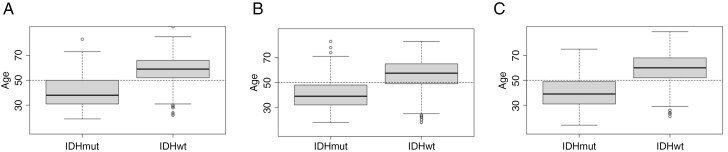 Figure 1
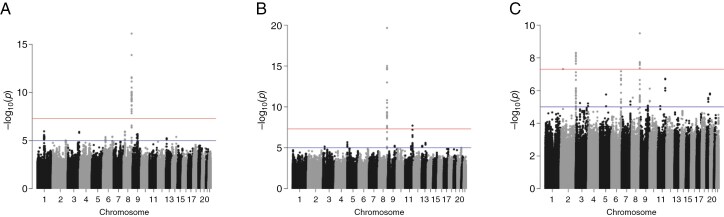 Figure 2
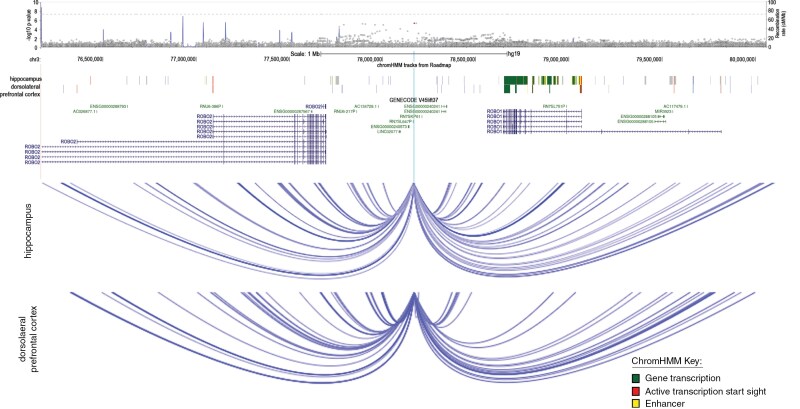 Figure 3
Peer Reviews
No public reviews on file for this paper yet. If you reviewed it on a platform where reviews are public (OpenReview, ICLR, NeurIPS, ICML), you can paste yours below so the community can read it here.
Videos
No videos yet. Explain this paper in a talk, walkthrough, or lecture? Add one.
Taxonomy
TopicsGlioma Diagnosis and Treatment · MicroRNA in disease regulation · Cancer-related molecular mechanisms research