Patterns of relapse in diffuse intrinsic pontine glioma after convection-enhanced delivery of 124I-omburtamab
Evan D Bander, Andrew L A Garton, Luca Pasquini, Anne S Reiner, Onur Yildirim, Ahmet T Ilica, Maria Donzelli, Sofia Haque, Mark M Souweidane

TL;DR
This study examines how DIPG tumors relapse after a specific drug delivery method and finds that it may help control tumor growth in certain brain areas.
Contribution
The study introduces the use of anatomical relapse patterns to assess the efficacy of convection-enhanced drug delivery in DIPG.
Findings
CED treatment was associated with lower local tumor progression in the pons and medulla.
Patients receiving CED had higher overall progression rates but no significant difference in survival.
Anatomical relapse patterns can inform future local therapy trials for DIPG.
Abstract
Diffuse intrinsic pontine glioma (DIPG) carries a high mortality rate and lacks effective treatment options with a median overall survival (OS) of 8–12 months. Convection-enhanced delivery (CED) has demonstrated safety in phase I trials, but efficacy is indeterminate. Evaluating anatomic patterns of relapse may aid in determining therapeutic efficacy of local CED drug delivery strategies. Sixty-three children with DIPG were retrospectively reviewed for first radiographic progression. All patients were treated using conventional external beam radiation (EBRT) and 31 were treated with CED of radiolabeled 124-iodine-omburtamab (NCT01502917). Anatomic patterns of initial progression were coded by independent neuroradiologists. OS and cumulative incidence of progression at each anatomic site were assessed in a competing risk analysis with death as a competing variable and were stratified…
Genes, proteins, chemicals, diseases, species, mutations and cell lines named across the full text — each resolved to its canonical identifier and authoritative record.
Click any figure to enlarge with its caption.
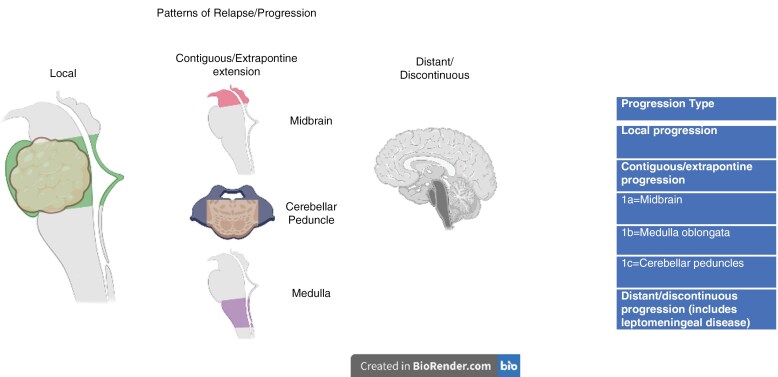 Figure 1
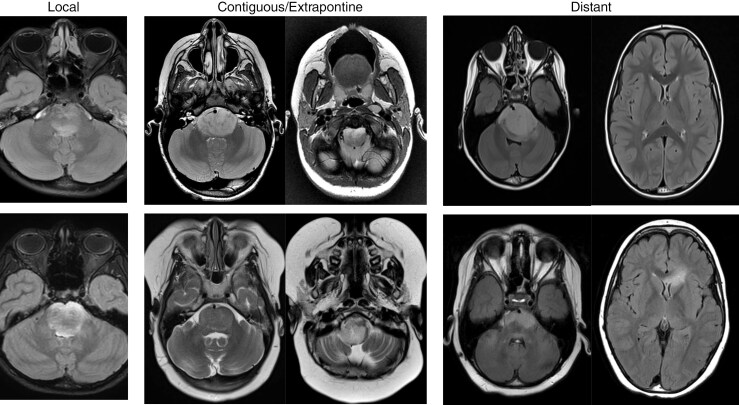 Figure 2
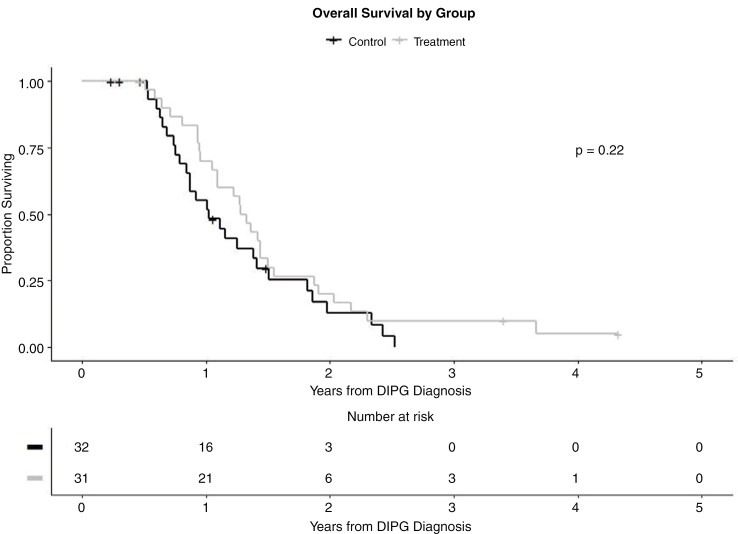 Figure 3
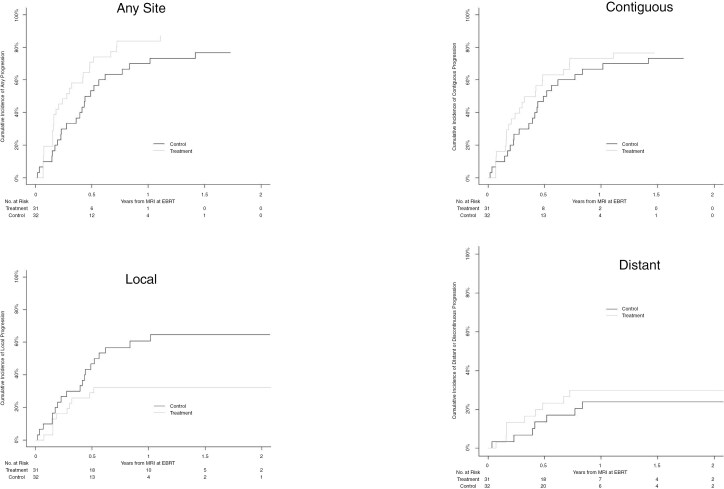 Figure 4
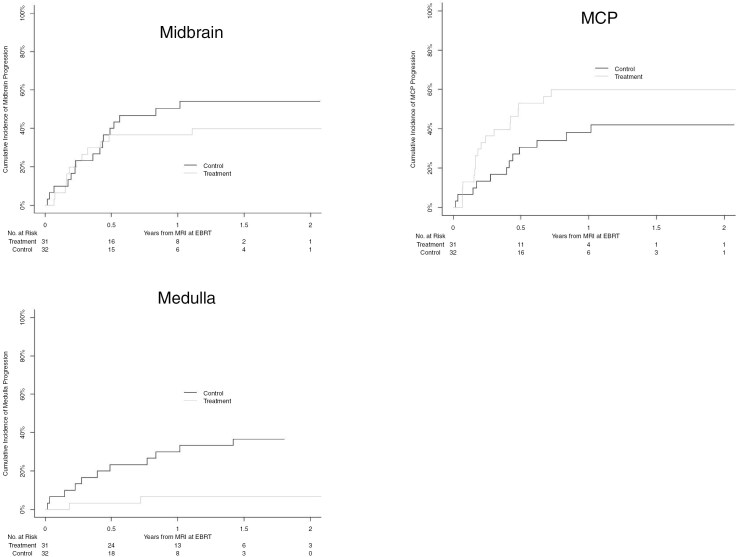 Figure 5
Peer Reviews
No public reviews on file for this paper yet. If you reviewed it on a platform where reviews are public (OpenReview, ICLR, NeurIPS, ICML), you can paste yours below so the community can read it here.
Videos
No videos yet. Explain this paper in a talk, walkthrough, or lecture? Add one.
Taxonomy
TopicsGlioma Diagnosis and Treatment · Neuroblastoma Research and Treatments · Radiation Therapy and Dosimetry