Cyclacene-derived carbon lattices with distorted hexagonal tiling and in-plane π-orbitals: coexistence of flat and Dirac bands
Divanshu Gupta, Michael Mastalerz, J. Michael Gottfried, Holger F. Bettinger

TL;DR
This paper introduces a new carbon lattice made from cyclacene molecules that shows unique electronic properties, including flat and Dirac bands, which could be useful for quantum studies and nanotechnology.
Contribution
The study introduces a new class of carbon lattices derived from cyclacene molecules with distorted hexagonal tiling and in-plane π-orbitals.
Findings
Cyc-CL systems exhibit tunable band gaps and coexistence of flat and Dirac bands near the Fermi level.
π orbitals in cyc-CL are primarily from px and py states, lying parallel to the layers.
Three variants of cyc-CL (6-cyc-CL, 12-cyc-CL, and 18-cyc-CL) were analyzed using DFT calculations.
Abstract
The discovery of nanomaterials with unique electronic band structures, such as flat bands, has drawn significant interest for enabling novel physical phenomena and advanced technological applications. Kagome lattices, characterized by corner-sharing triangles, are a notable class of materials featuring the coexistence of flat and Dirac bands. This study investigates a new class of carbon lattices derived from cyclacene molecules (cyc-CL), featuring a distorted hexagonal tiling. In these two-layer carbon structures with hydrogen-saturated bonds, π orbitals lie parallel to the layers, unlike typical 2D carbon materials. Using first-principles DFT calculations, we analyze three variants (6-cyc-CL, 12-cyc-CL, and 18-cyc-CL), examining band gaps, density of states (DOS), and orbital contributions. Cyc-CL systems exhibit tunable band gaps, flat and Dirac bands near the Fermi level, and…
Genes, proteins, chemicals, diseases, species, mutations and cell lines named across the full text — each resolved to its canonical identifier and authoritative record.
Click any figure to enlarge with its caption.
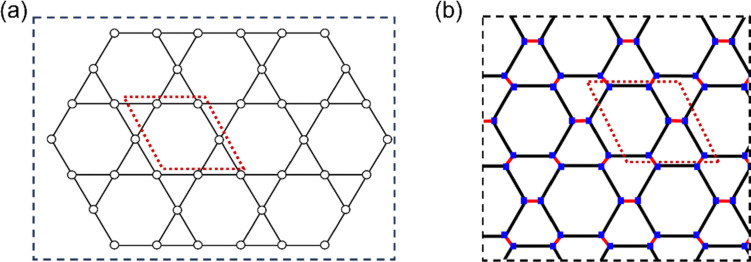 Figure 1
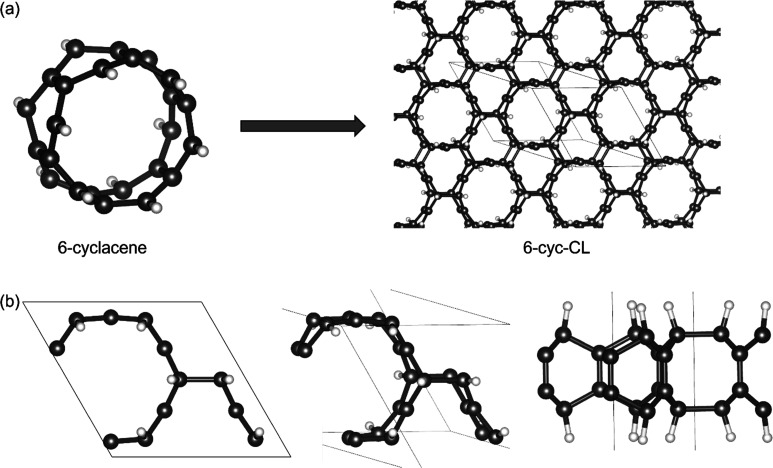 Figure 2
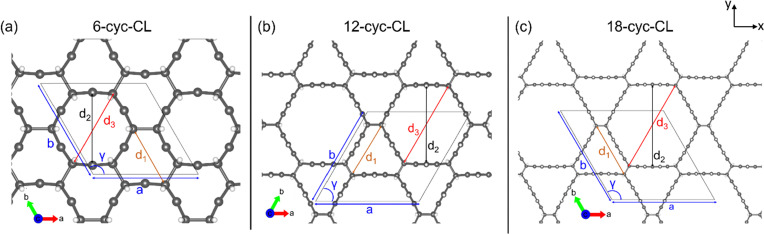 Figure 3
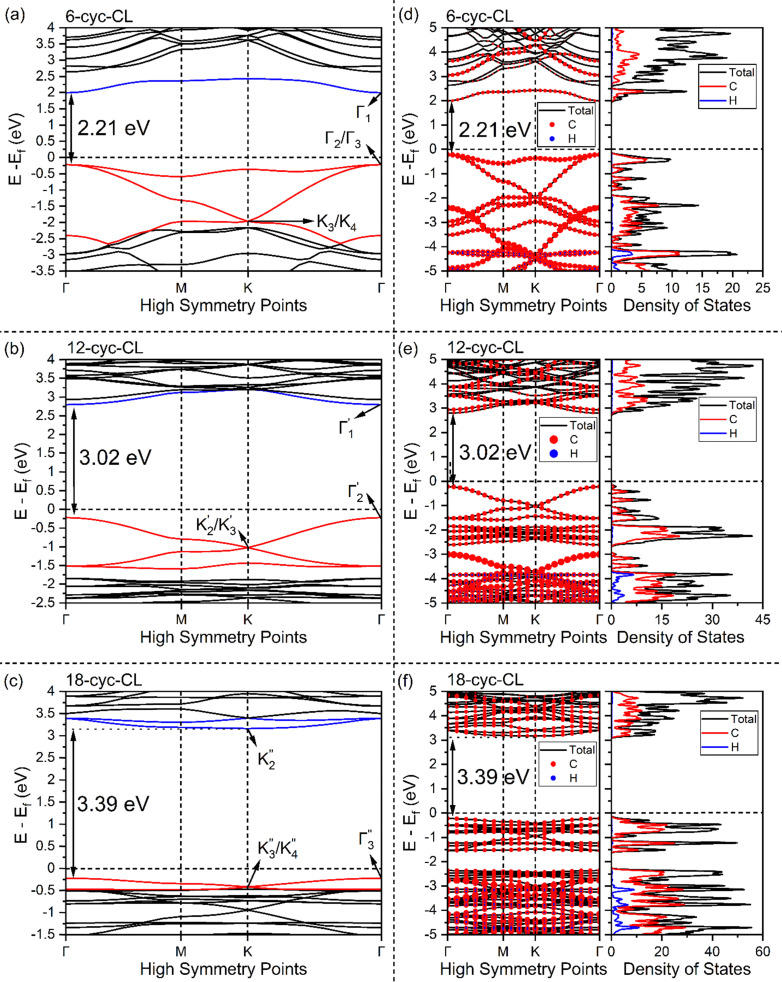 Figure 4
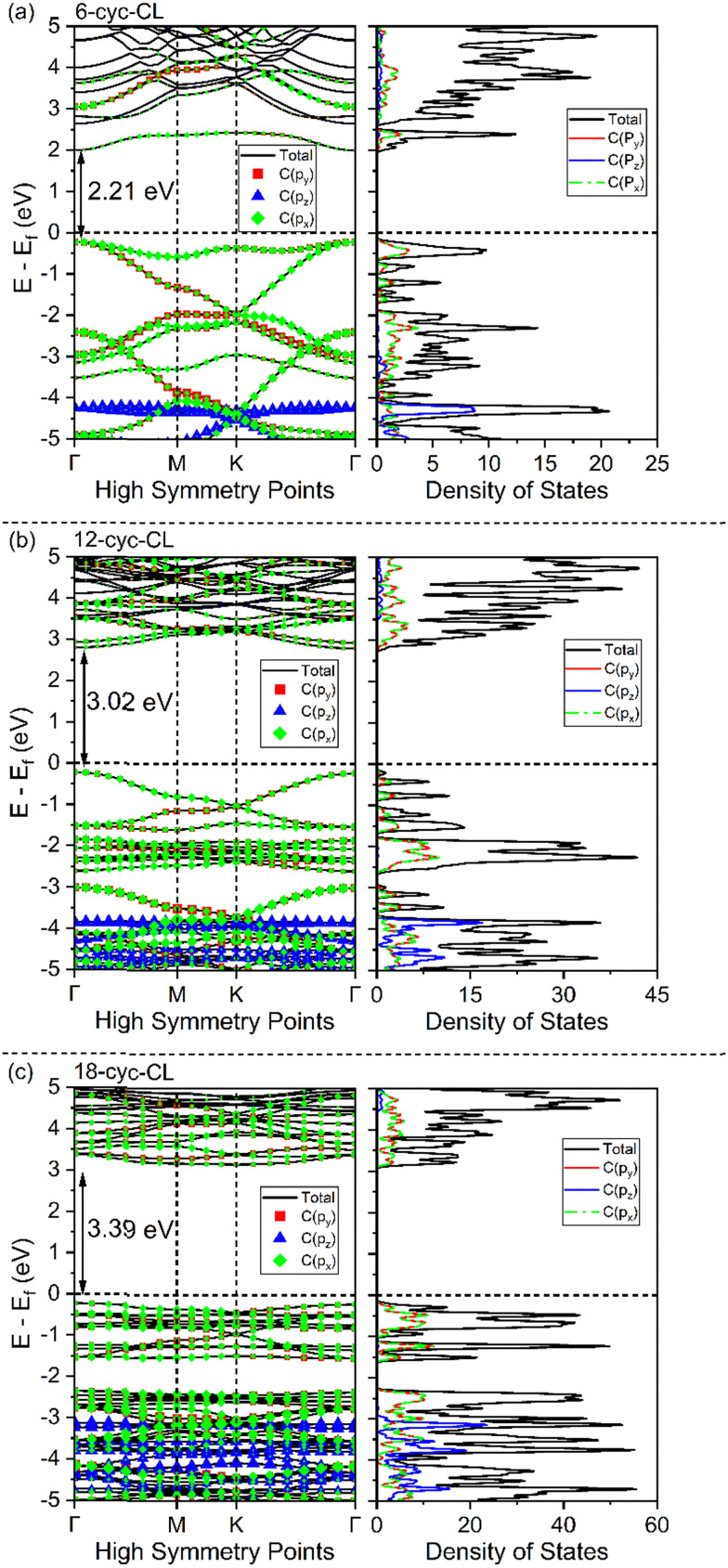 Figure 5
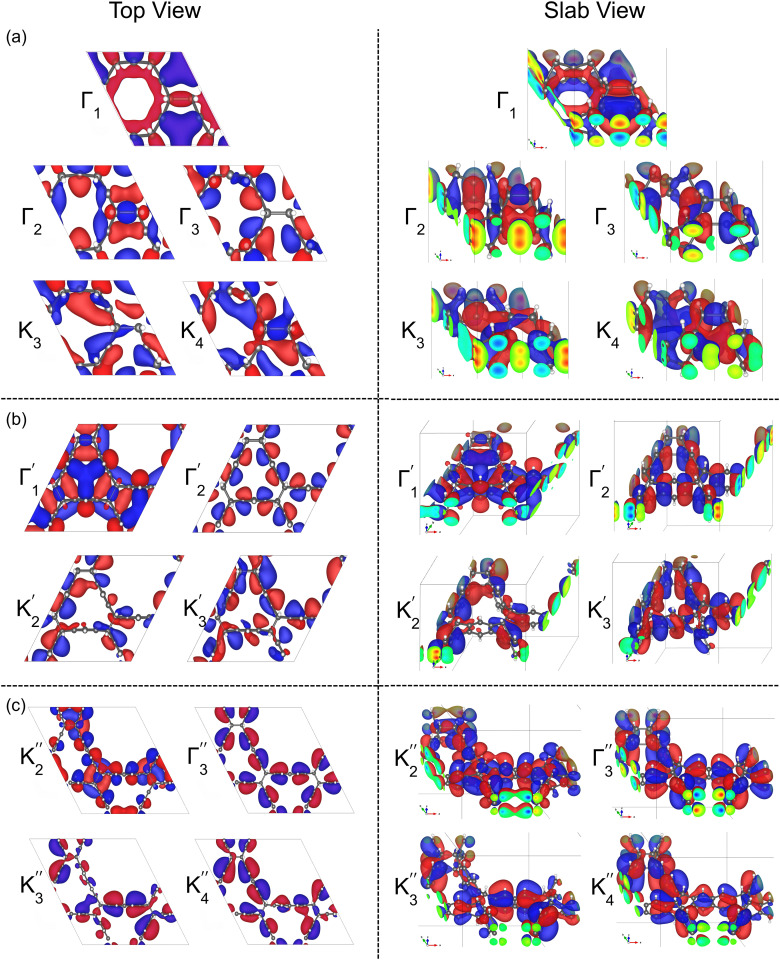 Figure 6
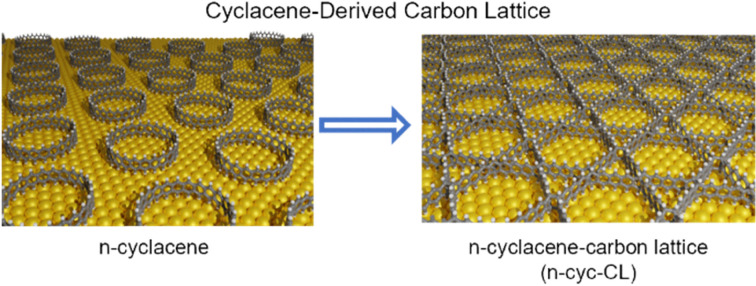 Figure 7
 Figure 8
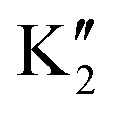 Figure 9
 Figure 10
 Figure 11
 Figure 12
 Figure 13
 Figure 14
 Figure 15
 Figure 16
 Figure 17
 Figure 18
 Figure 19
 Figure 20
 Figure 21
 Figure 22
 Figure 23
 Figure 24
 Figure 25
 Figure 26
 Figure 27
Peer Reviews
No public reviews on file for this paper yet. If you reviewed it on a platform where reviews are public (OpenReview, ICLR, NeurIPS, ICML), you can paste yours below so the community can read it here.
Videos
No videos yet. Explain this paper in a talk, walkthrough, or lecture? Add one.
Taxonomy
TopicsGraphene research and applications · Synthesis and Properties of Aromatic Compounds · Covalent Organic Framework Applications