Fourier Transform Analysis of GPS-Derived Mobility Patterns for Diagnosis and Mood Monitoring of Bipolar and Major Depressive Disorders: Prospective Study
Ting-Yi Lee, Ching-Hsuan Chen, Chih-Min Liu, I-Ming Chen, Hsi-Chung Chen, Shu-I Wu, Chuhsing Kate Hsiao, Po-Hsiu Kuo

TL;DR
This study shows that GPS mobility patterns, analyzed using Fourier transforms, can help diagnose and monitor bipolar and major depressive disorders by capturing differences in movement behaviors.
Contribution
The study introduces Fourier transform analysis of GPS data as a novel method for distinguishing and monitoring mood disorders through mobility patterns.
Findings
Fourier transform analysis of GPS data revealed distinct mobility patterns between bipolar and major depressive disorder patients.
Location variance's power spectrum was a significant predictor of depressed mood after adjusting for demographic factors.
Daily GPS data correlated more strongly with real-time mood assessments than weekly or monthly data.
Abstract
Mood disorders, including bipolar disorder (BP) and major depressive disorder (MDD), are characterized by significant psychological and behavioral fluctuations, with mobility patterns serving as potential markers of emotional states. This study explores the diagnostic and monitoring capabilities of Fourier transform, a frequency-domain analysis method, in mood disorders by leveraging GPS data as an objective measure. A total of 62 participants (BP: n=20, MDD: n=27, and healthy controls: n=15) contributed 5177 person-days of data over observation periods ranging from 5 days to 6 months. Key GPS indicators—location variance (LV), transition time (TT), and entropy—were identified as reflective of mood fluctuations and diagnostic differences between BP and MDD. Fourier transform analysis revealed that the maximum power spectra of LV and entropy differed significantly between BP and MDD…
Genes, proteins, chemicals, diseases, species, mutations and cell lines named across the full text — each resolved to its canonical identifier and authoritative record.
Click any figure to enlarge with its caption.
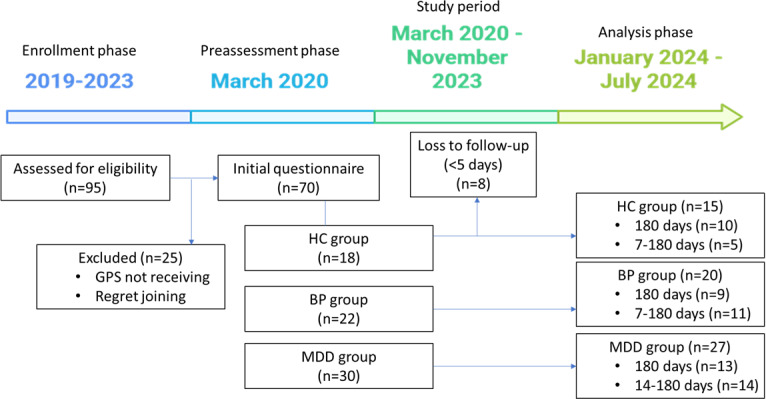 Figure 1
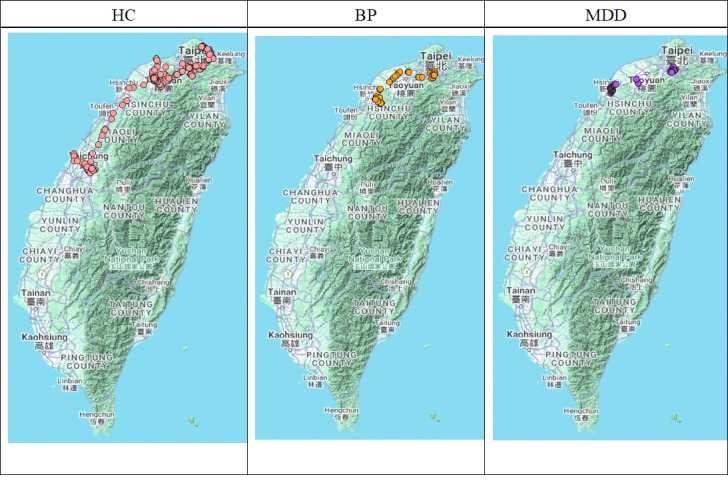 Figure 2
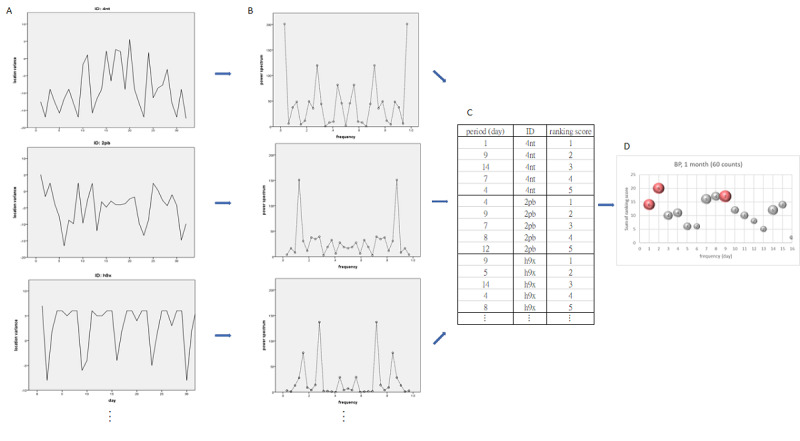 Figure 3
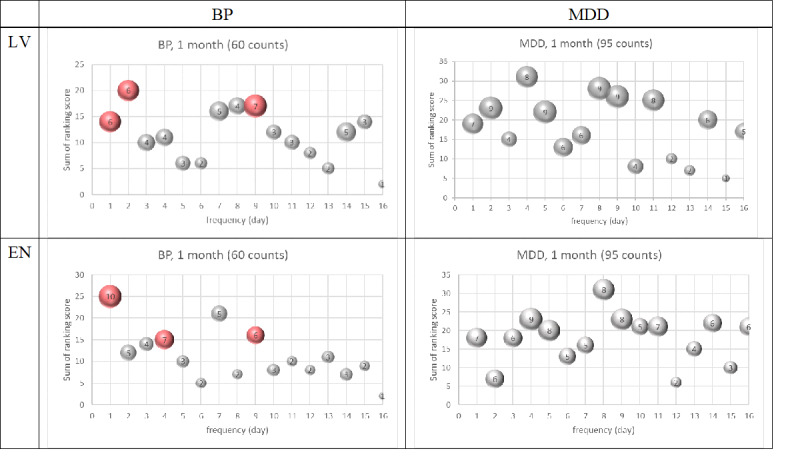 Figure 4
Peer Reviews
No public reviews on file for this paper yet. If you reviewed it on a platform where reviews are public (OpenReview, ICLR, NeurIPS, ICML), you can paste yours below so the community can read it here.
Videos
No videos yet. Explain this paper in a talk, walkthrough, or lecture? Add one.
Taxonomy
TopicsMental Health Research Topics · Bipolar Disorder and Treatment · Functional Brain Connectivity Studies