Detecting Interspecific Positive Selection Using Convolutional Neural Networks
Charlotte West, Conor R Walker, Shayesteh Arasti, Viacheslav Vasilev, Xingze Xu, Nicola De Maio, Nick Goldman

TL;DR
This paper introduces a new method using convolutional neural networks to detect positive selection in interspecific data, offering better accuracy and scalability compared to traditional statistical approaches.
Contribution
The novel use of convolutional neural networks for detecting positive selection improves accuracy and handles noisy data better than traditional methods.
Findings
Convolutional neural networks outperform traditional methods in detecting positive selection, especially with noisy data.
The model provides faster inference and scalability for large-scale multigene analyses.
Saliency maps help interpret the model's decisions and enable site-specific selection inference.
Abstract
Traditional statistical methods using maximum likelihood and Bayesian inference can detect positive selection from an interspecific phylogeny and a codon sequence alignment based on model assumptions, but they are prone to false positives due to alignment errors and can lack power. These problems are particularly pronounced when faced with high levels of indels and divergence. To address these issues, we trained and tested convolutional neural network models on simulated data and achieved higher accuracy in detecting selection across a specific range of phylogenetic scenarios and evolutionary modes. This advantage is particularly evident when performing inference on noisy data prone to misalignments. Our method shows some ability to account for these errors, where most statistical frameworks fail to do so in a tractable manner. We explore the generalizability of our convolutional neural…
Genes, proteins, chemicals, diseases, species, mutations and cell lines named across the full text — each resolved to its canonical identifier and authoritative record.
Click any figure to enlarge with its caption.
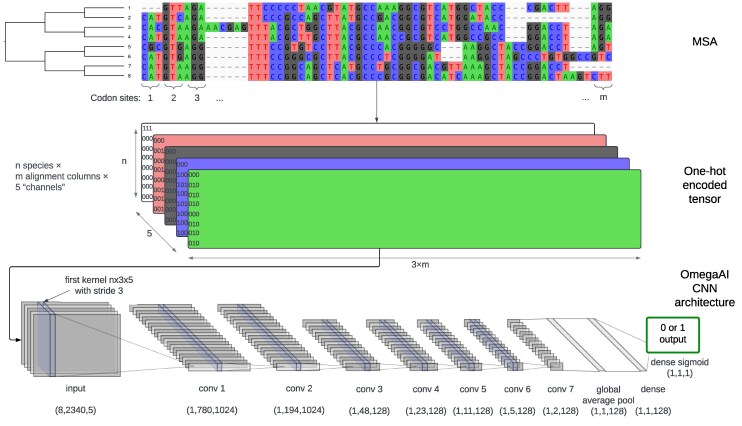 Figure 1
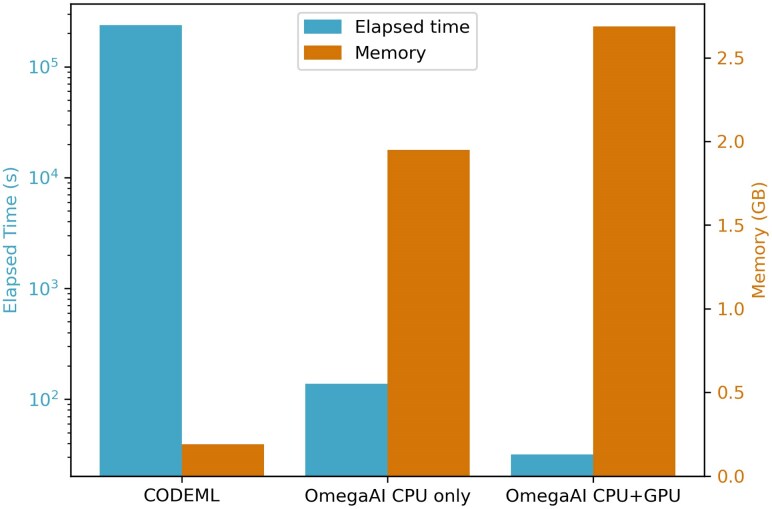 Figure 2
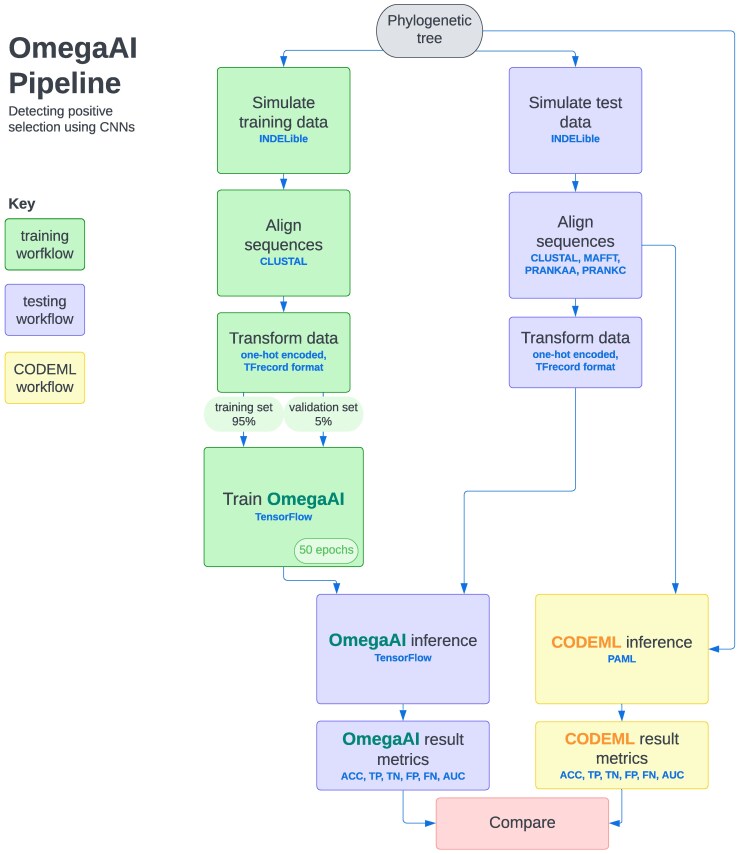 Figure 3
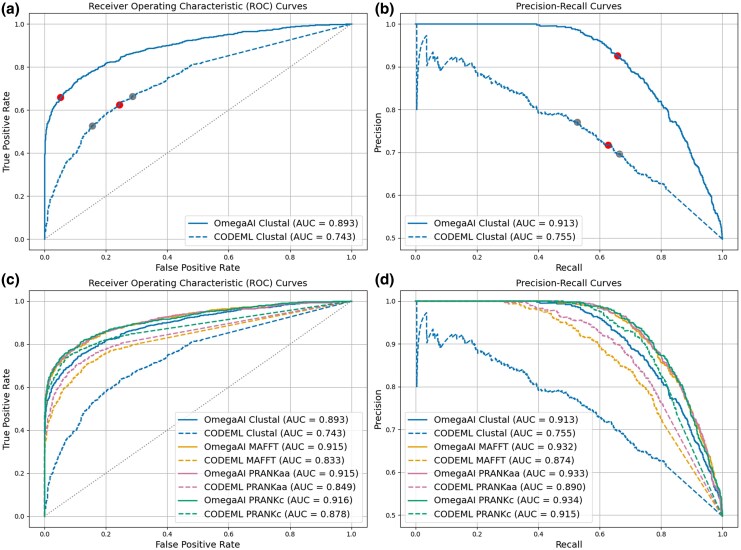 Figure 4
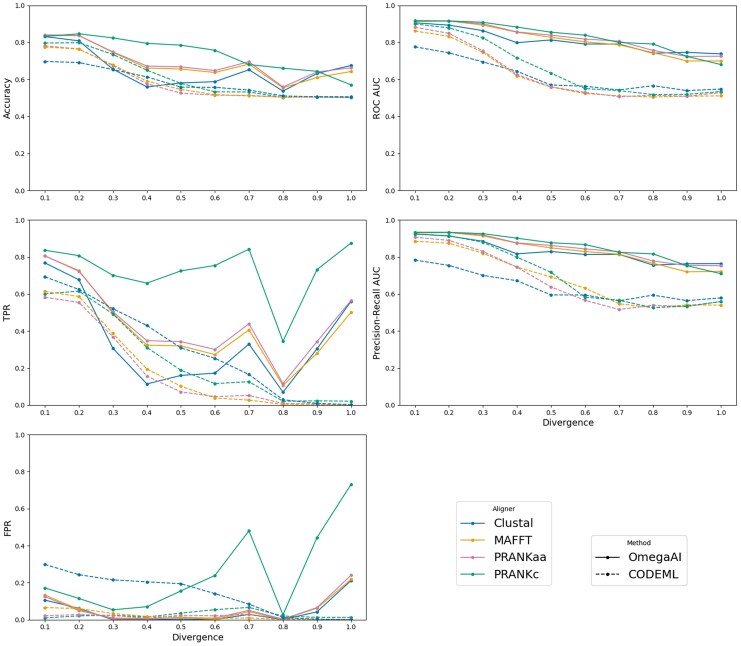 Figure 5
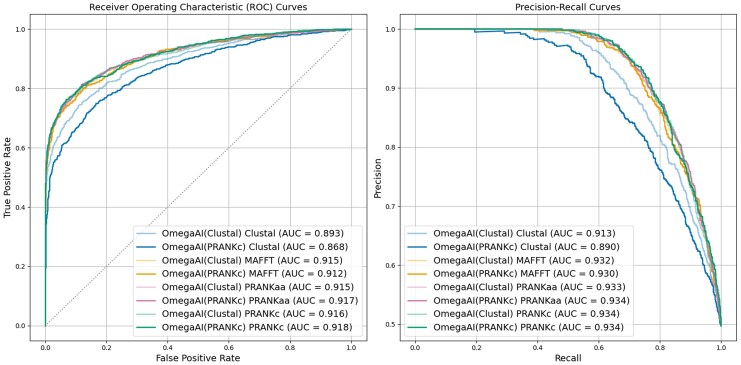 Figure 6
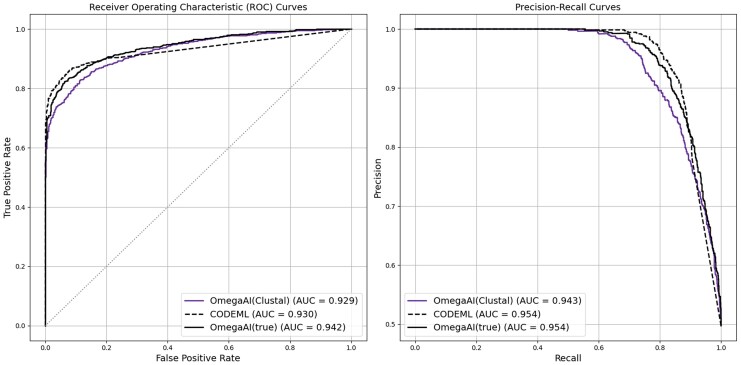 Figure 7
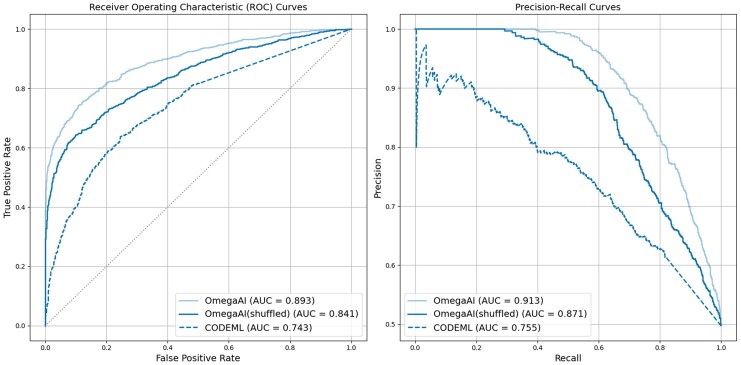 Figure 8
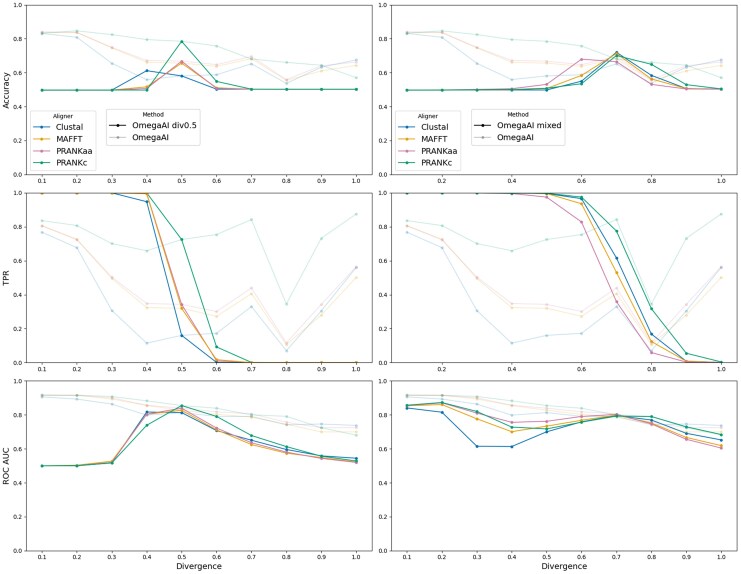 Figure 9
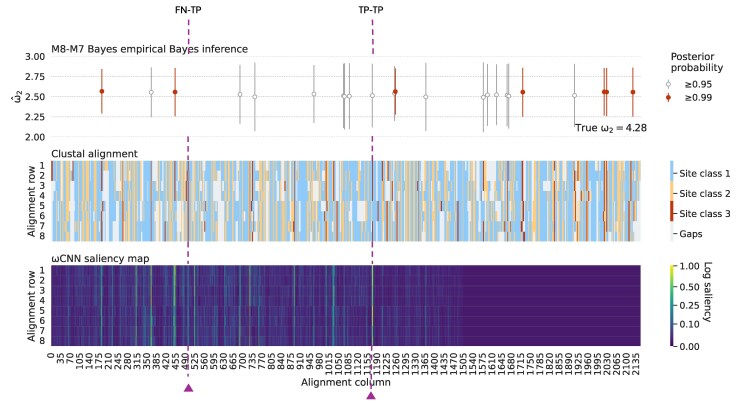 Figure 10
Peer Reviews
No public reviews on file for this paper yet. If you reviewed it on a platform where reviews are public (OpenReview, ICLR, NeurIPS, ICML), you can paste yours below so the community can read it here.
Videos
No videos yet. Explain this paper in a talk, walkthrough, or lecture? Add one.
Taxonomy
TopicsEvolutionary Algorithms and Applications · Fault Detection and Control Systems · Gaussian Processes and Bayesian Inference