Strategy for Withdrawal of Pharmacological Treatment for Urinary Incontinence in Children (StayDry): Protocol for an Open-Label Prospective Randomized Trial
Ann-Kristine Mandøe Svendsen, Søren Hagstrøm, Konstantinos Kamperis, Anna Elizabeth Andersen, Nanna Celina Henneberg, Jason Van Batavia, Anne Estrup Olesen, Luise Borch

TL;DR
This study aims to determine whether abruptly or gradually stopping medication for urinary incontinence in children affects the risk of incontinence returning.
Contribution
The study introduces a novel comparison of abrupt versus gradual withdrawal strategies for solifenacin or mirabegron in children.
Findings
The study will assess recurrence of incontinence 1 month after medication withdrawal.
Recurrence will also be measured at 3, 6, and 12 months post-withdrawal.
Results may guide optimal withdrawal strategies for treating urinary incontinence in children.
Abstract
To the best of our knowledge, no studies have investigated the withdrawal strategy of pharmacological treatment with solifenacin or mirabegron in children diagnosed with urinary incontinence who have achieved continence on pharmacotherapy. The primary objective is to investigate if abrupt withdrawal versus gradual withdrawal of pharmacotherapy (solifenacin or mirabegron) influences the risk of recurrence of incontinence, assessed by a self-reported 14-day calendar of incontinence episodes. Children aged 5-14 years diagnosed with urinary incontinence, treated with pharmacotherapy of solifenacin or mirabegron and ready for withdrawal, will be randomized 1:1 to either abrupt or gradual withdrawal, according to the medical treatment that the child is receiving. The primary outcome measure is the recurrence of incontinence after withdrawal, 1 month after initiation of withdrawal of the…
Genes, proteins, chemicals, diseases, species, mutations and cell lines named across the full text — each resolved to its canonical identifier and authoritative record.
Click any figure to enlarge with its caption.
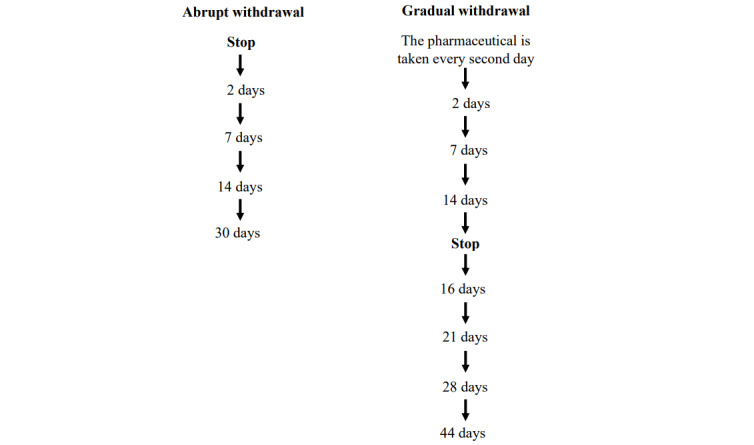 Figure 1
Peer Reviews
No public reviews on file for this paper yet. If you reviewed it on a platform where reviews are public (OpenReview, ICLR, NeurIPS, ICML), you can paste yours below so the community can read it here.
Videos
No videos yet. Explain this paper in a talk, walkthrough, or lecture? Add one.
Taxonomy
TopicsUrinary Bladder and Prostate Research · Urological Disorders and Treatments · Pelvic floor disorders treatments