Mucinous carcinoma of the breast: epidemiological, clinical, and prognostic characteristics; a single-center experience
Omar Hamdy, Mosab Shetiwy, Mahmoud M. Saber, Basma A. Eldawody, Shorouq A. Kassab, Mariam H. Nabih, Mostafa Abdelhakiem, Mona Zaki, Shaimaa M. Yussif, Saleh Saleh, Khaled Abdelwahab

TL;DR
This study examines the characteristics and outcomes of mucinous breast cancer in 152 patients over 15 years, showing it has a better prognosis than typical breast cancer.
Contribution
The study provides a detailed single-center analysis of mucinous carcinoma's clinical and prognostic features in a large patient cohort.
Findings
Mucinous carcinoma had a better prognosis and fewer lymphatic metastases compared to invasive breast carcinoma of no special type.
Pure mucinous carcinoma showed the best outcomes, with a mean disease-free and overall survival of around 43 months.
Most patients received surgery followed by adjuvant therapies, with luminal A being the most common subtype.
Abstract
Mucinous (colloid) carcinoma (MC) of the breast typically affects postmenopausal and elderly women, with a more favorable prognosis compared to invasive breast carcinoma of no special type (IBC-NST). It is characterized by the presence of extracellular mucin and better outcomes. In our work, we presented a fifteen-year yield of a tertiary cancer center for MC. In this retrospective study, the data of the patients with MC from January 2009 to August 2023 were retrieved by searching the prospectively registered electronic database of the Oncology Center, Mansoura University. The patients’ epidemiological, clinical, pathological, therapeutic, and oncological data were analyzed. A total of 152 patients with the pathology of MC of the breast were included. The mean age of patients was 55.38 ± 13.82 years. Imaging revealed a unifocal lesion in 93 patients (61.2%). The mean mass size by…
Genes, proteins, chemicals, diseases, species, mutations and cell lines named across the full text — each resolved to its canonical identifier and authoritative record.
Click any figure to enlarge with its caption.
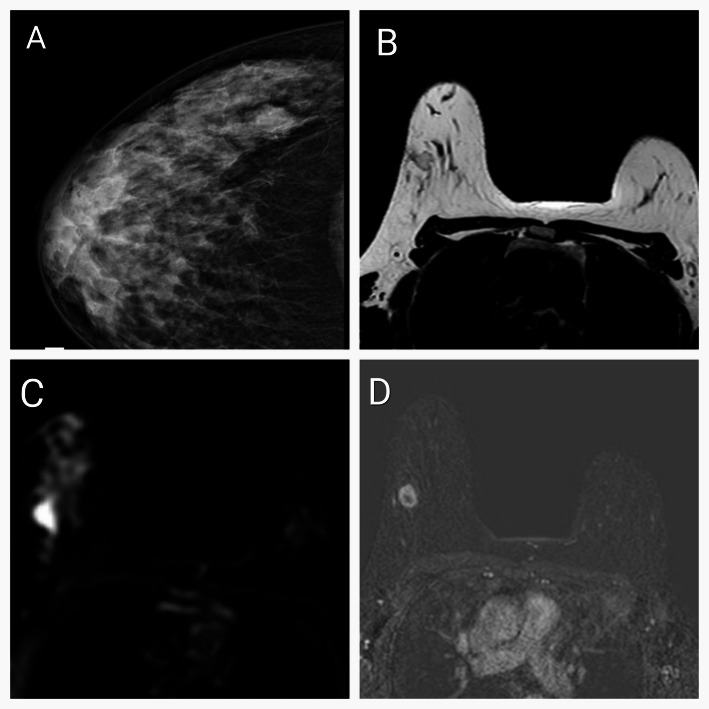 Figure 1
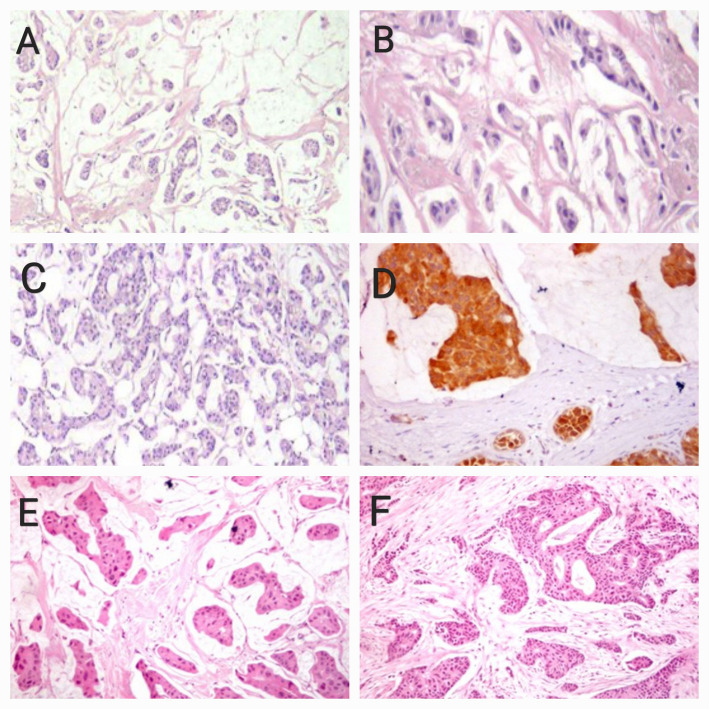 Figure 2
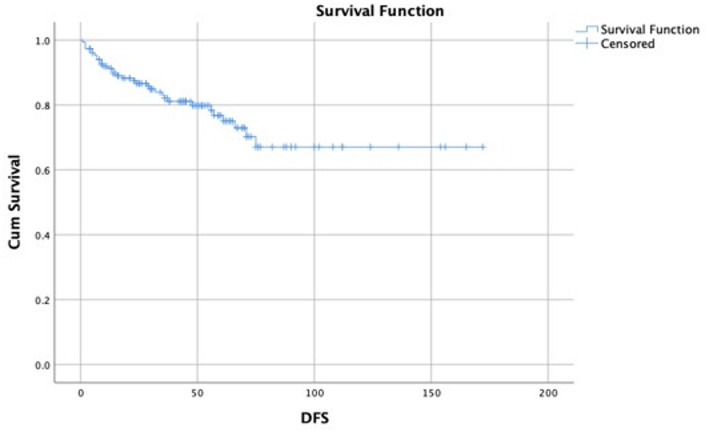 Figure 3
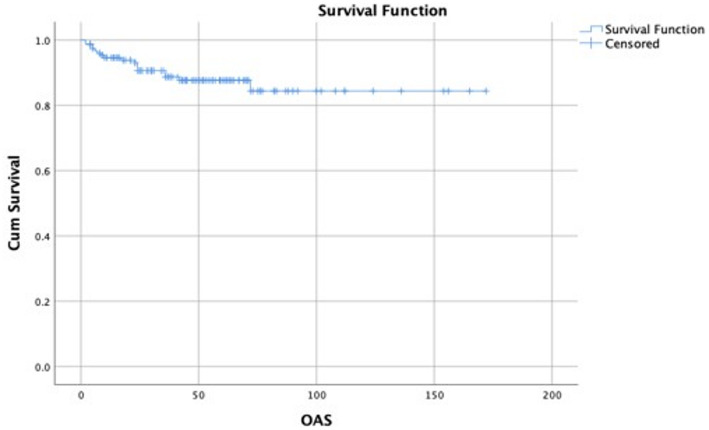 Figure 4
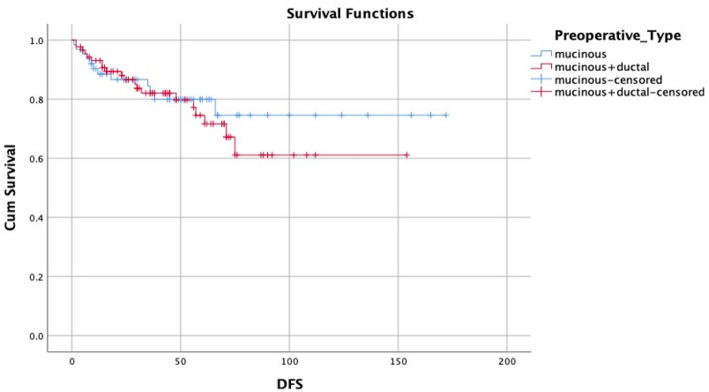 Figure 5
Peer Reviews
No public reviews on file for this paper yet. If you reviewed it on a platform where reviews are public (OpenReview, ICLR, NeurIPS, ICML), you can paste yours below so the community can read it here.
Videos
No videos yet. Explain this paper in a talk, walkthrough, or lecture? Add one.
Taxonomy
TopicsBreast Cancer Treatment Studies · Breast Lesions and Carcinomas · HER2/EGFR in Cancer Research