Use of a BMI-independent biomarker-based prostate cancer risk score to identify and triage individuals at risk of prostate disease
Joanne Watt, Allister Irvine, Mary Jo Kurth, Laura Mooney, Gary Smyth, Hardev Pandha, John Lamont, Peter Fitzgerald, Le Roy Dowey, Mark W. Ruddock

TL;DR
A new BMI-independent prostate cancer risk score could improve cancer detection in overweight men where traditional tests are less reliable.
Contribution
A novel biomarker-based risk score that is not affected by BMI was developed and shown to outperform tPSA in certain populations.
Findings
90.5% of the cohort had low prostate cancer risk based on the new PCRS.
67.8% of men with elevated PCRS had normal tPSA levels.
BMI had a negative correlation with tPSA but not with PCRS.
Abstract
Prostate cancer (PCa) is the second most common cause of cancer related deaths in men in the UK. A national screening programme for PCa does not exist due to the unsuitability of the total prostate specific antigen (tPSA) test which is not specific for PCa and has a high false positive rate. Serum tPSA was measured in n = 25,356 male Randox Health clients. A biomarker-based (tPSA, EGF, MCP-1, IL-8) prostate cancer risk score (PCRS) was then applied to a retrospective cohort (n = 1,142/25,356) of individuals to assess PCa risk. A comparative analysis between tPSA and PCRS indicated that 90.5% of the cohort were assigned low risk of PCa. Of those with an elevated PCRS, 67.8% (78/115) had a normal tPSA value based on tPSA age-adjusted cut-offs. In addition, we observed a significant negative correlation between increasing body mass index (BMI) in men with high BMI (≥ 30) and tPSA levels.…
Genes, proteins, chemicals, diseases, species, mutations and cell lines named across the full text — each resolved to its canonical identifier and authoritative record.
Click any figure to enlarge with its caption.
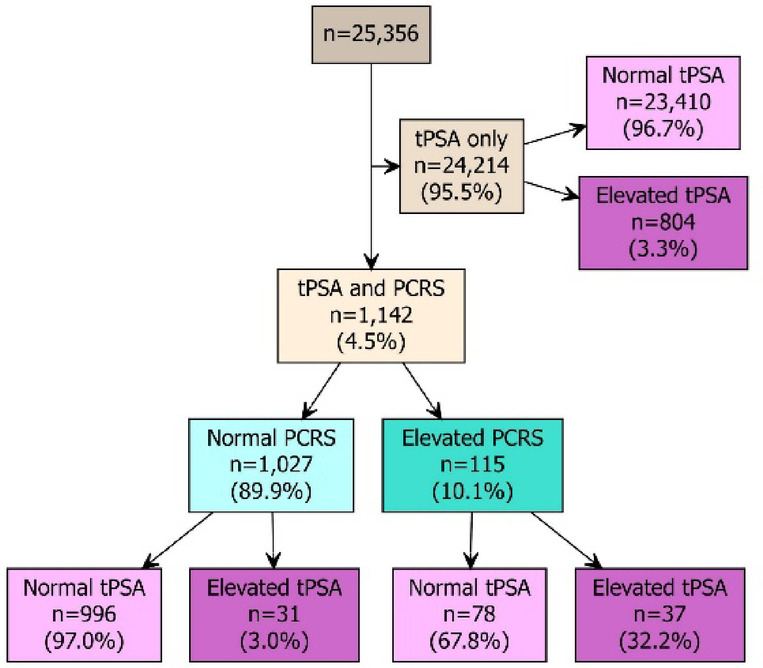 Figure 1
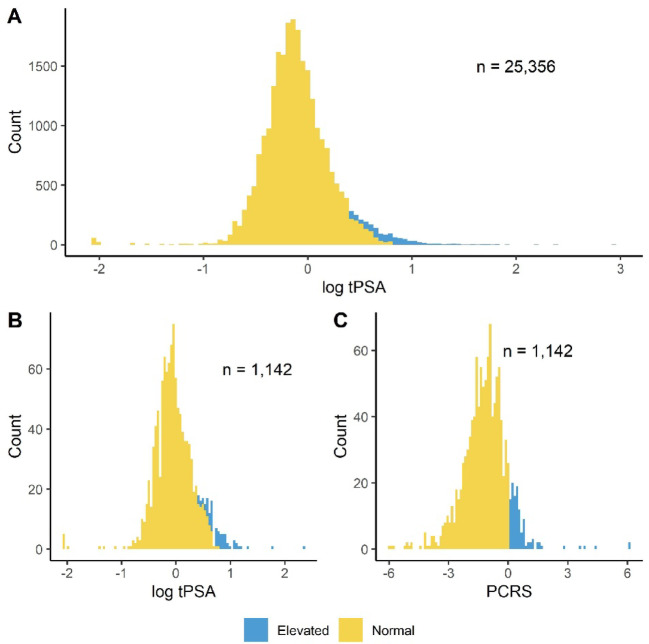 Figure 2
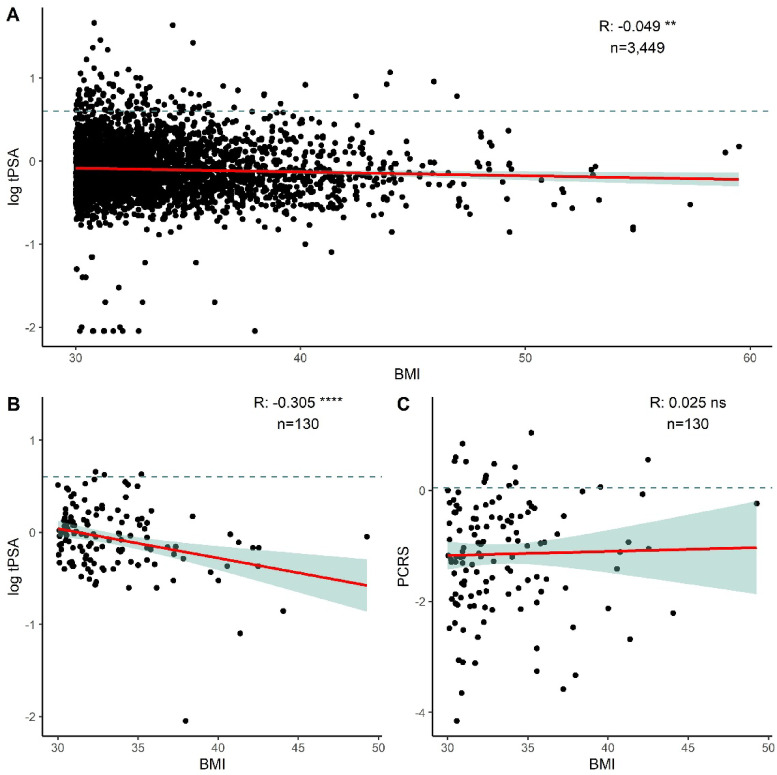 Figure 3
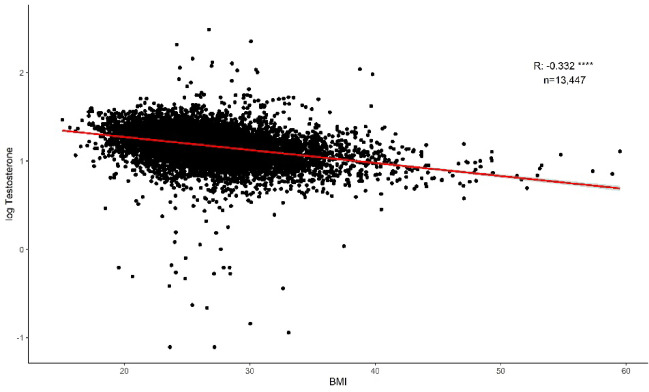 Figure 4
Peer Reviews
No public reviews on file for this paper yet. If you reviewed it on a platform where reviews are public (OpenReview, ICLR, NeurIPS, ICML), you can paste yours below so the community can read it here.
Videos
No videos yet. Explain this paper in a talk, walkthrough, or lecture? Add one.
Taxonomy
TopicsProstate Cancer Treatment and Research · Prostate Cancer Diagnosis and Treatment · Cancer Risks and Factors