Syphacia obvelata antigens alter the FOXP3/RORɣt expression balance in isolated peripheral blood mononuclear cells of IBD patients
Abbas Amin, Niloofar Taghipour, Mohammad Rostami-Nejad, Foroogh Alborzi Avanaki, Reyhaneh Jafarshad, Seyyed Javad Seyyed Tabaei, Nariman Mosaffa

TL;DR
This study shows that antigens from Syphacia obvelata can increase the FOXP3/RORɣt ratio in immune cells from IBD patients, suggesting potential anti-inflammatory effects.
Contribution
The study demonstrates that S. obvelata antigens can modulate FOXP3 and RORɣt gene expression in IBD patient PBMCs.
Findings
FOXP3 expression increased significantly after treatment with all S. obvelata antigens.
RORγt expression decreased significantly in two antigen groups.
The FOXP3/RORγt ratio increased significantly after 24 hours of antigen exposure.
Abstract
Inflammatory Bowel Disease (IBD) arises from disrupted interactions among intestinal microbiota, epithelial cells, and the immune system, which are influenced by genetic and environmental factors. A critical factor in IBD pathogenesis is the balance between FOXP3+ regulatory T cells (Tregs) and RORγt+ Th17 cells; a decreased Treg/Th17 ratio can lead to inflammation. Syphacia obvelata may help modulate immune responses by promoting Th2 responses and enhancing Treg populations, potentially impacting FOXP3 and RORγt expression and aiding IBD management. In this study, peripheral Blood Mononuclear Cells (PBMCs) from 6 IBD patients were treated with S. obvelata antigens (ES-Ag, S-Ag, and ES/S-Ag) for 24 h. Optimal concentrations and time points were determined via the MTT assay. Total RNA was extracted, cDNA was synthesized, and RT-qPCR was performed using FOXP3 and RORγt primers. The gene…
Genes, proteins, chemicals, diseases, species, mutations and cell lines named across the full text — each resolved to its canonical identifier and authoritative record.
Click any figure to enlarge with its caption.
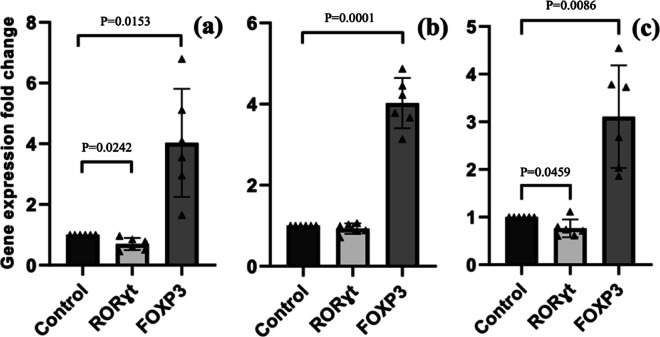 Figure 1
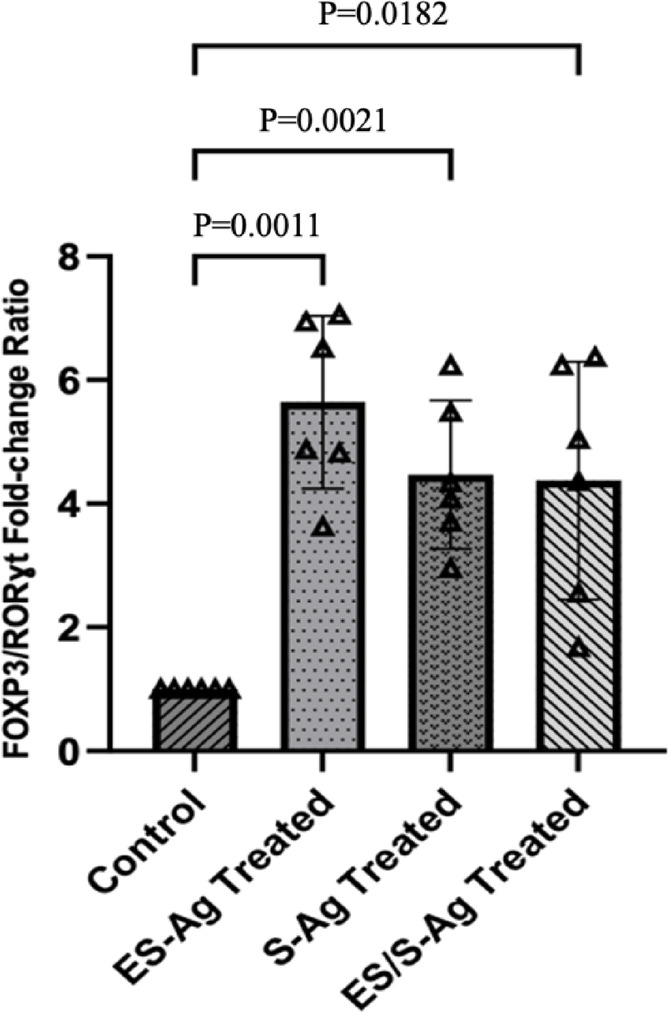 Figure 2
Peer Reviews
No public reviews on file for this paper yet. If you reviewed it on a platform where reviews are public (OpenReview, ICLR, NeurIPS, ICML), you can paste yours below so the community can read it here.
Videos
No videos yet. Explain this paper in a talk, walkthrough, or lecture? Add one.
Taxonomy
TopicsDermatology and Skin Diseases · Psoriasis: Treatment and Pathogenesis · Inflammatory Bowel Disease