Abundant microchondrules in 162173 Ryugu suggest a turbulent origin for primitive asteroids
Matthew J. Genge, Natasha V. Almeida, Matthias van Ginneken, Lewis Pinault, Tobias Salge, Penelope J. Wozniakiewicz, Hajime Yano, Steven J. Desch

TL;DR
Tiny microchondrules found in asteroid Ryugu suggest primitive asteroids may have formed in turbulent regions of the early Solar System, not just at large distances.
Contribution
The discovery of abundant microchondrules in Ryugu challenges the idea that primitive asteroids only formed at large heliocentric distances.
Findings
Abundant microchondrules (>350 ppm) were found in sample A0180 from asteroid Ryugu.
Microchondrules have similar size and shape distributions to normal chondrules, suggesting similar formation processes.
Turbulent diffusion and meridional flows may have concentrated microchondrules in the Jovian pressure-bump region.
Abstract
Chondrules are a characteristic feature of primitive Solar System materials and are common in all primitive meteorites except the CI-chondrites. They are thought to form owing to melting of solid dust aggregates by energetic processing within the solar nebula and thus record fundamental processes within protoplanetary disks. We report the discovery of abundant altered microchondrules (>350 ppm) with modal sizes of 6–8 µm within sample A0180 from C-type asteroid Ryugu. These microchondrules have similar log-normal size and shape distributions to normal-sized chondrules, implying evolution by similar size-sorting. We suggest here formation of microchondrules in an outer Solar System chondrule factory, located in the Jovian pressure-bump, followed by turbulent diffusion and concentration relative to chondrules by intense turbulence. Meridional flows could have also separated…
Genes, proteins, chemicals, diseases, species, mutations and cell lines named across the full text — each resolved to its canonical identifier and authoritative record.
Click any figure to enlarge with its caption.
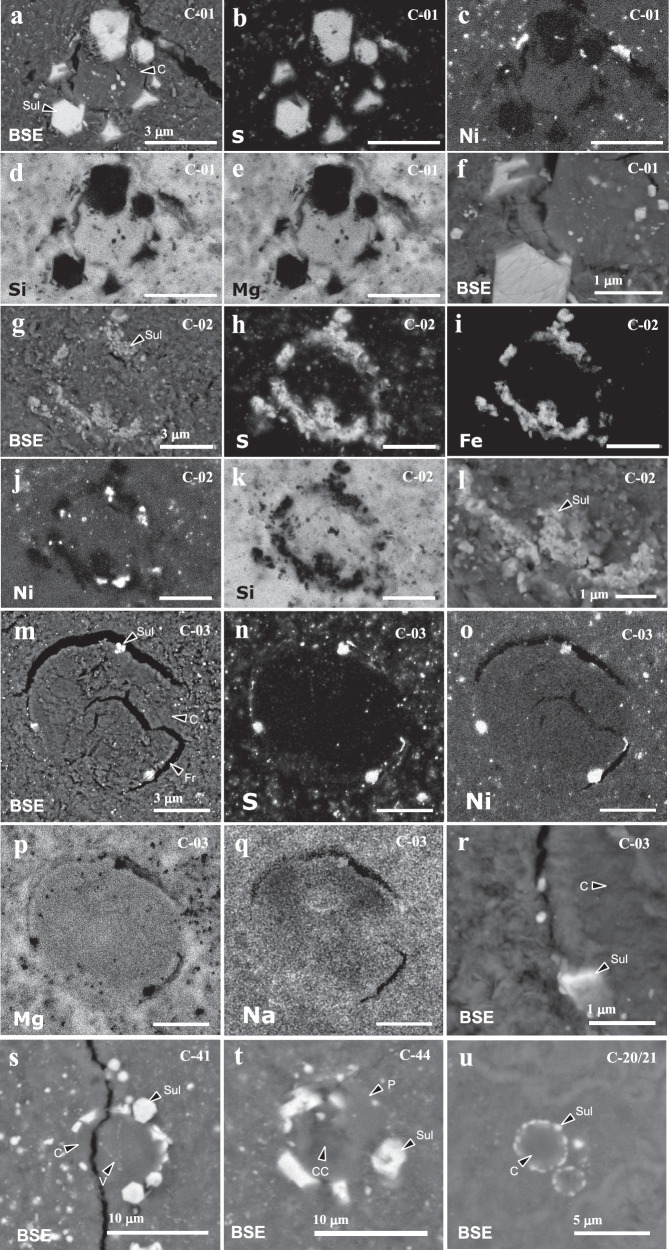 Figure 1
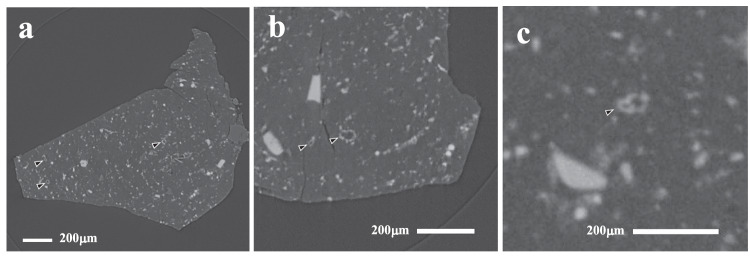 Figure 2
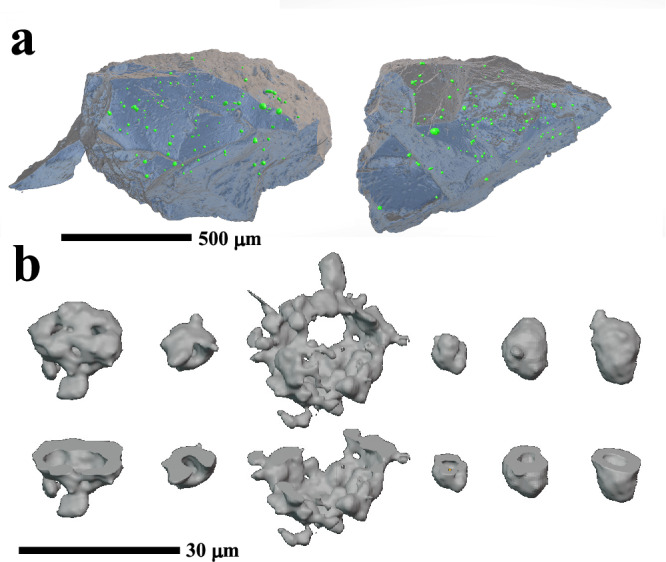 Figure 3
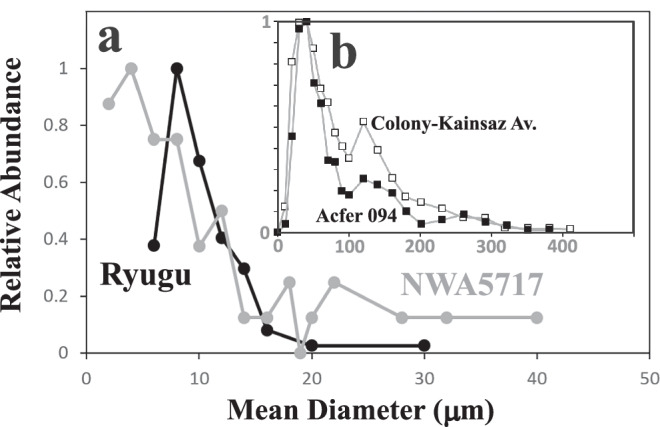 Figure 4
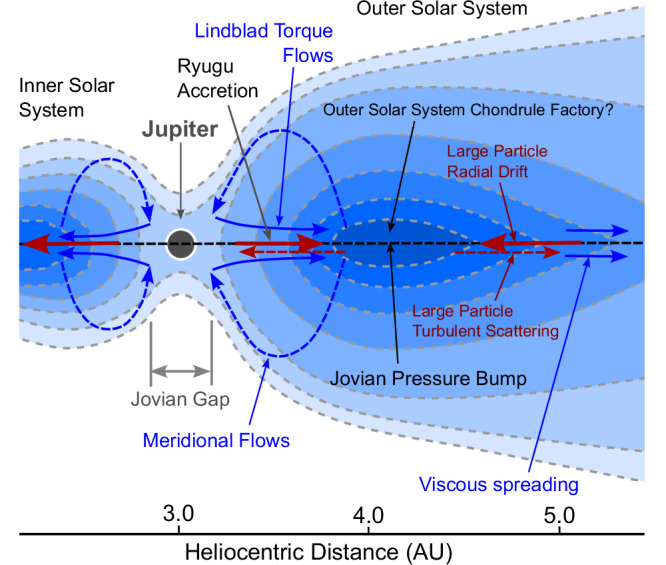 Figure 5
Peer Reviews
No public reviews on file for this paper yet. If you reviewed it on a platform where reviews are public (OpenReview, ICLR, NeurIPS, ICML), you can paste yours below so the community can read it here.
Videos
No videos yet. Explain this paper in a talk, walkthrough, or lecture? Add one.
Taxonomy
TopicsAstro and Planetary Science · Planetary Science and Exploration · Astrophysics and Star Formation Studies