A comparative study of femtosecond pulsed and continuous wave lasers on physiological responses through activation of phytochromes in seeds
Csenger Márk Szabó, Botond Bán, Borbála Sinka, Bálint Tóth, Barnabás Gilicze, Imre Seres, János Bohus, Attila Ébert, Péter Borbély, Zsolt Gulyás, Gábor Galiba, Eva Darko, Miklós Hovári, Béla Hopp, Csaba Péter, Károly Mogyorósi, András Viczián

TL;DR
This study shows that both continuous and ultrafast laser pulses can trigger plant seed germination and growth through phytochrome activation.
Contribution
The novel finding is that femtosecond laser pulses can activate phytochromes in seeds without adverse effects, despite lower sensitivity than continuous light.
Findings
Phytochrome B in seeds absorbs photons from femtosecond laser pulses efficiently, albeit with lower sensitivity than continuous light.
Ultrashort laser pulses do not cause harmful effects during later plant development.
The response to pulsed light aligns with in vitro phytochrome photoconversion characteristics.
Abstract
Red light activates phytochrome photoreceptors, which mediate such key developmental steps as germination and seedling photomorphogenesis in Arabidopsis thaliana. To examine the details of these responses, we developed a novel experimental system and demonstrated that brief, high-intensity light pulses can elicit sustained physiological responses. We observed that the seeds responded to the femtosecond laser light pulses, but with lower sensitivity compared with continuous light sources having the same average fluence. We concluded that (i) phytochrome B photoreceptors within imbibed seeds efficiently absorb red and far-red photons from pulsed femtosecond laser pulses, with absorption occurring during approximately 10 orders of magnitude shorter amount of time than with conventional light sources; (ii) these treatments did not induce adverse effects during later plant development; and…
Genes, proteins, chemicals, diseases, species, mutations and cell lines named across the full text — each resolved to its canonical identifier and authoritative record.
Click any figure to enlarge with its caption.
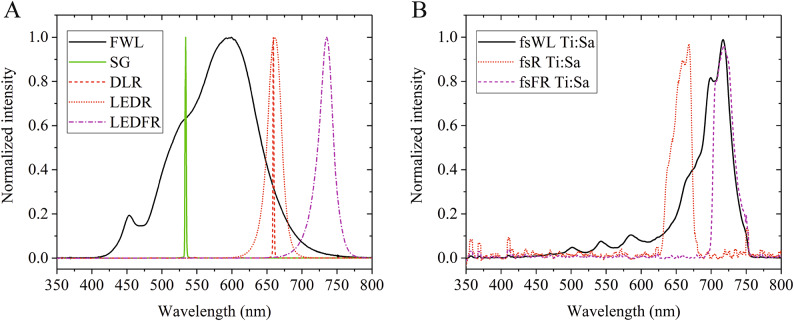 Figure 1
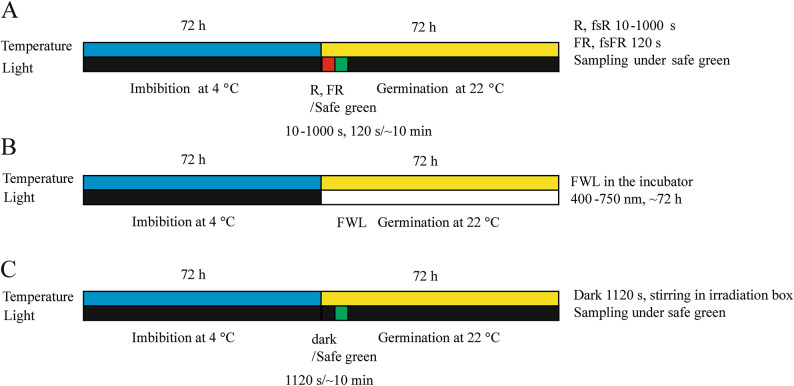 Figure 2
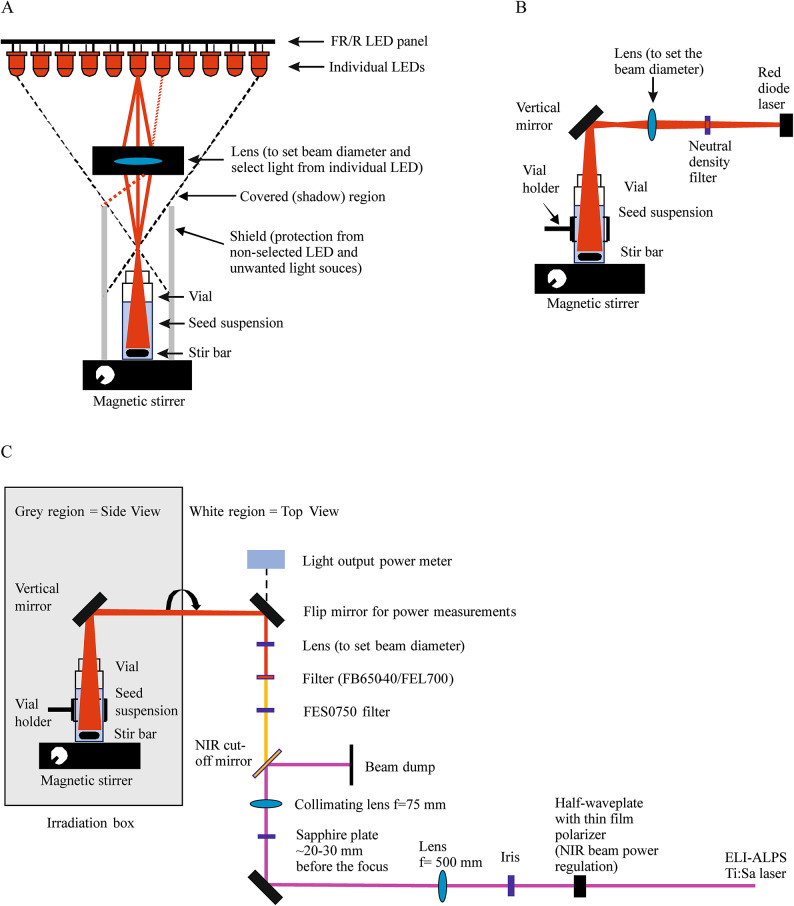 Figure 3
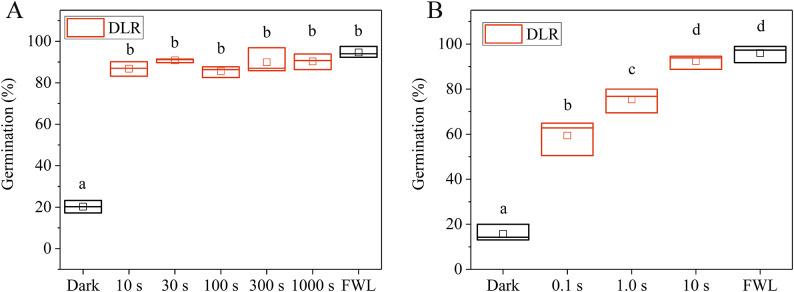 Figure 4
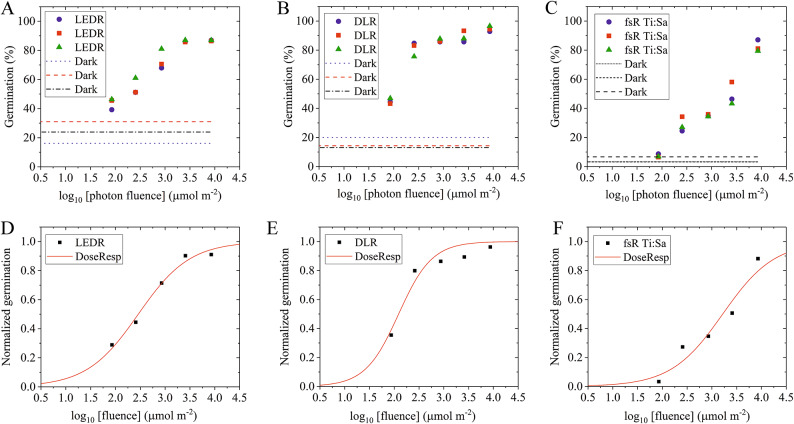 Figure 5
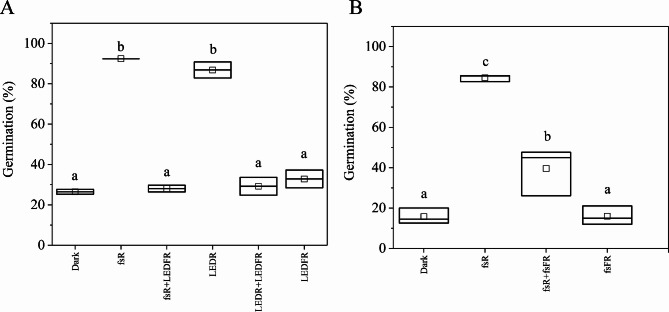 Figure 6
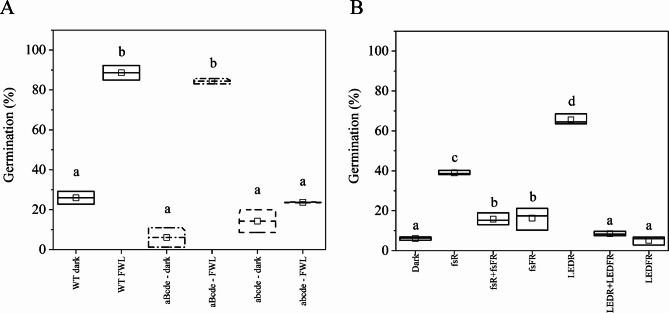 Figure 7
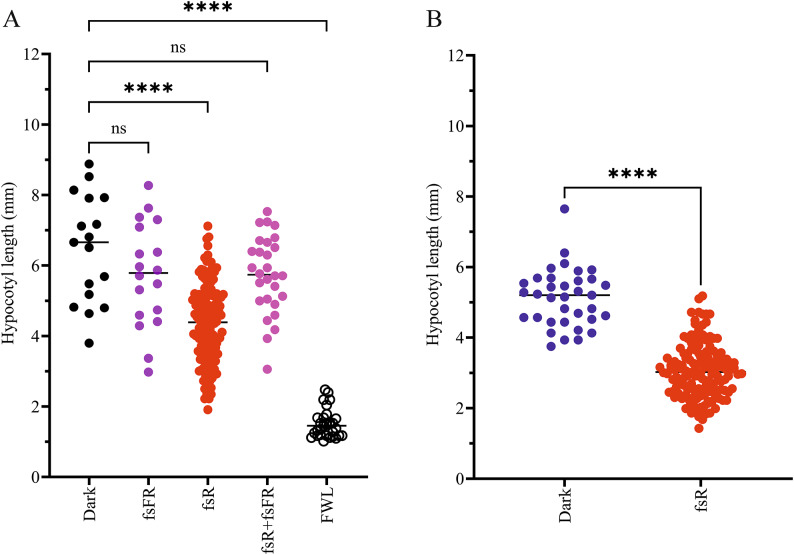 Figure 8
Peer Reviews
No public reviews on file for this paper yet. If you reviewed it on a platform where reviews are public (OpenReview, ICLR, NeurIPS, ICML), you can paste yours below so the community can read it here.
Videos
No videos yet. Explain this paper in a talk, walkthrough, or lecture? Add one.
Taxonomy
TopicsLight effects on plants · Magnetic and Electromagnetic Effects · Photosynthetic Processes and Mechanisms