Devices for minimally invasive liver parenchyma transection: the SICE (Italian Society of Endoscopic Surgery) Italian and International survey
Graziano Ceccarelli, Pasquale Avella, Edoardo Maria Muttillo, Maria Conticchio, Giovanni Domenico Tebala, Gaetano Piccolo, Lucia Romano, Riccardo Memeo, Aldo Rocca, Davide Giovanni Grego, Davide Giovanni Grego, Roberto Lauro, Nicolas Pontarolo, Jacopo Andreuccetti

TL;DR
This study explores how different devices are used for liver surgery in minimally invasive techniques, comparing laparoscopic and robotic approaches across hospitals.
Contribution
The study provides insights into the current practices and device preferences for liver parenchyma transection in minimally invasive surgery.
Findings
Laparoscopic techniques remain dominant for liver resections, including major hepatectomies.
CUSA is preferred for major resections, while ultrasonic shears and bipolar devices are used for minor ones.
Robotic surgery often uses Maryland bipolar forceps and vessel sealers, with hybrid methods addressing limitations.
Abstract
Minimally Invasive Liver Surgery (MILS), encompassing laparoscopic (L-MILS) and robotic (R-MILS) approaches, has revolutionized liver surgery, offering reduced morbidity, shorter hospital stays, and improved outcomes while maintaining oncological efficacy. Despite the widespread use of L-MILS, parenchyma liver transection techniques and devices remain debated. This study investigates the adoption of transection devices (TDs) in MILS among 86 hospitals, focusing on surgical practices, device utilization, and outcomes. The Italian Society of Endoscopic Surgery (SICE) endorsed a cross-sectional internet-based survey targeting general and Hepato-Pancreato-Biliary surgeons. Responses from 86 centers revealed that 77% of institutions is available a robotic platform, with an adoption rate of 87.50% in high-volume centers. L-MILS remains the predominant technique for liver resections, also in…
Genes, proteins, chemicals, diseases, species, mutations and cell lines named across the full text — each resolved to its canonical identifier and authoritative record.
Click any figure to enlarge with its caption.
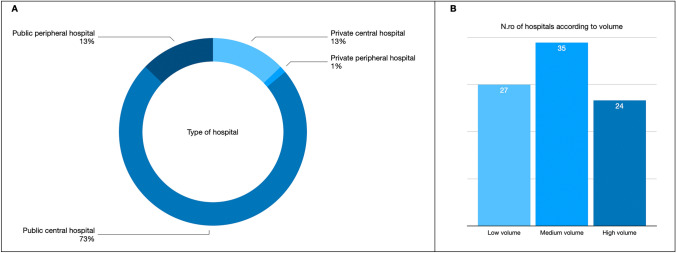 Figure 1
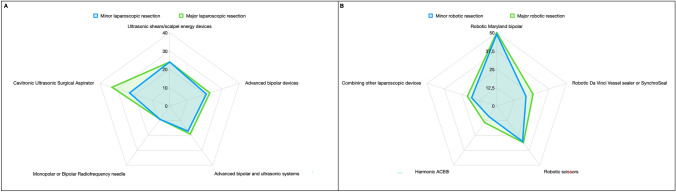 Figure 2
 Figure 3
Peer Reviews
No public reviews on file for this paper yet. If you reviewed it on a platform where reviews are public (OpenReview, ICLR, NeurIPS, ICML), you can paste yours below so the community can read it here.
Videos
No videos yet. Explain this paper in a talk, walkthrough, or lecture? Add one.
Taxonomy
TopicsHepatocellular Carcinoma Treatment and Prognosis · Organ Transplantation Techniques and Outcomes · Liver Disease and Transplantation