The Bedrock technique with triangular titanium rods for spinopelvic fixation and sacroiliac joint fusion: is there a learning curve?
Cale J. Hendricks, Jason J. Haselhuhn, Paul Brian O. Soriano, James T. Longhurst, Christopher T. Martin, Jonathan N. Sembrano, Nathan R. Hendrickson, Kristen E. Jones, David W. Polly

TL;DR
This study examines the learning curve for a surgical technique using triangular titanium rods for spinal and pelvic fusion, finding a slight decrease in implant malpositioning over time.
Contribution
The paper provides empirical evidence on the learning curve associated with the Bedrock technique using triangular titanium rods for spinopelvic fixation.
Findings
The implant malposition rate decreased from 7.1% in the first 21 cases to 4.5% in the next 22 cases.
All malpositions occurred medially and/or cephalad, prompting a shift in technique to lower implant placement.
Patients showed significant one-year improvements in disability and pain metrics.
Abstract
The Bedrock technique involves fusion of the sacroiliac (SI) joint at the time of long construct spinal fusion extending to the pelvis. This is done with triangular titanium rods (TTR) placed parallel and cephalad to S2AI screws, requiring placement of two implants into the small bony corridor in the teardrop of the pelvis. In our initial 21 cases adopting this technique, we found a 7.1% rate of implant malposition requiring intraoperative repositioning. The objective of this follow-up study was to report on our implant malposition rates over a larger number of cases, to determine a potential learning curve, and to report on strategies for minimizing implant malpositioning. Surgeries in which SI joint fusion was performed concomitant with spinopelvic fixation using the Bedrock Technique with TTRs and CT-navigation between 5/1/2019 and 5/27/2021 were reviewed. Operative reports were…
Genes, proteins, chemicals, diseases, species, mutations and cell lines named across the full text — each resolved to its canonical identifier and authoritative record.
Click any figure to enlarge with its caption.
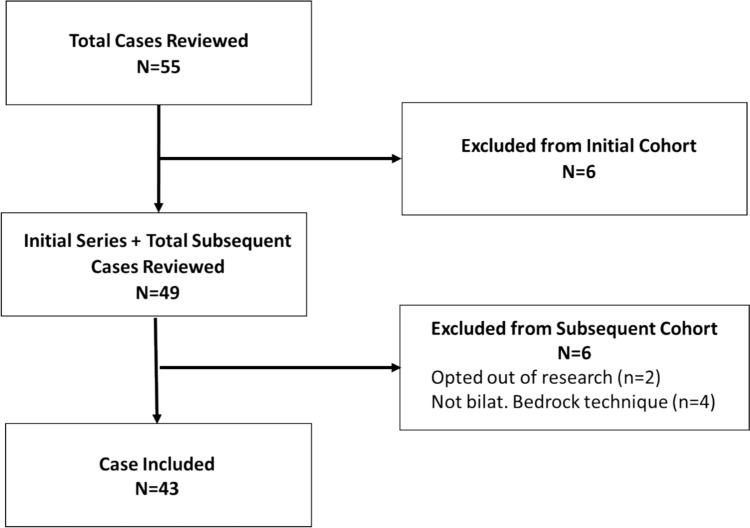 Figure 1
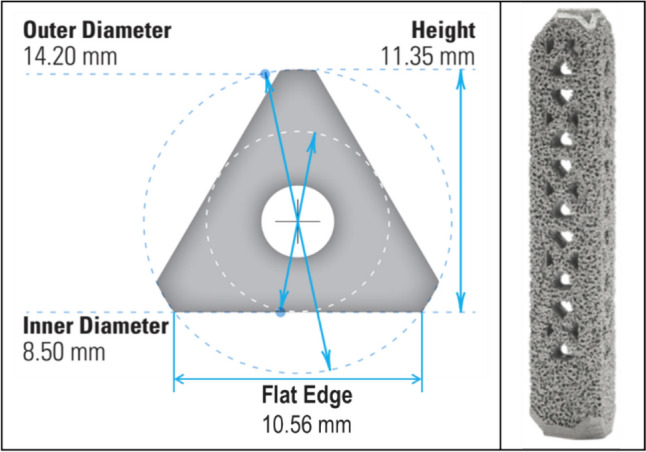 Figure 2
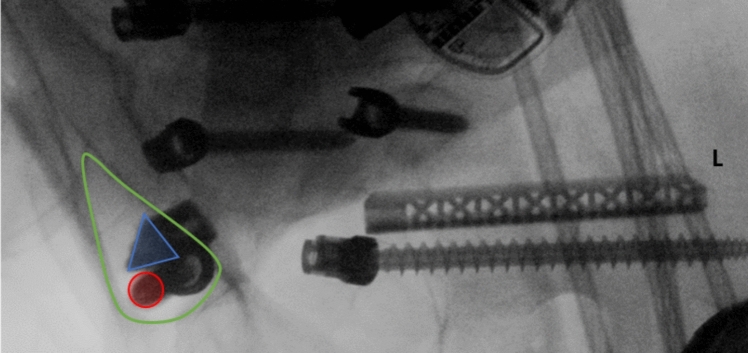 Figure 3
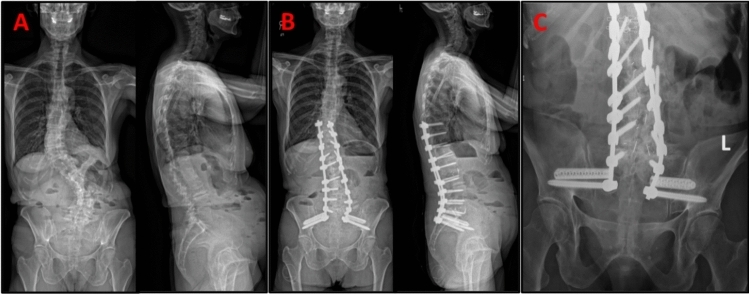 Figure 4
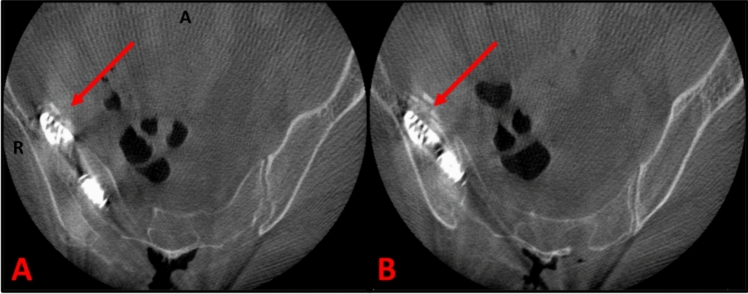 Figure 5
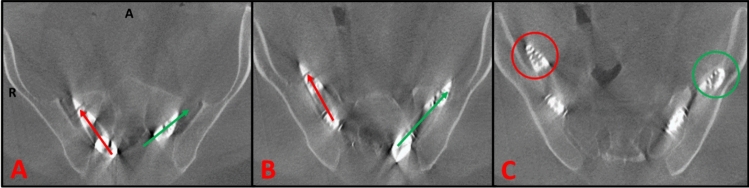 Figure 6
Peer Reviews
No public reviews on file for this paper yet. If you reviewed it on a platform where reviews are public (OpenReview, ICLR, NeurIPS, ICML), you can paste yours below so the community can read it here.
Videos
No videos yet. Explain this paper in a talk, walkthrough, or lecture? Add one.
Taxonomy
TopicsPelvic and Acetabular Injuries · Spine and Intervertebral Disc Pathology · Spinal Fractures and Fixation Techniques