Morphometric Characterization of Levator Ani Subdivisions in Healthy Controls and Patients: An MRI Study Using 3D PICS
Nina Jessica Gmür, Soleen Ghafoor, Klaus Steigmiller, Thomas Winklehner, Cäcilia S. Reiner, Cornelia Betschart

TL;DR
This study uses MRI and a new 3D imaging system to measure differences in pelvic muscles between healthy women and those with pelvic organ prolapse.
Contribution
The study introduces a novel 3D MRI method (3D PICS) for quantitatively analyzing levator ani muscle subdivisions in health and disease.
Findings
Patients with pelvic organ prolapse had lower insertion points in vertically oriented muscles compared to controls.
Muscle lengths in patients were 4% to 24% longer than in healthy controls.
The 3D PICS system showed moderate to good interrater reliability for most measurements.
Abstract
To date, levator ani muscle (LAM) morphometry has been classified descriptively and semi-quantitatively. New MRI techniques enabling detailed visualization with the 3D pelvic inclination correction system (3D PICS) could offer a one-stop-shop diagnostic modality for quantitative assessment of LAM subdivisions. The aim of this controlled MRI study was to assess morphometric LAM subdivision characteristics in two distinct groups of premenopausal women, namely nulliparous asymptomatic controls and symptomatic patients (Pelvic Organ Prolapse Quantification [POP-Q] ≥ II). Magnetic resonance imaging scans of the 22 women in each group were analyzed applying the 3D PICS coordinate system. A second reading of MRI was used to calculate interrater reliability (IRR). Origins and insertions were expressed in the 3D-Cartesian coordinate system in relation to point 0/0/0 (inferior pubic point).…
Genes, proteins, chemicals, diseases, species, mutations and cell lines named across the full text — each resolved to its canonical identifier and authoritative record.
Click any figure to enlarge with its caption.
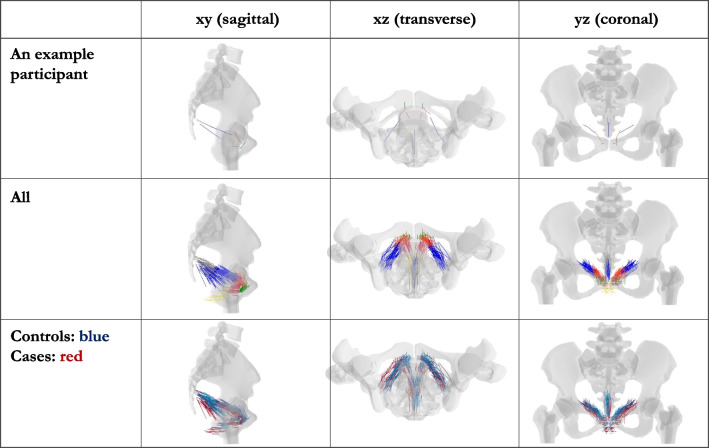 Figure 1
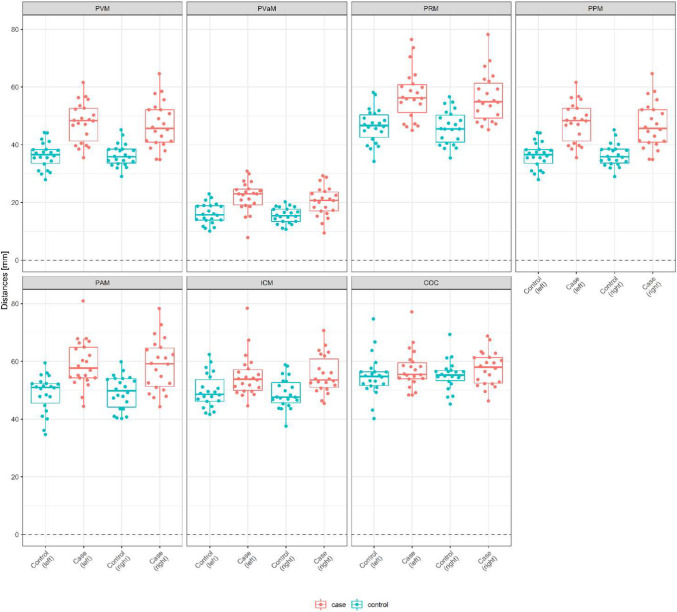 Figure 2
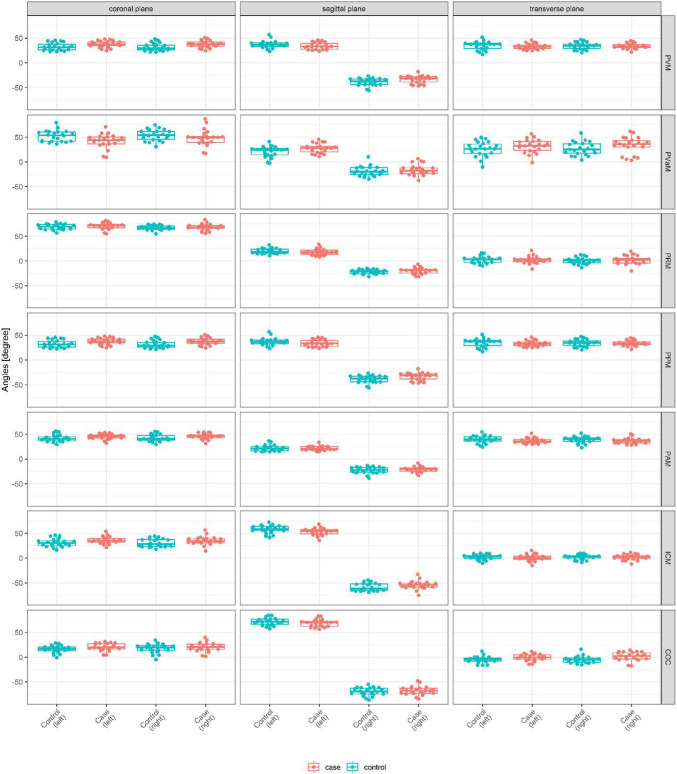 Figure 3
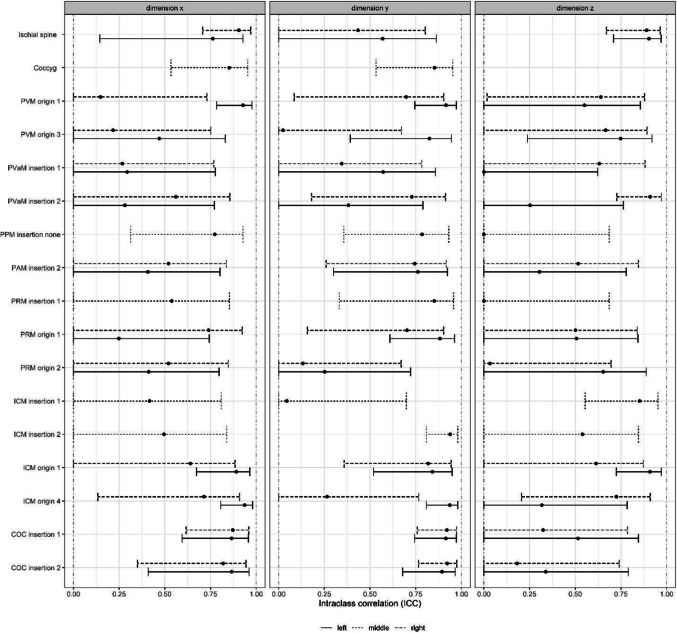 Figure 4
Peer Reviews
No public reviews on file for this paper yet. If you reviewed it on a platform where reviews are public (OpenReview, ICLR, NeurIPS, ICML), you can paste yours below so the community can read it here.
Videos
No videos yet. Explain this paper in a talk, walkthrough, or lecture? Add one.
Taxonomy
TopicsPelvic floor disorders treatments · Anorectal Disease Treatments and Outcomes · Pelvic and Acetabular Injuries