Subfecundity and associated factors among pregnant mothers receiving antenatal care at public health facilities in Ambo town Oromia region, Ethiopia: a cross-sectional study
Elias Andesha, Gizachew Abdissa, Gemechu Ganfure, Melese Adugna, Merga Sheleme, Jemal Bedane

TL;DR
This study finds that over 20% of pregnant women in Ethiopia's Ambo town experienced subfecundity, with factors like age over 35 and stress playing a role.
Contribution
This is the first study in Ambo town, Ethiopia, to assess subfecundity and its associated factors using a cross-sectional design.
Findings
Subfecundity prevalence was 21.3% (95% CI: 17.2–25.5) among pregnant mothers in Ambo town.
Older mothers (>35 years) and those with menstrual irregularities were more likely to experience subfecundity.
Stress before conception and contraceptive use were also significantly associated with subfecundity.
Abstract
Subfecundity is defined by a time to pregnancy of more than 12 months with unprotected sexual intercourse. Despite many couples experiencing psychological, social, and economic effects as a consequence of subfecundity, it has been inadequately explored in Ethiopia. Since there is limited information available in Ethiopia on subfecundity and no further studies have been conducted in the study area, this study will serve as input. Therefore, this study aimed to assess the magnitude of subfecundity and associated factors in Ambo town. A cross-sectional study was employed using systematic sampling to select 368 pregnant mothers. Data were collected through face-to-face interviews using a pre-tested structured questionnaire supplemented with a review of medical records. Bivariate and multivariable logistic regression were performed to identify factors associated with subfecundity. The…
Genes, proteins, chemicals, diseases, species, mutations and cell lines named across the full text — each resolved to its canonical identifier and authoritative record.
Click any figure to enlarge with its caption.
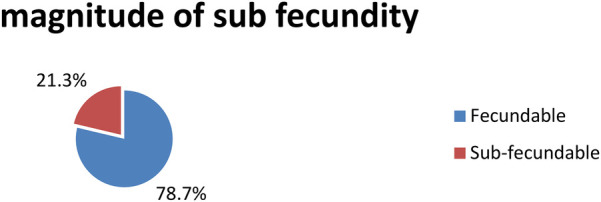 Figure 1
Peer Reviews
No public reviews on file for this paper yet. If you reviewed it on a platform where reviews are public (OpenReview, ICLR, NeurIPS, ICML), you can paste yours below so the community can read it here.
Videos
No videos yet. Explain this paper in a talk, walkthrough, or lecture? Add one.
Taxonomy
TopicsDemographic Trends and Gender Preferences · Reproductive Health and Technologies · Assisted Reproductive Technology and Twin Pregnancy