Preventing opioid prescribing for low back pain using multimodal mechanical stimulation vs. TENS: a randomized-controlled trial
Amy L. Baxter, Jena L. Etnoyer-Slaski, Jessica Allia Rice Williams, Kevin Swartout, Lindsey L. Cohen, M. Louise Lawson

TL;DR
A new device called M-Stim reduced opioid prescriptions and use for low back pain more effectively than TENS units in a clinical trial.
Contribution
The study introduces a novel multimodal mechanical stimulation device that significantly reduces opioid use and prescribing for low back pain.
Findings
Zero opioid-naïve M-Stim participants received opioid prescriptions compared to 8.6% in the TENS group.
M-Stim users had significantly fewer opioid milligram morphine equivalents and fewer days of use compared to TENS users.
M-Stim reduced opioid prescribing compared to national rates by 63%.
Abstract
Low back pain (LBP) is the most common reason for outpatient opioid prescribing: a quarter of patients receive prescriptions, leading to opioid use disorder (OUD) in 5%. Guideline-recommended multimodal interventions often face implementation barriers, and effective modalities (e.g., electrical stimulation) lack coverage. A multimodal mechanical stimulation (M-Stim) device for LBP has demonstrated safety and efficacy in pain reduction, but its impact on opioid use has not yet been determined. As part of an NIH-funded double-blind study to reduce pain and opioid use, patients with moderate-to-severe LBP presenting to two suburban chiropractic centers were randomized to receive either the M-Stim device or a transcutaneous electrical nerve stimulation (TENS) unit for 30 min daily, in addition to other therapies. Analgesic use was reported daily for 28 days, with new prescribing followed…
Genes, proteins, chemicals, diseases, species, mutations and cell lines named across the full text — each resolved to its canonical identifier and authoritative record.
Click any figure to enlarge with its caption.
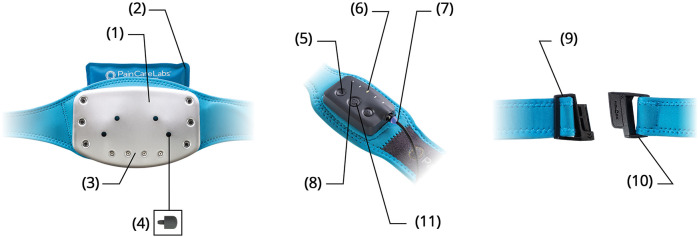 Figure 1
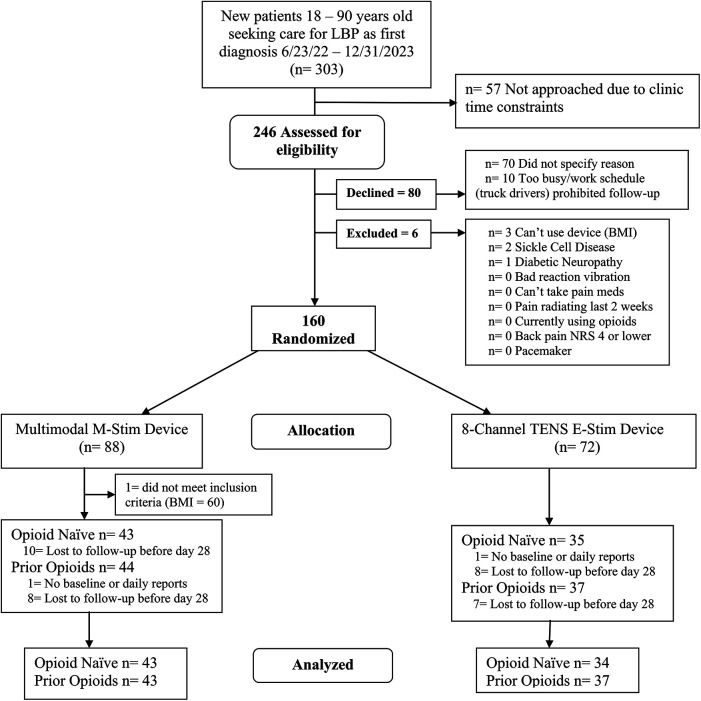 Figure 2
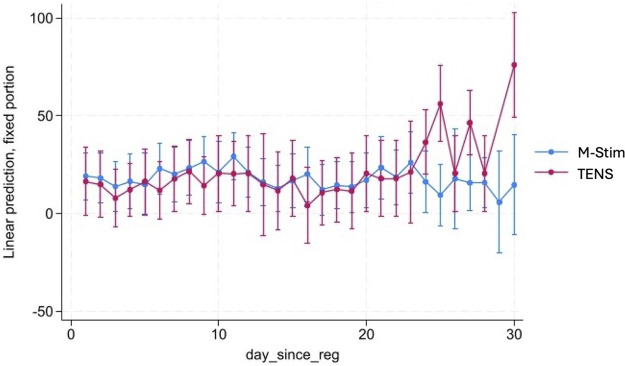 Figure 3
Peer Reviews
No public reviews on file for this paper yet. If you reviewed it on a platform where reviews are public (OpenReview, ICLR, NeurIPS, ICML), you can paste yours below so the community can read it here.
Videos
No videos yet. Explain this paper in a talk, walkthrough, or lecture? Add one.
Taxonomy
TopicsMusculoskeletal pain and rehabilitation · Pain Management and Treatment · Spine and Intervertebral Disc Pathology