Unfavorable microbiological impact of directly duodenal biliary drainage in patients with perihilar obstruction: a preliminary report
Veronika Rozhkova, Kamuran Tutuş, Selda Kömeç, Erdem Kınacı, Özgür Bostancı, İlgin Özden

TL;DR
This study shows that biliary drainage methods exposing bile to duodenal fluid increase harmful bacteria and drug-resistant infections in patients with perihilar obstruction.
Contribution
The study reveals that direct duodenal biliary drainage increases the risk of multidrug-resistant bacterial colonization in bile.
Findings
95% of contacted group patients had positive bile cultures compared to 33% in the non-contacted group.
Multimicrobial growth was 68% in the contacted group versus 24% in the non-contacted group.
The contacted group had higher rates of MDR/XDR bacteria and CRE colonization in bile.
Abstract
Biliary drainage is frequently used in patients with perihilar obstruction. This study was designed to compare the microbiological characteristics of patients whose biliary trees were either exposed or not exposed to duodenal fluid, depending on the drainage method used. The charts of 71 patients with perihilar obstruction (any etiology causing an obstruction parallel to that of a proximal cholangiocarcinoma according to the Bismuth–Corlette classification) were evaluated retrospectively. The contacted group comprised 20 patients who underwent either endoscopic stenting or percutaneous transhepatic biliary drainage (PTBD) with duodenal extension, while the non-contacted group consisted of 51 patients with either external PTBD or surgery upfront. Positive bile culture results were identified in 19/20 (95%) vs. 17/51 (33%) patients (p = 0.00001) and multimicrobial growth in 13/19 (68%)…
Genes, proteins, chemicals, diseases, species, mutations and cell lines named across the full text — each resolved to its canonical identifier and authoritative record.
Click any figure to enlarge with its caption.
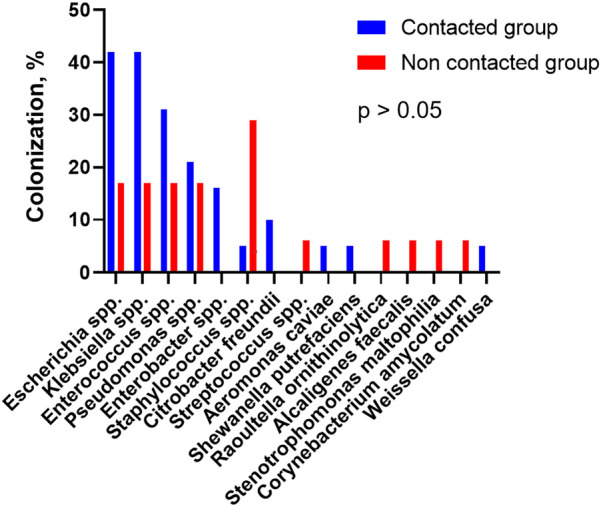 Figure 1
Peer Reviews
No public reviews on file for this paper yet. If you reviewed it on a platform where reviews are public (OpenReview, ICLR, NeurIPS, ICML), you can paste yours below so the community can read it here.
Videos
No videos yet. Explain this paper in a talk, walkthrough, or lecture? Add one.
Taxonomy
TopicsGallbladder and Bile Duct Disorders · Pediatric Hepatobiliary Diseases and Treatments · Amoebic Infections and Treatments